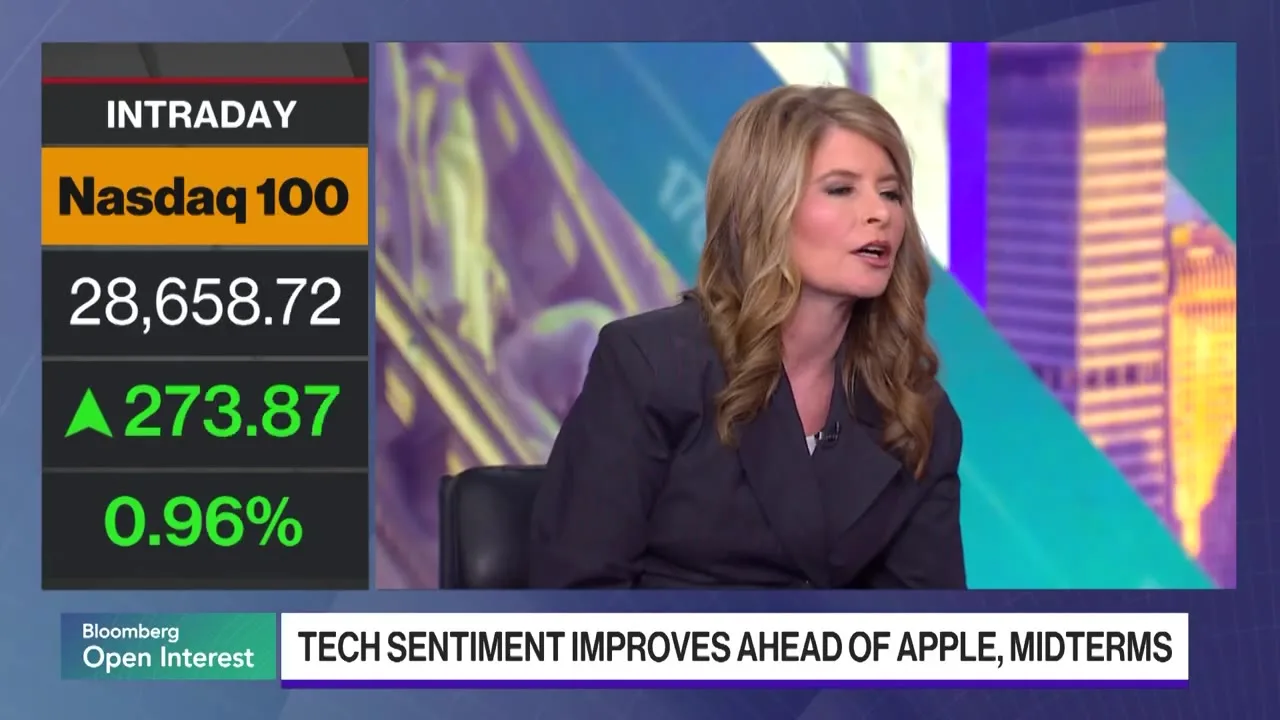
Investors have turned to sharp shifts into health care to hedge market risks, Amy Silverman, RBC Capital Markets' head of derivatives strategy, said, while options showed limited broad concern.
The moves across assets exceeded changes in options pricing last week. That gap leaves open whether investors feel reassured or whether options prices fail to capture their anxiety.
Silverman discussed election risks and investor positioning in a Bloomberg Television interview published Nov. 2. She said the US midterm elections could bring relief, although disputed results or attention turning toward the presidential race could cut it short.
Options prices across different expiry dates suggest some easing after the vote. Contested elections in Alaska or other states could generate fresh volatility, while presidential candidates could enter the headlines by January next year.
“What the market has decided to do in terms of hedging is just to violently rotate,” she said. Investors have sought shelter in health care without showing broad concern across options markets.
The VIX, a measure of expected US stock market volatility, rose last week before easing somewhat. Changes in expected volatility and skew, the difference in prices between options protecting against falls and those benefiting from gains, were relatively muted.
The gap between bond and stock volatility had narrowed. The comparison stood near the 99th percentile a few weeks earlier and had fallen to about the 70th percentile over five years, by RBC Capital Markets' reckoning.
That narrowing meant stock options had begun reflecting turbulence elsewhere. Further adjustment remained possible, although much of the earlier gap had closed.
Large cloud computing companies also face changes in their cash generation and borrowing needs. Amazon, Microsoft and Google each recorded their largest earnings-day share price move on record, in the company's assessment.
“These aren't the hyperscalers you married,” Silverman said. Their changing cash flows and bond issuance could require investors to rethink how they price earnings-related swings if spending continues.
The shift also affects investment strategies that group stocks by traits such as quality, value and cash generation. Companies that fitted a strong free-cash-flow category earlier this year no longer necessarily belong there.
Their large weights in the S&P 500 give those changes broader importance. Silverman described the forces behind recent swings as partly fundamental, but also structural.
Retail investors had yet to show an overwhelming return to buying call options after recent declines. The company's tracking across the S&P 500 and Russell showed relatively few instances of pricing patterns associated with that activity.
More call buying could point to continued positive momentum. For now, that signal was limited.
Silverman could not establish whether artificial intelligence was driving retail investors toward bond exchange-traded funds. She had seen changes in call-option pricing in TLT, a Treasury bond fund, but connected those moves to interest-rate concerns.
Retail investors have historically concentrated on stocks, though bond funds traded on exchanges offer another outlet for similar options activity. Whether AI was expanding their choices remained unresolved.
Regional bank options looked relatively inexpensive in the company's comparison of actively traded domestic and international funds. Options pricing tied to international stock indexes had also eased after rising ahead of elections.