
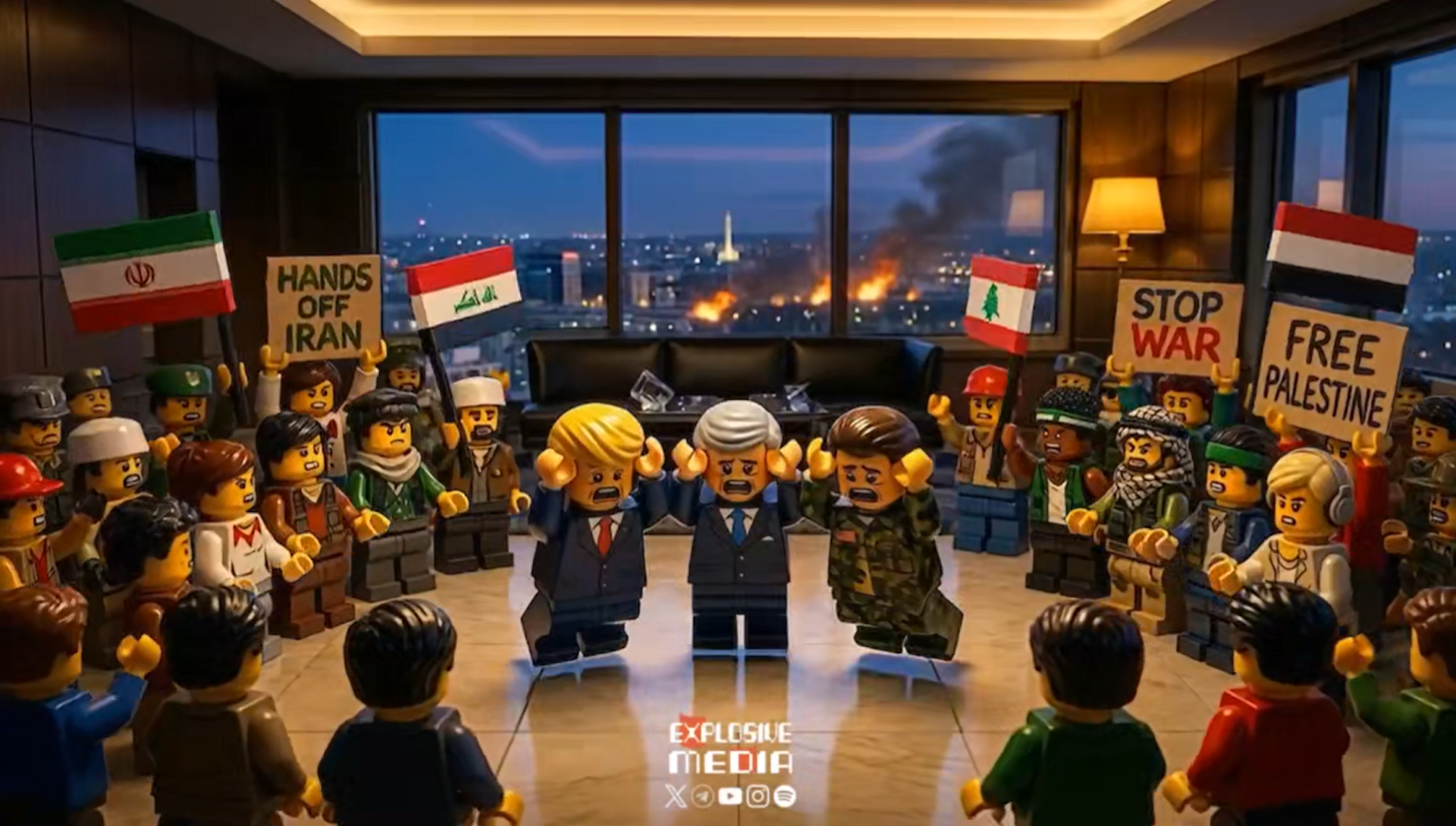
A Lego-style Iranian military commander raps over a gangster beat: “Our inbox is flooded with Americans saying they don’t watch the news. They listen to our songs instead since your media is full of shit.”
This is the opening line of an AI-generated video which is part of Iran’s meme campaign – built around Lego-style animation and rap soundtracks, which have accumulated billions of views online. The line captures the strange reality of contemporary politics: news is often most effectively disseminated not through journalism but humour, memes and entertainment.
Since late February, pro-Iranian media groups – most notably, the X account Explosive Media – have flooded social media with AI-generated video content mocking Donald Trump, Benjamin Netanyahu and US foreign policy. It has been dubbed “slopaganda” – but the sophistication is striking.
These videos contain disinformation and antisemitic tropes but do not look or feel like state propaganda – despite the spokesperson for Explosive Media admitting to the BBC that the Iranian government is a client. They capture the internet zeitgeist: fast, funny, visually familiar and designed for virality.
Trojan horses
The success of these memes lies in their audience strategy. They do not target people actively seeking news. Instead, they mimic the language of everyday internet culture to reach those who are not following events in the Middle East at all.
Humour is the mechanism they use to get reach. These videos function as Trojan horses, drawing viewers in with recognisable imagery, references and music – while communicating a narrative about American overreach, dysfunction and corruption.
As Emerson Brooking, a US-based expert in disinformation, notes, this kind of content reaches “politically uninvested people who otherwise wouldn’t have engaged with war-related content”.
The key insight here is not geopolitics but audiences. Conventional political communication, including press conferences, policy statements and traditional news coverage, reaches people who are already paying attention. These AI meme videos are designed to reach everyone else: the millions of people whose understanding of international conflict extends no further than what happens to appear in their social media feed.
Humour is the primary mechanism these videos have harnessed to conquer the social media algorithms. The joke is not the message – it is the delivery system. By packaging geopolitical arguments inside “diss tracks”, pop culture references and shareable clips, these videos communicate political ideas before audiences have even registered they are consuming political content.
What makes audiences receptive to ‘slopaganda’?
But this raises a deeper question. Why are people so receptive to receiving political information in this form? The answer is that they have been primed for it.
For two decades, a generation of Americans – and increasingly British and European viewers – have learned to process political news through satire. Jon Stewart’s The Daily Show became, for many younger viewers, a more trusted source of political information than the nightly news.
The likes of Stephen Colbert, John Oliver, Seth Meyers and Jimmy Kimmel also built enormous audiences by making politics funny, accessible and emotionally engaging in ways that conventional journalism often failed to do. The implicit message, repeated nightly, was that humour was not merely a gloss on political commentary. It was a more honest form.
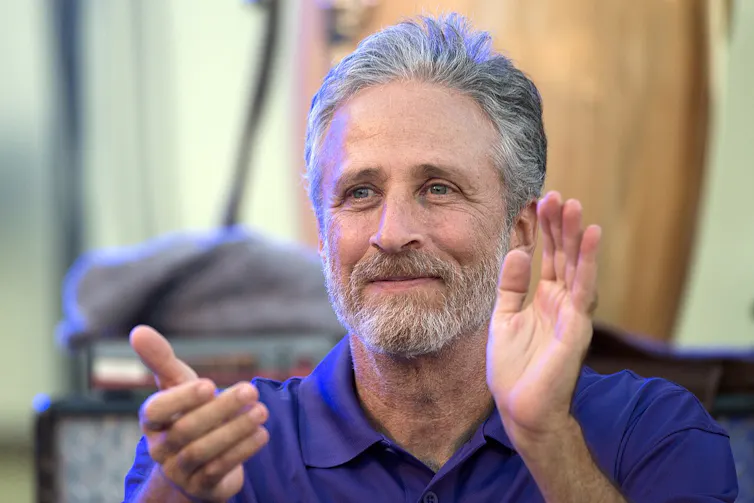
Late-night political satirists such as Jon Stewart blurred the distinction between news and entertainment. DoD News/Flickr/Wikimedia Commons, CC BY-SA
This was largely a progressive phenomenon. The targets were politicians and large institutions, both government and private sector – and the satirists positioned themselves as holding power to account. But this created an expectation that political content should be entertaining, and that comedy is a legitimate vehicle for political understanding.
Iran is copying populist strategy
Since 2008, many populists have recognised the power of using humour in their election campaigns – none more so than Trump. His campaign appearances on comedy podcasts, his garbage truck and McDonald’s drive-through stunts, and his endless memes are not distractions from his political strategy – they are his political strategy.
Trump reached, and mobilised, millions of disaffected and typically uninterested voters who had long since stopped engaging with political news in any traditional form.
Iran has been paying attention. The American scholar of propaganda Nancy Snow has noted that Iran is now “using popular culture against the No.1 pop culture country, the United States”.
The Lego aesthetic, the rap beats, the 1980s pop covers, the selection of jokes are not random choices. They demonstrate a precise calibration of what can effectively reach online audiences in the western attention economy.
The result is content that is not immediately visible as foreign propaganda, and instead looks like entertainment. For audiences already accustomed to learning about politics through comedy, the distinction barely registers.
There is a profound irony here. The cultural conditions that produced shows like The Daily Show and Last Week Tonight – the erosion of trust in mainstream political communication and the demand for authenticity and humour over formal rhetoric – have produced a media environment in which a foreign state can distribute propaganda to millions of Americans, and have it feel indistinguishable from domestic entertainment.
This is not to say that late-night satire and Iranian AI content is equivalent. But they are operating in the same media ecosystem – one in which humour has become a primary method of political communication.
The most unsettling thing about what is happening right now is what this means for our information environment.
If propaganda is indistinguishable from satire, and satire accumulates millions of views while news does not, the line between political entertainment and political persuasion has seemingly collapsed. And the people most affected are those who think they are not following the war at all.

Adam R. North does not work for, consult, own shares in or receive funding from any company or organisation that would benefit from this article, and has disclosed no relevant affiliations beyond their academic appointment.




