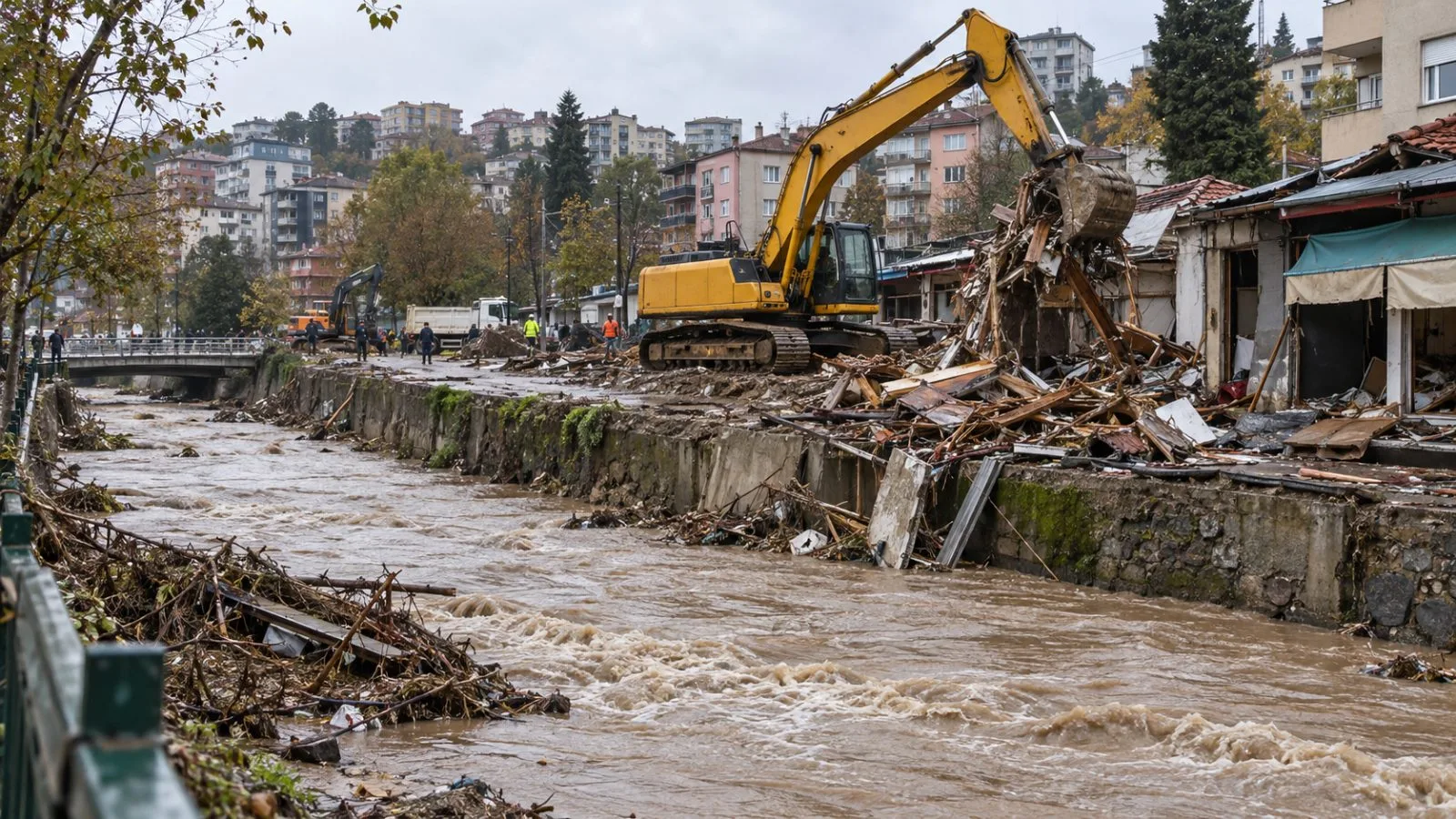
Istanbul officials have begun removing structures from the Ayazağa creek bed so rehabilitation work can proceed after a severe downpour flooded neighborhoods across the city. The National reported that planners and climate specialists viewed development in the watershed as a factor that may have increased runoff and limited drainage.
The Istanbul Governorate said emergency services logged 2,518 reports from 11 p.m. ET Oct. 13 to 1 p.m. ET Oct. 14 (03:00-17:00 UTC). The records included 1,277 flood reports, 15 landslides and 47 incidents involving stranded people, as well as reports concerning 808 homes, 280 businesses and 76 vehicles.
Istanbul Governor Davut Gül said the structures being cleared included shops, a sports field, stadium stands, a Quran course and adjoining housing. He said the work would open a 1,700-meter stretch for creek rehabilitation. Anadolu Agency reported that demolition was complete by Oct. 20 at 19 shops, the Quran course building and the stadium.
The National reported that Gulshah Aktan’s family estimated it lost 40 computers and goods and repair equipment worth 5 million to 6 million Turkish liras after floodwater entered its electronics repair shop. Urban planners and climate specialists interviewed by the outlet linked development higher in the watershed to more runoff reaching Ayazağa and said dense building in the valley left less room for water to drain.
Rainfall measurements covered different periods: Gül said some parts of Istanbul received as much as 272 kilograms of rain per square meter, which he described as the city’s highest amount since 1942, while Kandilli Observatory recorded 129.6 millimeters on Oct. 15, its third-highest daily total in records from 1911 to 2026. ClimaMeter’s comparison of weather patterns from 1950–1987 and 1988–2025 found about 7% heavier rain across the broader zone of heaviest precipitation but no statistically significant rainfall change over Istanbul; it estimated human-driven climate change accounted for about 3% of rain-related damage among exposed assets in the hazard area, without modeling local drainage and land use. Türkiye is scheduled to host COP31, the U.N. climate conference, in Antalya from Nov. 9-20.