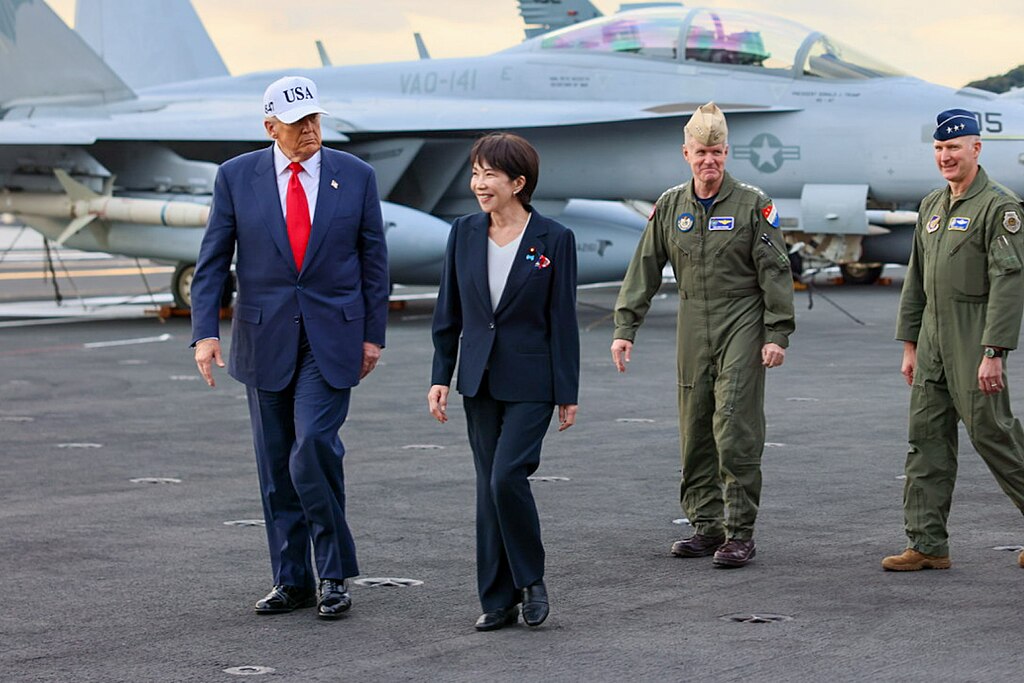
Japan’s Prime Minister Sanae Takaichi has reiterated the importance of the Japan–U.S. strategic alliance amid rising tensions over Taiwan, while carefully distancing herself from earlier remarks that were interpreted as suggesting a direct Japanese military response to a potential conflict involving China. Speaking on a nationally televised program late Monday, Takaichi sought to clarify her position after criticism from opposition leaders and sharp backlash from Beijing.
Takaichi emphasized that Japan’s alliance with the United States would be fundamentally undermined if Tokyo were to abandon Washington during a crisis over Taiwan. However, she underscored that her comments should not be taken as an endorsement of Japan initiating military action if a conflict were to erupt between China and the United States. Instead, she framed Japan’s possible involvement strictly within the boundaries of existing laws and its pacifist constitution.
Relations between Japan and China have deteriorated to their lowest point in years following remarks Takaichi made in November, when she suggested that a hypothetical Chinese attack on Taiwan could trigger a Japanese military response. China, which claims sovereignty over the democratically governed island, reacted strongly with export restrictions, flight cancellations, and repeated demands for a retraction, accompanied by harsh official commentary.
On television, Takaichi clarified that her earlier statements were focused on scenarios such as evacuating Japanese and American citizens from Taiwan in the event of an emergency. She noted that if U.S. forces operating jointly with Japan were attacked and Japan failed to act, the bilateral alliance could collapse. Any response, she said, would be limited, lawful, and based on a comprehensive assessment of the situation on the ground.
While stopping short of retracting her November comments, Takaichi maintained that her stance aligns with Japan’s long-standing security policy, including the right to collective self-defence when Japan’s survival is threatened. With high approval ratings since taking office in October 2025, she has called a snap election for February 8, aiming to leverage her popularity as security and foreign policy dominate public debate.