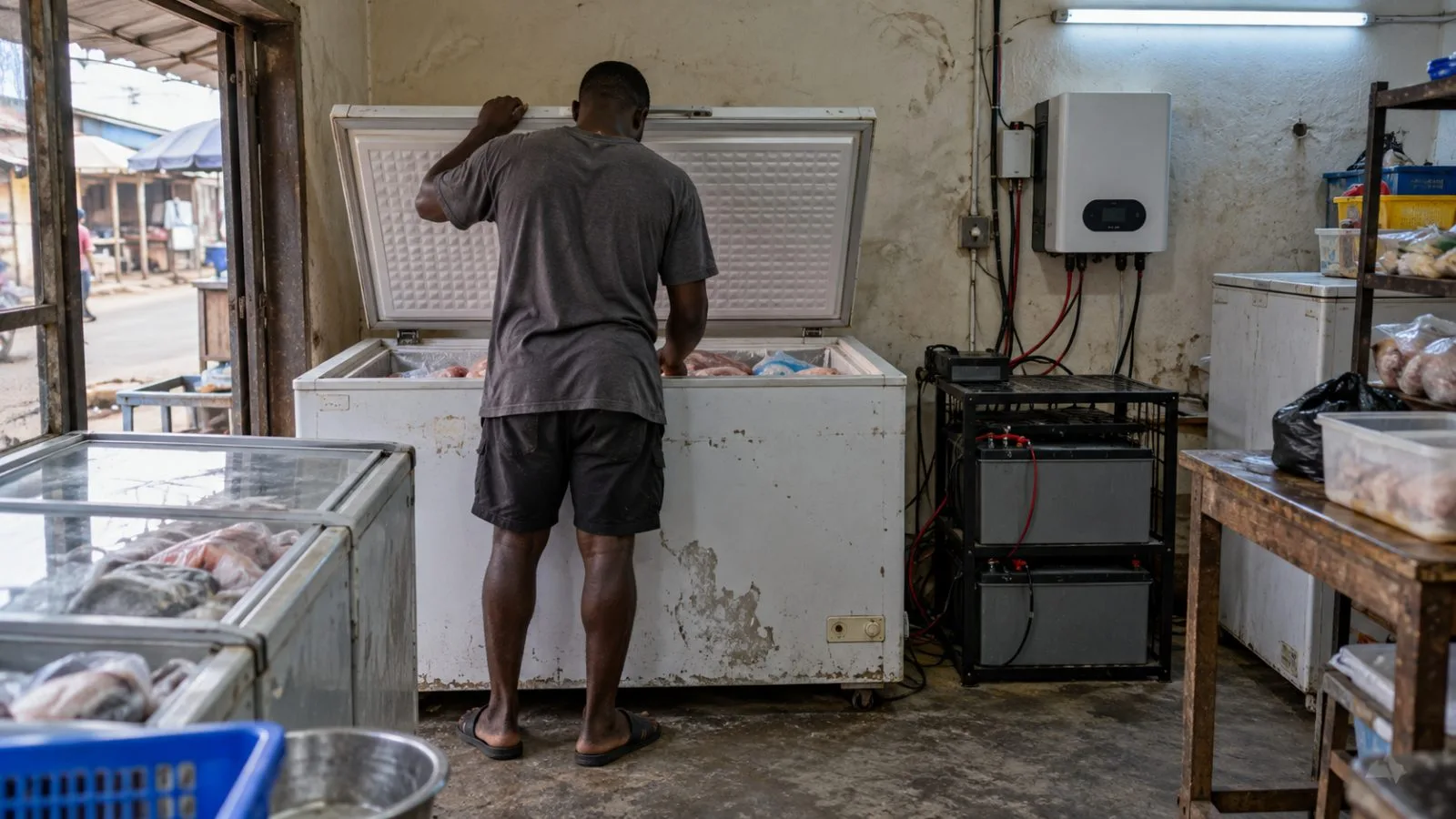
Two frozen-food sellers in Lagos have paid as much as ₦2.2 million for solar systems as unreliable grid power and generator fuel costs threaten perishable stock, BusinessDay reported Oct. 22.
Chichi Eze, a trader in Ojo Local Government Area, said the shop sometimes went one or two weeks without electricity. She told BusinessDay generator fuel cost ₦7,000 to ₦10,000 each day and said she invested about ₦2.2 million in a solar system. Using the lower end of that range, BusinessDay calculated fuel spending at about ₦210,000 over 30 days.
Amaka Allen, who said she had traded for more than 10 years, spent about ₦2 million on solar this year, BusinessDay reported. The outlet also reported that Ife Adeoye said outages had spoiled products before sale and losses sometimes topped profits. Adeoye said solar had improved her business and helped attract customers.
The reported decisions followed high daily fuel expenses and losses from spoilage. BusinessDay said smaller traders without capital can struggle with solar’s initial cost. Its interviews do not show how many frozen-food sellers in Lagos have switched.
The Nigerian Electricity Regulatory Commission (NERC) reported average available generation capacity of 4,758 megawatts in August 2026, with an average load factor of 86% and 4,102 megawatts used on average. These national figures do not establish how long Eze’s shop went without power or why. The commission’s data describe grid-connected generation, not the electricity reaching a particular shop. NERC’s outage guidance cites overloaded infrastructure, generation shortfalls, transmission or distribution faults and routine maintenance as possible reasons for weak supply, without identifying a cause for the outages Eze described.
Nigerian National Petroleum Company Limited (NNPC) said Oct. 9 that elevated global crude prices linked to the Middle East conflict were affecting domestic petrol prices. EconoTimes previously covered Nigeria’s petrol-relief measures amid higher crude costs. NNPC said its discount at retail stations would run through Oct. 31, 2026, and does not establish a uniform national pump price.