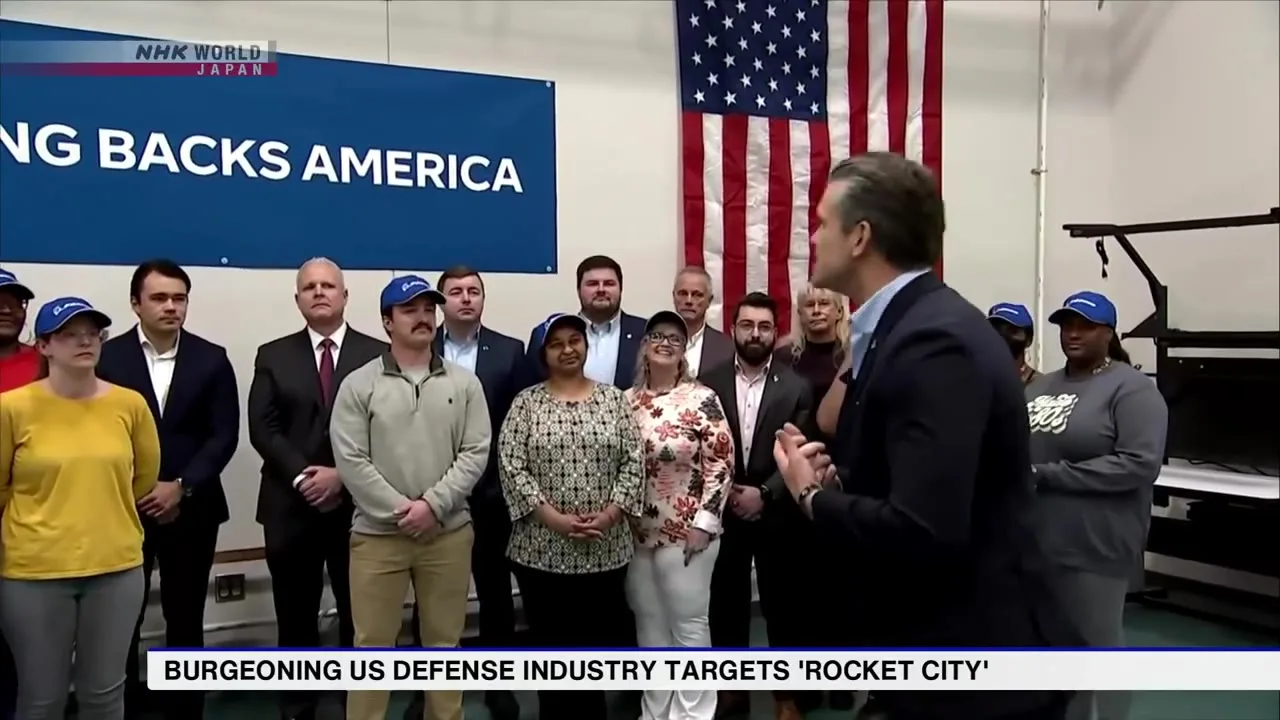
Leidos nearly tripled its manufacturing workforce over the past three and a half years as it expanded missile production operations in Huntsville, Alabama, the defense company said in televised remarks.
The expansion has brought recruitment and training efforts into local classrooms as defense manufacturers seek skilled workers. The company also expects its Huntsville workforce to grow over the next year to 18 months.
The remarks appeared in NHK World-Japan News' “Burgeoning US defense industry targets 'rocket city',” published Oct. 22. The recording did not identify the company speaker by name or title.
Leidos put its Huntsville workforce at about 3,000 people and said it donated $1.75 million to establish an advanced manufacturing training center at a local vocational school.
“We're growing rapidly and it's important for us to have a talent pipeline in the place where our business is,” the company speaker said.
Students at the training center work with machinery used on manufacturing lines. Local schoolchildren also learned about circuit boards during the visit, part of the company's effort to interest young people in future jobs.
The company gave no hiring target for the coming year to 18 months. Its comments also left open how many additional manufacturing workers it would recruit and when those jobs would become available.
Huntsville, known as Rocket City because of its long association with the US space program, hosts military agencies and the companies that supply them. Those operations now drive much of the city's growth.
The Army Aviation and Missile Command and the Missile Defense Agency have operations there. US Space Command is also set to relocate to the city, although the recording gave no timetable.
A local factory making components for the Patriot PAC-3 missile is increasing production. The expansion comes amid rising weapons demand while Washington remains in conflict with Iran and provides military support to Ukraine and Israel.
The local Chamber of Commerce launched a program two years ago to help startups enter the defense industry. It connects founders with established defense companies and government contacts.
The program also offers advice on military purchasing trends and the process for winning government business. At a pitching event, founders presented products including artificial intelligence tools for image analysis and systems for identifying suspicious electronic components.
One business described an inspection system designed to detect counterfeit or altered electronics used in defense equipment. The program's director described increased demand and changes to Pentagon purchasing procedures as an opportunity for startups, without giving contract values or purchasing commitments.