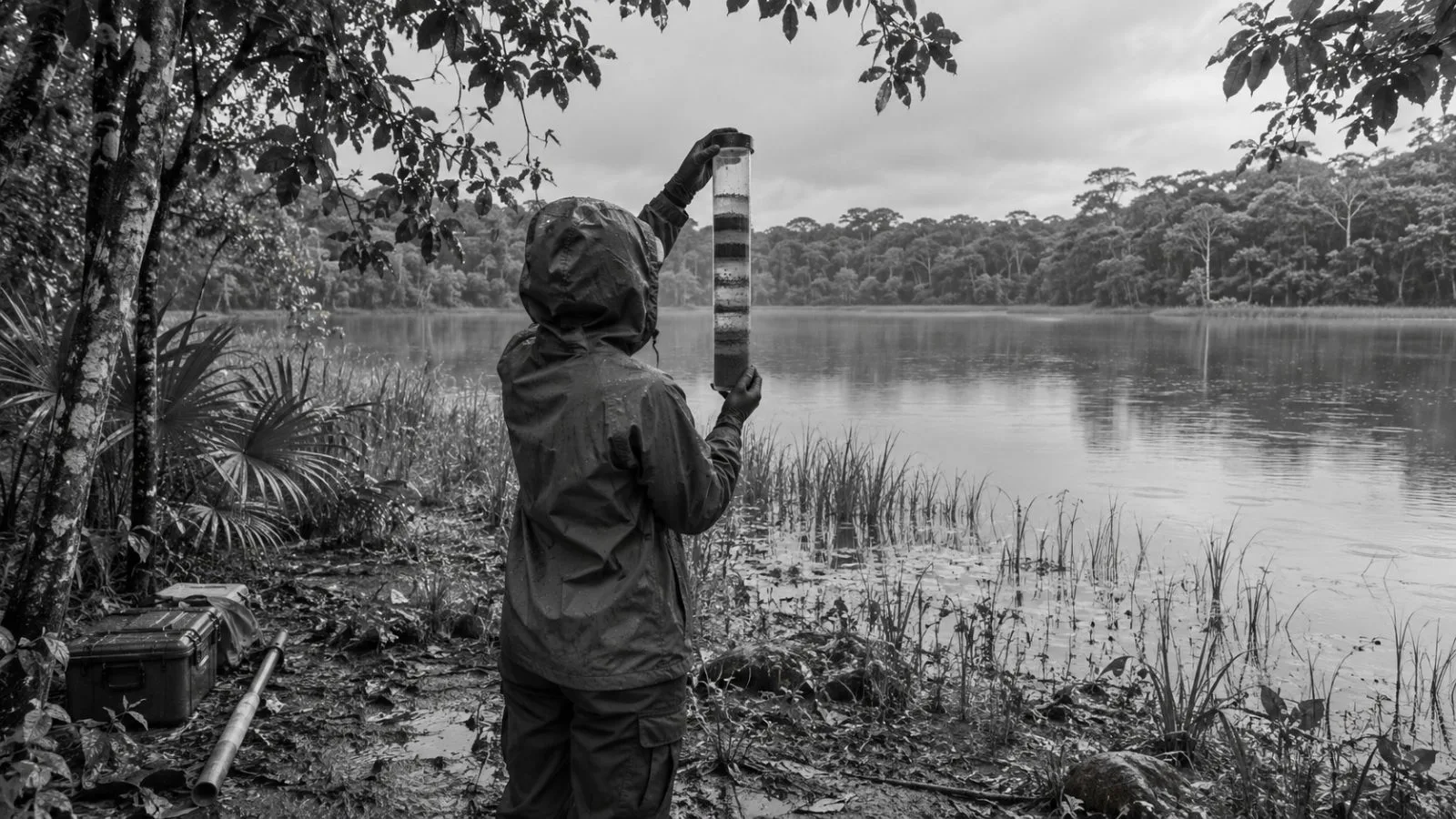
Mercury in sediments from two lakes on Mexico’s Yucatán Peninsula stayed above modern aquatic-life thresholds for centuries, while biological indicators fell, a Nov. 6 study found.
Published in Science Advances, the study examined cores from Lago Cobá and Cenote Xcach. At Cobá, mercury levels remained above the probable-effect threshold for more than 200 years and exceeded the severe-effect threshold for close to 100 years, the researchers reported.
At Xcach, the high-contamination interval lasted roughly from 535 to 820 CE. Mercury averaged about 8.4 micrograms per gram of sediment during that period and reached about 18 micrograms per gram around 720 CE. The modern severe-effect benchmark cited in the study is 2.0 micrograms per gram.
Sediment layers with elevated mercury also showed changes in indicators associated with algae, bacteria, cyanobacteria, ostracods, snails and nonbiting midges. The authors point to ancient use of elemental mercury and cinnabar, a red mercury-sulfide mineral used as pigment, as possible sources. They did not establish how mercury entered either lake.
The study places the findings in the Classic Period, dated from 250 to 920 CE, alongside environmental pressures including drought, deforestation and soil erosion. Auburn University also recounts a 1996 study that found a gap in ostracod shells at Cobá; later testing detected high mercury in the same sediment section.
The sediment evidence does not show that people were poisoned or that mercury caused Maya cities to decline. Reuters reported that co-author Savanna Wooten said people might have encountered mercury through water or fish, but this was a possibility, not a measured exposure.
Lead author Matthew Neal Waters, an Auburn environmental sciences professor, said the research adds water quality to the environmental pressures under study. Auburn said Waters is analyzing more sediment samples from Mesoamerica and plans to collect cores from lakes near Maya trade hubs.