


 Ethereum Foundation-Linked Wallets Move $11.13M in ETH to Kraken
  FAA Warns US Airlines Over Saudi Arabia Flight Risks
  IMF, World Bank Meetings Face Global Economic Risks Amid Iran War
  Arthur Hayes Announces FLOP Testnet Launch Within Weeks
  European Stocks Rise as Oil Prices Fall Ahead of US CPI
  Moonshot AI Executives Seek Settlement Ahead of Hong Kong IPO
  European Auto Stocks Rise as EU-China Trade Deal Targets Hybrid Imports
  RBA Signals More Rate Hikes as Inflation Risks Rise
  Russia Approves Sberbank for Crypto Exchange Services
  TSMC Profit Set to Surge 65% as AI Chip Demand Drives Record Earnings
  Nvidia’s China AI Chip Market Share Falls to 34% as Huawei Gains Ground
  Bank of America Predicts Yen Rebound as USD/JPY Faces Risks
  Samsung, SK Hynix Shares Fall as China's CXMT Advances DRAM Technology
  Elon Musk Donates $366 Million to 2026 US Midterms
  Samsung, SK Hynix Shares Plunge as China Chip Competition Grows
  Fed's Hammack Urges Faster Rate Hikes to Fight Inflation


 Add as a preferred source on Google
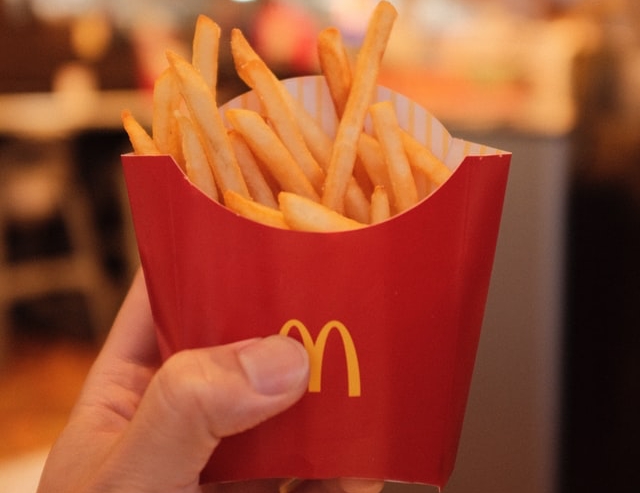
McDonald's Japan recently ran out of french fries that it was forced to sell just small fries in its restaurant outlets. There was a potato shortage that caused the fast-food chain to suspend sales of the popular side.
There were no medium or large-size french fries at McDonald's Japan for days and today, it was reported that the bigger sizes of fries are finally back after a week. According to Kyodo News, the fast-food will bein selling the fries starting 10:30 a.m. on Friday, Dec. 31.
Last Friday, McDonald's Japan's 2,900 stores were only able to sell small fries with their orders. At that time, the company cited disruptions with the potato import from North America because of floodings near the Vancouver port as the cause of the fries shortage. In addition, there was also the logistics disruption worldwide due to the COVID-19 pandemic.
"The suspension caused a great deal of trouble to our customers," McDonald's Japan said in a statement. "We will continue to cooperate with importers and suppliers to ensure stable procurement."
Meanwhile, potatoes were transported to Japan through air to help solve the french fries shortage in the Japanese unit of McDonald's. Bloomberg reported that at least three Boeing 747's brought loads of potatoes to the country and these planes were contracted.
It was Flexport Inc., an American freight forwarder, that helped fly the potatoes through the three planes. "Flexport just contracted to fly three 747 loads of potatoes to Japan to help with the French fry shortage," Ryan Petersen, the freight company's chief executive officer, stated via social media.
With the deliveries, McDonald's Japan said it is expecting the fries shortage to be solved by New Year's Eve. The spokesperson of McDonald's unit in Japan also confirmed to Bloomberg via phone that it will be resuming the sale of medium and large size fries on Dec. 31st.
Meanwhile, the supply shortage in fast-food chains is not just experienced in Japan but in other parts of the world as well. There were cream cheese shortages, chicken shortages, and more. All of these were caused by the global supply chain disruptions due to the pandemic and natural calamities.







