
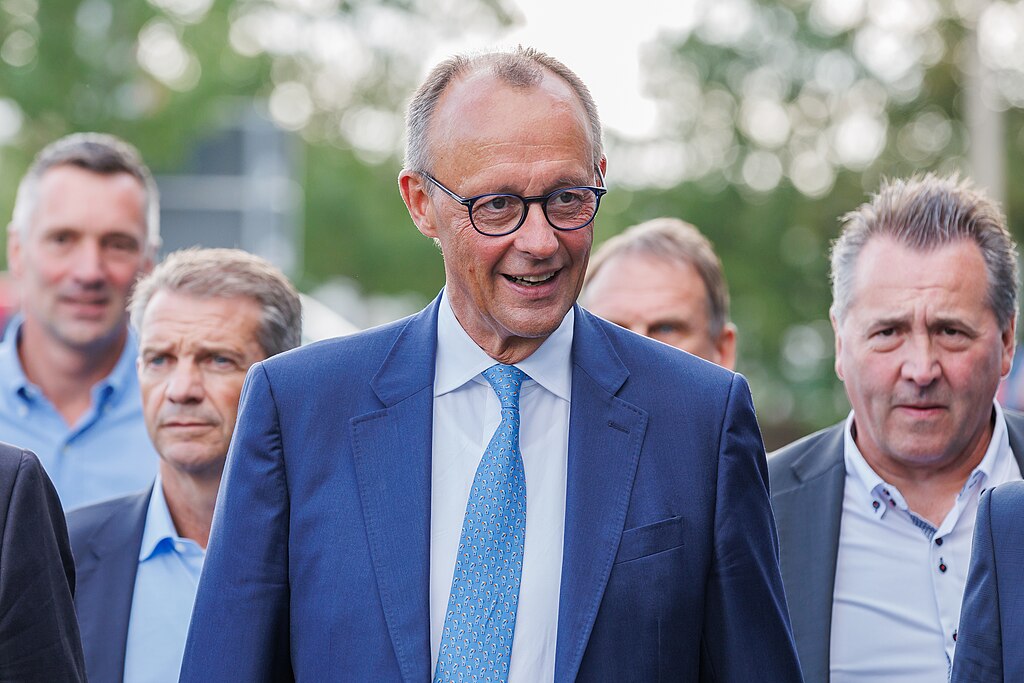
German Chancellor Friedrich Merz has ruled out cooperation with the Alternative for Germany (AfD) after the far-right party scored a historic victory in Saxony-Anhalt, a result he admitted had shaken his Christian Democratic Union (CDU) “to its very foundations.”
The AfD secured nearly 44% of the vote in Sunday’s Saxony-Anhalt state election, winning 39 of 83 legislative seats. Although it fell short of an outright majority, the party is urging individual CDU lawmakers to support its attempt to form a government.
Such an arrangement would mark the first time a far-right party has governed a German state in the postwar era. However, Merz reaffirmed the CDU’s longstanding “firewall” policy, under which mainstream parties refuse to cooperate with the AfD.
“We are all deeply shocked,” Merz said, describing the outcome as one of the CDU’s worst election performances in decades. Despite falling approval ratings and further state elections ahead, the chancellor dismissed suggestions that he should resign and pledged to continue his government’s reform agenda.
AfD co-leader Tino Chrupalla called on CDU legislators to support what he described as a “centre-right conservative majority.” The populist left-wing BSW remains the only major German party to signal potential willingness to cooperate with the AfD.
Immigration, economic insecurity and Germany’s foreign policy featured prominently in the campaign. Both the AfD and BSW oppose continued German military support for Ukraine and advocate rebuilding ties with Russia.
Merz, however, insisted that the election would not change Berlin’s stance toward Moscow or Kyiv. He argued that abandoning Ukraine would weaken European security and threaten Western democratic values.
The AfD performed particularly strongly among male voters, receiving support from 50% of men compared with 39% of women. Party co-leader Alice Weidel called the result a milestone and said the AfD would target at least 40% nationally in Germany’s 2029 election.
The result also generated concern abroad. French Finance Minister Roland Lescure called it a “very, very worrying signal,” warning of a broader populist surge as European governments confront growing political dissatisfaction.


