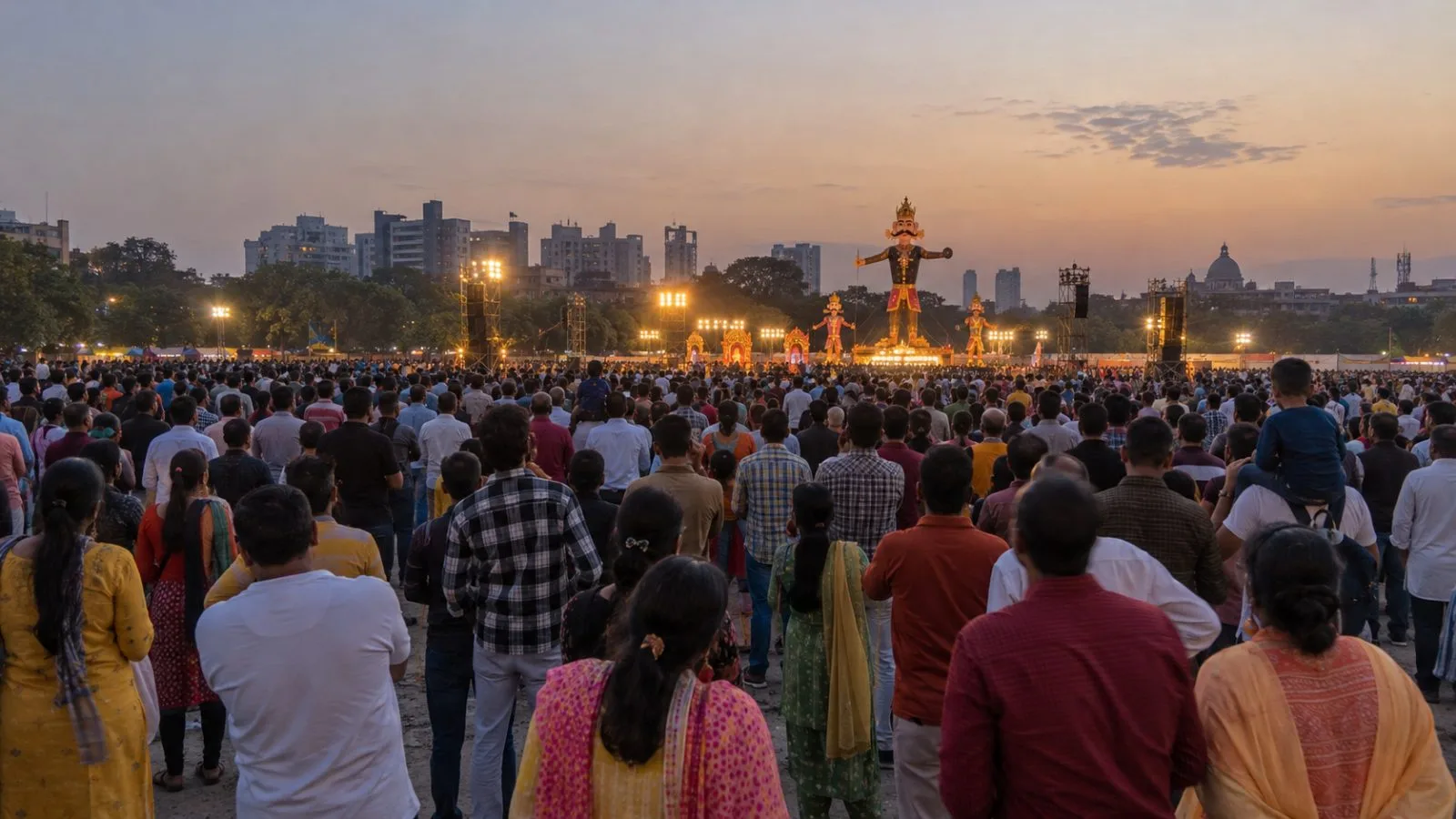
Prime Minister Narendra Modi used India’s Dussehra address in Delhi on Oct. 20 to frame equal treatment and public welfare as tests of governance, tying the appeal to national unity and self-reliance.
The Prime Minister’s Office published an English rendering of the remarks, which were delivered in Hindi, and described it as an approximate translation. In that version, Modi said, “Ram Rajya means a system where there is no discrimination against anyone.”
He presented the ideal as one that provides justice and equal opportunity, and urged public institutions to put citizens first by giving priority to poor and disadvantaged people. The address did not describe a new policy for carrying out those aims.
Modi also connected collective effort and confidence in India’s own resources with his goal of a developed, self-reliant country. He called on political parties and institutions to stand together in the national interest.
The prime minister cited the return of more than 650 ancient idols to India over the preceding 12 years. He also pointed to Deepavali’s addition to UNESCO’s intangible cultural heritage list. UNESCO recorded the inscription on Dec. 10, 2025.
Dussehra, also known as Vijaya Dashami, is associated with Lord Ram’s victory over Ravana, according to India’s tourism ministry. Modi used the celebration to explain his view of governance and public service.
At a Dussehra event in Delhi on Oct. 24, 2023, Modi also called for an end to discrimination and included equal rights and self-reliance in his vision of Ram Rajya. His latest address set out similar priorities but announced no specific measure or timetable.