


 Senate Sets December 8 Vote on Trump’s NASA Nominee Jared Isaacman
  Blue Origin New Glenn Rocket Explodes During Launch Pad Test, Delaying Space Ambitions
  NASA Artemis II: First Crewed Moon Mission Since Apollo Takes Four Astronauts on 10-Day Lunar Journey
  Neuralink Plans High-Volume Brain Implant Production and Fully Automated Surgery by 2026
  Trump Signs Executive Order to Boost AI Research in Childhood Cancer
  Blue Origin’s New Glenn Achieves Breakthrough Success With First NASA Mission
  SpaceX Delays Starship V3 Launch Ahead of Potential Record IPO
  Cogent Biosciences Soars 120% on Breakthrough Phase 3 Results for Bezuclastinib in GIST Treatment
  Eli Lilly’s Inluriyo Gains FDA Approval for Advanced Breast Cancer Treatment
  Is space worth the cost? Accounting experts say its value can’t be found in spreadsheets
  Trump and Merck KGaA Partner to Slash IVF Drug Costs and Expand Fertility Coverage
  FDA Adds Fatal Risk Warning to J&J and Legend Biotech’s Carvykti Cancer Therapy
  SpaceX’s Starship Completes 11th Test Flight, Paving Way for Moon and Mars Missions
  Trump Administration Releases New UFO Files and Apollo Mission Records


 Add as a preferred source on Google
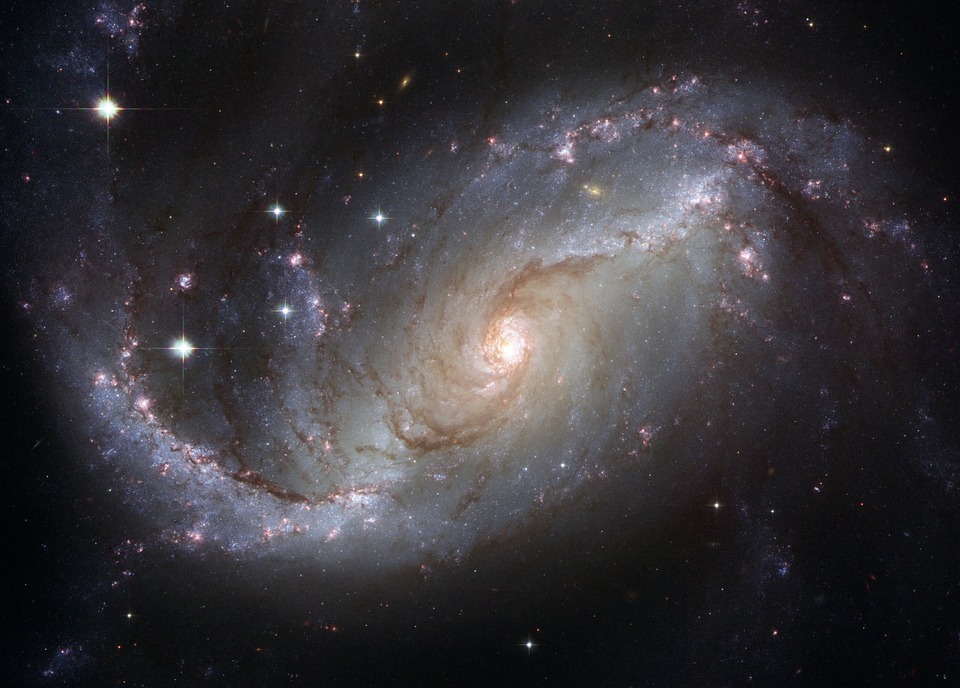
NASA’s Hubble Space Telescope has provided some of the most fascinating images taken from deep space. Now it seems that it has captured another phenomenon happening within the cosmos as it snapped a photo of a whirlpool galaxy.
Express reports that the Hubble took a photo of the whirlpool galaxy referred to as M51 which is located 23 million light-years away. This spiraling galaxy is next to a yellowish galaxy referred to as NGC 5195 and the two galaxies seem to be engaged in a “tug-of-war” according to the report. It may look as if the smaller galaxy is pulling on the arm of the spiral galaxy at first but upon closer inspection, the two galaxies have some space between them.
Nicknamed after its shape of resembling a whirlpool, M51 is also “home to young stars, and its yellow core is where older stars reside,” said NASA.
“Many spiral galaxies possess numerous, loosely shaped arms, which make their spiral structure less pronounced. These arms are star-formation factories, compressing hydrogen gas and creating clusters of new stars.”
As for the smaller galaxy, NGC 5195, the agency revealed that it has been passing by M51 for millions of years. “As NGC 5195 drifts by, its gravitational muscle pumps up waves within the Whirlpool’s pancake-shaped disk,” said NASA. “The waves are like ripples in a pond generated when a rock is thrown into the water.”
This year marks the 30th anniversary of the Hubble Space Telescope since its launch back in 1990. One of Hubble’s most famous photos is of the Pillars of Creation in the Eagle Nebula that was snapped back in 1995. NASA released a photo capturing the phenomenon from a newer angle, sprinkled with many baby stars all around it. “The ghostly outlines of the pillars seem much more delicate, and are silhouetted against an eerie, blue haze,” said the agency in a statement.
Along with revisiting the photo that the Hubble telescope is known for, NASA has launched a site where people can see the image the telescope took on their birthdays. The images will vary, from the Swan nebula to a whirlpool galaxy or even to a field full of stars.







