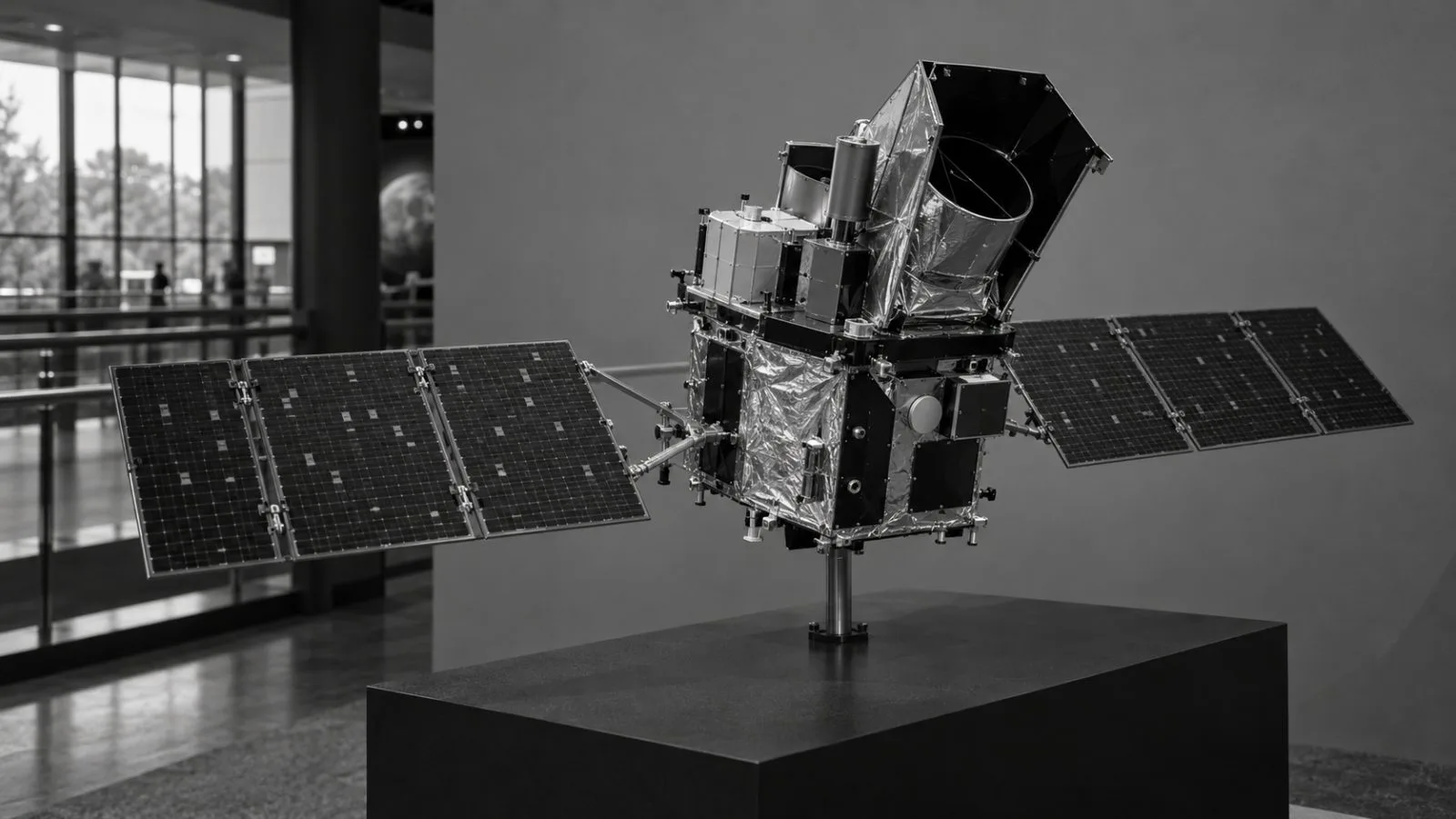
NASA's latest estimate puts the 3,200-pound Neil Gehrels Swift Observatory's re-entry on Nov. 4, while 11 hours of uncertainty leaves the timing and location of any surviving debris unresolved.
The U.S. Space Force (USSF) forecast cited in NASA's Nov. 2 update centers the return on 3:30 a.m. EST on Wednesday, Nov. 4, with 11 hours of uncertainty. That is 8:30 a.m. UTC and 2 p.m. India Standard Time.
NASA expects the atmosphere to destroy most of the observatory, though some components could make it through re-entry. The agency estimates the chance that a person on Earth will be harmed at about one in 2,100.
Swift's low orbital inclination places any surviving fragments within a belt extending 20.6 degrees north or south of the equator, NASA says. The agency has not identified a city or published a projected ground track for debris. NDTV reported that Mumbai and Hyderabad fall within the latitude band, but those cities are not part of NASA's forecast.
The forecast differs from an earlier estimate. The Associated Press reported on Oct. 31 that the U.S. Space Force then expected Swift's return around Friday; NASA's update two days later centered on Nov. 4. EconoTimes previously covered an earlier forecast for Swift's return.
Swift made its final observation Oct. 20 and entered safe mode at an altitude of 171 miles (275 kilometers). NASA said drag at that height made steady telescope pointing difficult, while elevated solar activity accelerated the observatory's orbital decline.
A NASA-Katalyst Space plan to raise Swift's orbit ended before the team could capture the observatory, NASA said, after an attitude-control problem affected the commercial LINK spacecraft. NASA said the effort was intended to extend Swift's work and build experience for future satellite-servicing missions.
Launched Nov. 20, 2004, Swift was designed for a two-year prime mission. NASA says it observed more than 2,000 gamma-ray bursts, studied more than 1,400 supernovae and contributed data to about 7,000 published scientific papers.
NASA says monitoring continues and forecasts will be revised. The agency has not given a time for its next update.