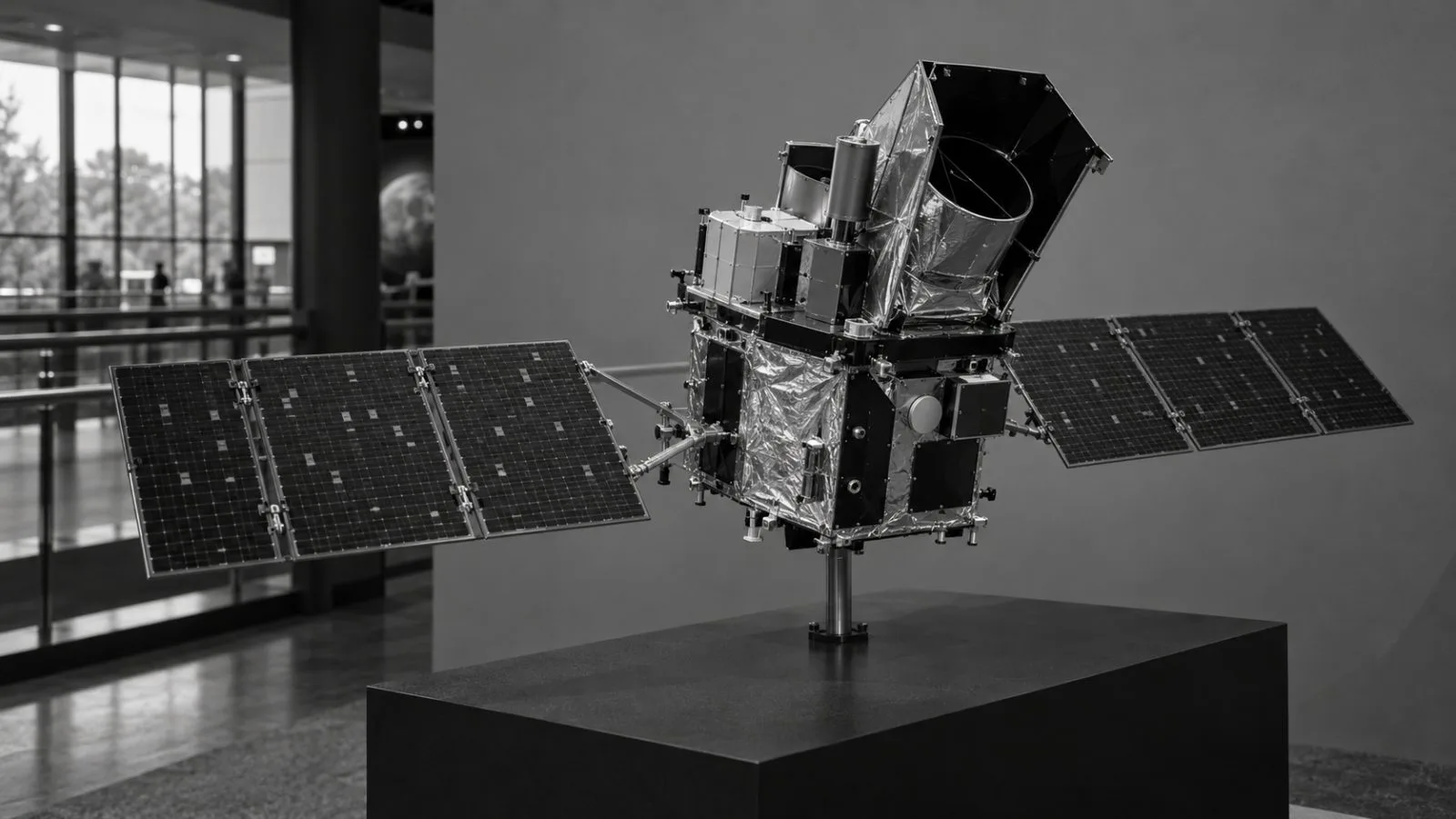
The Independent reported Sunday that the U.S. Space Force expects NASA’s Neil Gehrels Swift Observatory to re-enter Earth’s atmosphere around Friday, following the end of its 22-year observing mission.
NASA linked the spacecraft’s faster orbital decline partly to recent solar activity, which increased atmospheric drag. The agency also said restarting observations after a pause added drag. An effort to raise Swift’s orbit was unsuccessful; EconoTimes previously covered the end of Swift’s science mission.
The Independent said the Space Force is monitoring Swift’s descent. The outlet placed parts of the possible re-entry footprint in Africa, Central and South America, India, Southeast Asia and Australia, and said the exact time and location were not clear.
NASA’s Brad Cenko, Swift’s mission chief scientist, told The Associated Press that most of the observatory should burn up in the atmosphere. He said some dense components and mirror sections could survive, with any surviving pieces most likely to land in the ocean.
Swift launched in 2004 to observe gamma-ray bursts and supernovas. NASA says the observatory recorded more than 2,000 gamma-ray bursts and studied more than 1,400 supernova explosions.