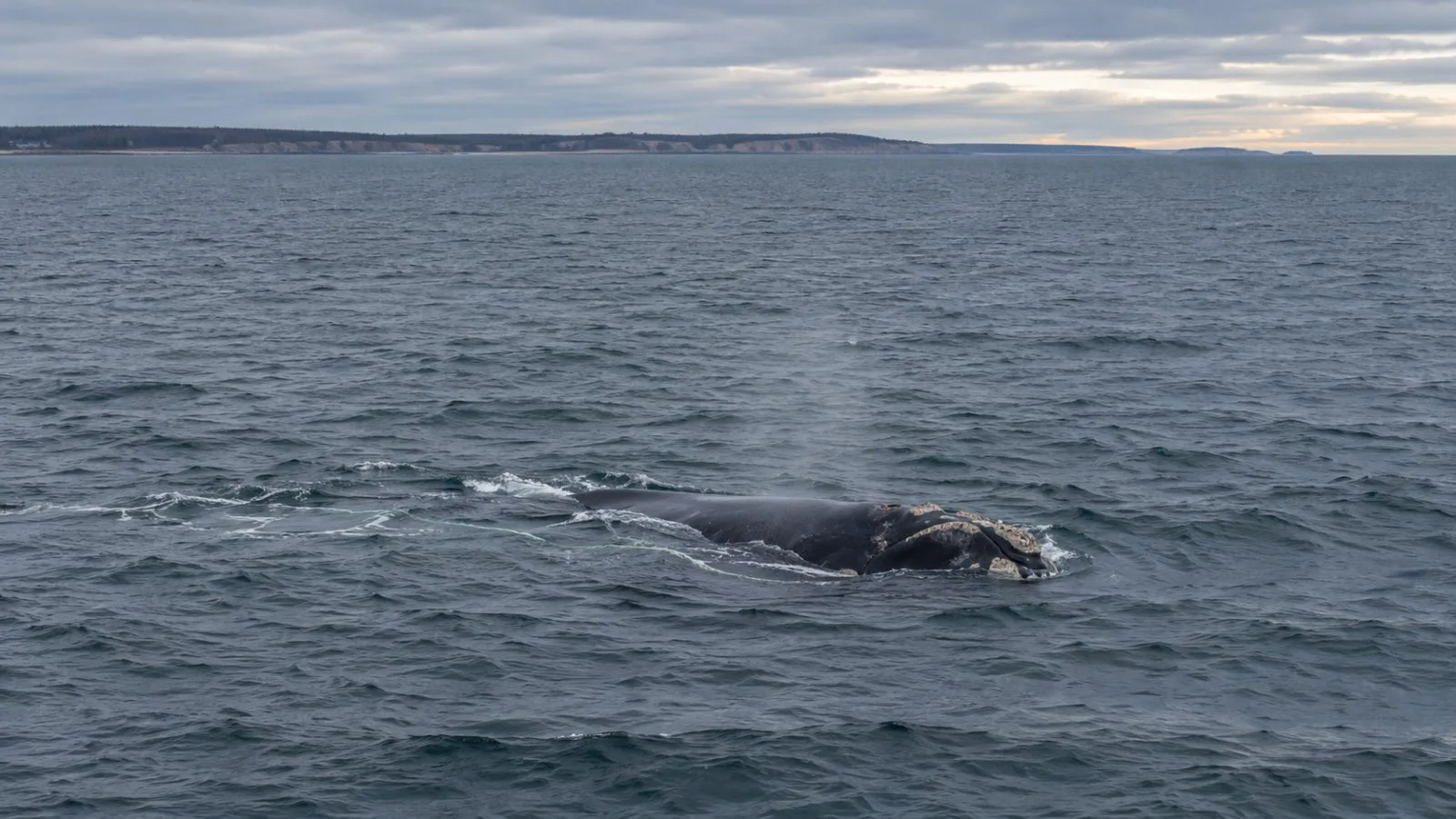
NOAA Fisheries, part of the National Oceanic and Atmospheric Administration (NOAA), said it was notified Oct. 29 of an entangled North Atlantic right whale near Bradelle Bank in the Gulf of St. Lawrence.
NOAA said the whale had not been identified. Fisheries and Oceans Canada (DFO) told The Canadian Press that the gear type was also unknown. The Canadian Press reported that a surveillance flight recorded the whale on Oct. 21 in waters among New Brunswick’s Acadian Peninsula, Prince Edward Island and Quebec’s Îles-de-la-Madeleine. The outlet said reviewers detected the entanglement later and that the whale had not been seen again.
If officials relocate the whale, they plan to attach a satellite tracker to the gear and attempt disentanglement, The Canadian Press reported. DFO says response teams weigh the whale’s behavior and marine conditions before deciding whether an attempt is safe. NOAA asked the public to stay away, saying, “For everyone's safety, the public should not interfere with the response.”
DFO lists the North Atlantic right whale as endangered under Canada’s Species at Risk Act. The department says fishing activity can overlap with whale movements, and that entanglements can seriously harm whales, including by affecting reproduction and population recovery. Damaged or lost gear can also leave fish harvesters with replacement costs, DFO says. Its strategy says certified seafood may earn higher prices, while fisheries without adequate whale protections may face barriers to market access.
NOAA’s October 2025 estimate put the population at 384 whales alive at the start of 2024. The North Atlantic Right Whale Consortium’s 2025 report card gives that estimate a 95% credible interval of 375 to 394.
DFO says right whale deaths and entanglements in the Gulf in 2017 and 2019 led Canada to pledge in 2020 to require lower breaking-strength gear in certain unattended trap and pot fisheries in Atlantic Canada and Quebec, including crab and lobster fisheries.
The department’s strategy sets 2027 as a target for assessing entanglement risk in fixed-gear fisheries in the Gulf of St. Lawrence.