


 UK Finance Minister Healey Calls for Fiscal Discipline Amid Global Risks
  Asian Stocks Mixed as OpenAI Revenue Concerns Hit Chipmakers
  Iran Refuses to Halt Uranium Enrichment Amid US Nuclear Demands
  Dollar Near 18-Month High as Euro, Yen and Pound Weaken
  Gold Prices Rise Above $4,200 as Russia-Ukraine Energy Truce Eases Oil Concerns
  Oil Prices Rise as Hormuz Risks Offset IEA Stock Release
  Oil Prices Rise as Houthi Attacks Threaten Middle East Supply
  Gold Prices Rise as Dollar Weakens, Treasury Yields Fall


 Add as a preferred source on Google
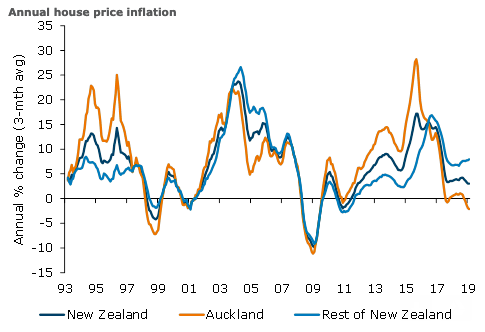
New Zealand’s REINZ house sales is expected to have fallen by 7 percent during the month of February on a seasonally adjusted basis, according to the latest report from ANZ Research, after an eager start to the year (up 13 percent in January). Prices have nudged higher to start the year, but this is expected to be short lived.
Slack in the Auckland market has increased, which is likely to see weakness there continue. Meanwhile, some provincial markets are seeing solid house price increases. Affordability constraints are being felt and investors are wary (with a possible capital gains tax no doubt contributing).
Credit availability does not appear to be a particular constraint, though proposed changes in bank capital requirements will likely weigh if implemented. Prices have been boosted by easing in LVR restrictions and falls in mortgage rates late last year, but this lift is expected to prove temporary. Annual house price inflation is stable at 3 percent, ANZ Research reported.
Days to sell lengthened nationwide from 39 to 40 days, reflecting increased slack in the Auckland market, where days to sell lengthened from 43 to 49 days. Days to sell at this level is the longest it has been in Auckland since the 2008/09 recession.
While slack at this level may not linger reflecting usual volatility in the data, it does suggest that weakness in prices may continue for a while yet – though price declines are expected to remain gradual, the report added.
Meanwhile, Auckland house prices rose 0.5 percent m/m in February, but they are down 0.5 percent over the past three months and more than 2 percent over the past year.
In the rest of New Zealand, prices were up 0.9 percent (8.2 percent y/y). Prices have seen a solid lift over the past three months, up 2.2 percent. All regional housing markets outside Auckland and Canterbury remain tight. Hawke’s Bay, Manawatu-Whanganui, West Coast and Southland have seen particularly large increases over the past three months.
Image Courtesy: ANZ Research







