


 GSK Unveils $2.52 Billion Cost-Cutting Plan to Accelerate Drug Pipeline
  Rapidus Seeks Chip Customers as Japan Pushes 2nm Semiconductor Revival
  SK Biopharmaceuticals Secures Global Rights to Biohaven Epilepsy Drug Opakalim
  Paramount Skydance Completes $110 Billion Warner Bros Discovery Deal
  DogecoinVM Makes DOGE Transactions 300x Faster
  The American mass exodus to Canada amid Trump 2.0 has yet to materialize
  Iran Tanker Attacks Surge as Hormuz Oil Flows Near Prewar Levels
  1 in 3 uni students experience serious financial hardship. Could concession cards for all help?
  Moderna Short Sellers Hit With $4.8 Billion Loss as Stock Soars
  AstraZeneca Q2 Earnings Beat Forecasts as Oncology Growth Supports 2026 Outlook
  China Shuts 670 Banks as Bitcoin Eyes Financial Risks
  Litecoin Marks 15 Years as Grayscale Backs LTC ETF Push
  RBI Raises Repo Rate to 5.50% in Hawkish Shift on Inflation Risks
  Want to cut your energy bills? Here’s how five experts are doing it
  Trump Signs Order to Cut Routine Childhood Vaccines


 Add as a preferred source on Google
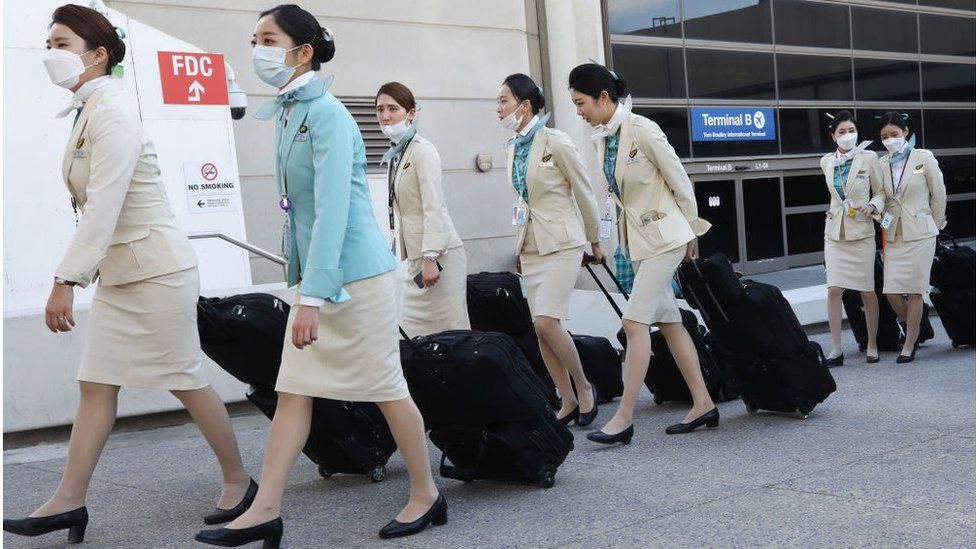
The South Korean government will lift the requirement of wearing protective clothing for flight attendants on international routes from next month in an effort to hasten a return to normalcy for flights abroad.
The Ministry of Land, Infrastructure and Transport intends to notify airlines shortly about the recommendations for relaxing COVID-19 restrictions on overseas flights.
Beginning April 2020, South Korean airlines have required international flight crews to wear gloves and protective suits over their uniforms before passengers board.
International flight attendants were also obliged to wear goggles while traveling to locations with a high frequency of COVID-19 infections. After the planes land, the protective garments are discarded onboard.
Airline cabins have also been disinfected before each journey. The government intends to reduce cabin disinfection frequency to twice a month, a level seen prior to the outbreak.
Airlines have also been burdened by the expense of specific chemicals required to sanitize cabins before the flight, as well as added personnel expenditures.
Meanwhile, the issue of fairness has arisen since the disinfection methods for international flights are more stringent than those for domestic flights and public transportation such as buses, subways, and trains.







