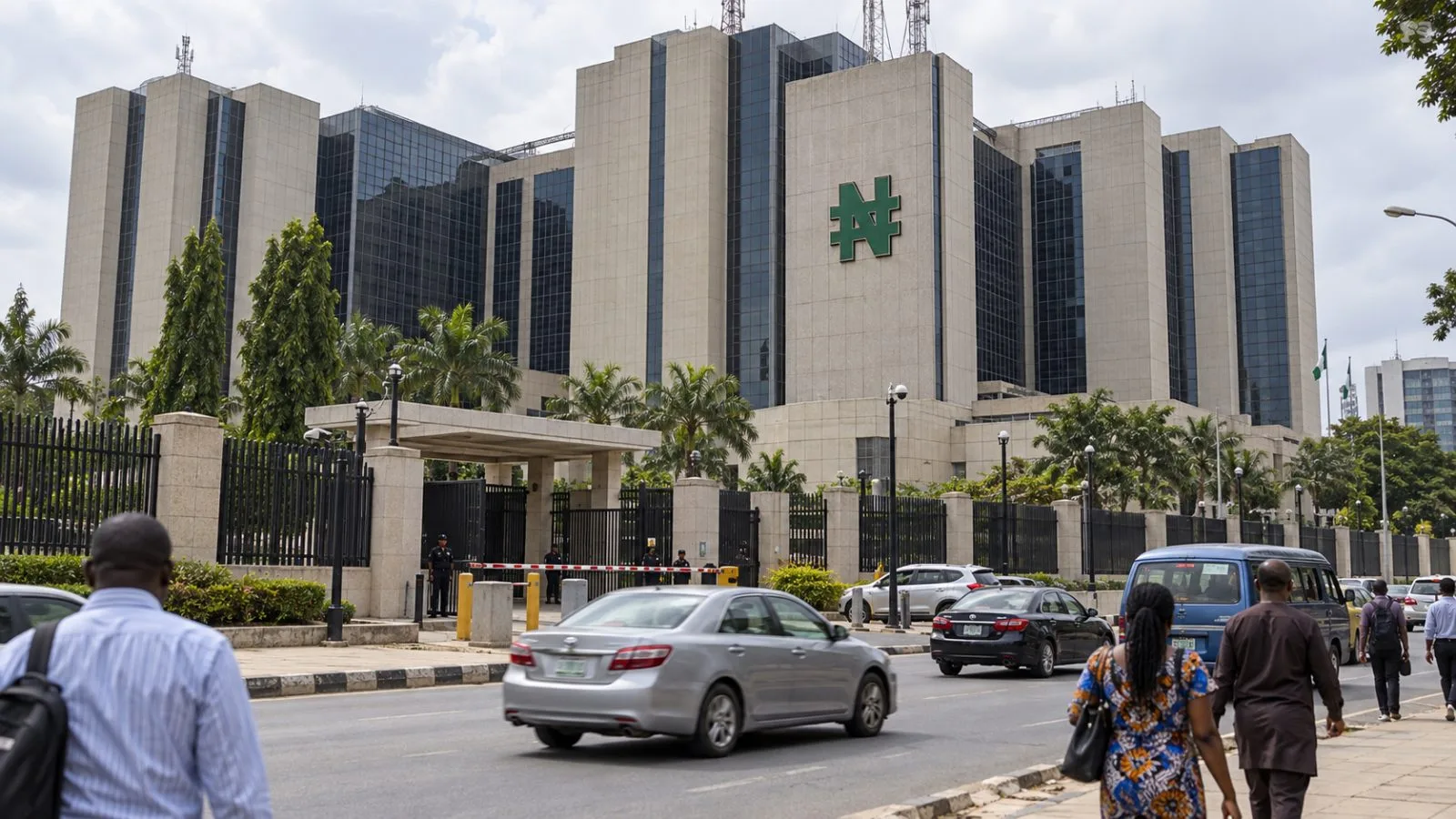
Nigeria's foreign-exchange inflows rose 12.7% in the first half of 2026 while the Central Bank of Nigeria's (CBN) reported dollar sales fell to $1.67 billion, giving different signals about currency supply.
BusinessDay and Nairametrics reported the sales total, down from $5.41 billion in the first half of 2025. Both attributed the figure to data in the CBN's Q2 2026 Statistical Bulletin. BusinessDay's comparison of first-half sales from 2022 to 2026 identified this year's $1.67 billion as the lowest in that five-year period.
Vanguard's analysis of CBN data put aggregate foreign-exchange inflows at $63.82 billion, up from $56.62 billion a year earlier. Autonomous-source inflows were $45.5 billion, compared with $38.3 billion. Inflows through CBN channels edged down to $18.28 billion from $18.33 billion.
The sales and inflow totals track different activity: one records the CBN's foreign-exchange sales, while the other counts inflows reported through CBN and autonomous channels. The two measures can move in different directions without describing the same transactions.
The CBN says it consolidated foreign-exchange market segments into the Nigerian Foreign Exchange Market under a “willing buyer, willing seller” model on June 14, 2023. The bank said the reform aimed to improve price discovery, transparency and investor confidence.
In comments to BusinessDay, Ayodeji Ebo, chief executive officer of MDU Capital, pointed to relative exchange-rate stability and attractive naira yields as factors supporting foreign portfolio investment and prompting some dollar holders to shift funds into naira. He said steadier rates can help businesses plan import costs, while warning that portfolio flows may reverse.