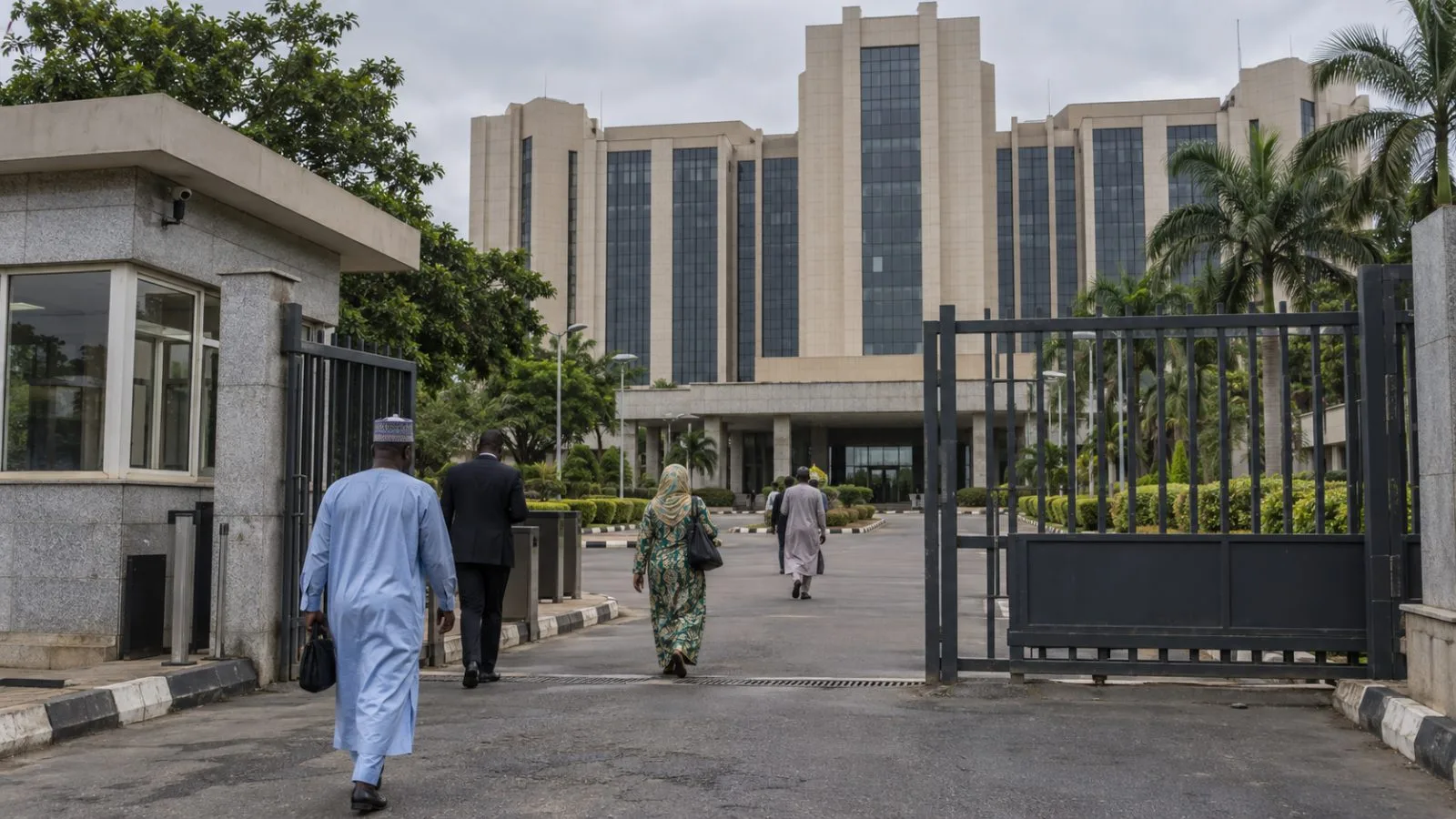
Nigeria’s finance ministry disputes the World Bank’s interest-to-revenue comparison, while the Budget Office of the Federation (BOF) archive lists no quarterly execution report later than Q3 2025, leaving later figures absent from its public record.
For the first six months of 2026, the bank puts federal interest expense at ₦7.7 trillion and federal revenue at ₦6.2 trillion. That is roughly 124% of revenue, a difference of ₦1.5 trillion. For January-June 2025, the update lists ₦5.6 trillion in interest and ₦3.6 trillion in revenue.
In an Oct. 18 statement, the Federal Ministry of Finance (FMF) said the comparison counts interest on obligations the federal government services for other tiers, including states’ external borrowing, while leaving out some agency receipts not yet remitted to the Treasury. The ministry gave no adjusted ratio for the first half of 2026.
From 2023 through 2025, real federation revenue growth accrued chiefly to states, according to a World Bank presentation, but their spending responses were not uniform.
The BOF archive contains quarterly entries for Q1, Q2 and Q3 2025. Its Q3 report is dated Aug. 24, 2026, and the archive shows no Q4 2025 or 2026 report. The gap leaves the public archive without a newer quarterly record of how approved budgets were executed.
Sections 30 and 50 of Nigeria’s Fiscal Responsibility Act require quarterly budget execution reports within 30 days after each quarter ends. Reports for Q4 2025, Q1 2026 and Q2 2026 were due Jan. 30, April 30 and July 30, respectively. The Q3 2026 report is due Oct. 30.
The Debt Management Office (DMO) separately reported public debt of ₦166.788 trillion as of June 30, 2026, including federal, state and Federal Capital Territory obligations. That is an outstanding-debt total, separate from the disputed interest-to-revenue ratio.