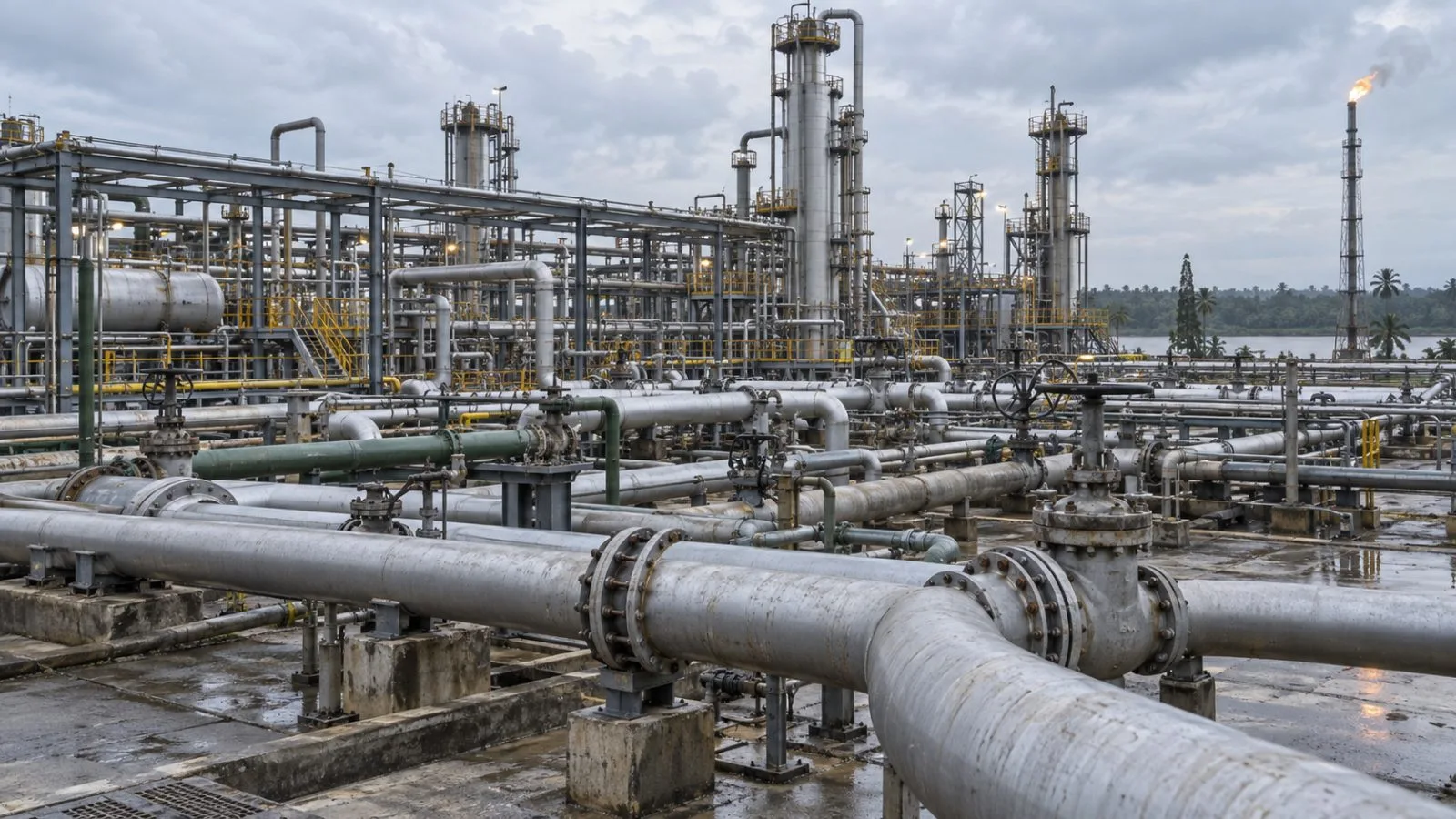
January 2026 figures from the Nigerian Upstream Petroleum Regulatory Commission (NUPRC) put Nigeria’s proven and probable gas reserves at 215.19 trillion cubic feet, while BusinessDay said closer links to local economic activity could benefit Nigeria.
BusinessDay framed the country’s gas resources as a potential source of domestic gains if they were more closely connected to the local economy. The reserve figure covers proven and probable gas.
The Natural Resource Governance Institute (NRGI) projected that Nigeria’s output would rise by about 1.3 billion cubic feet a day by 2030 in its scenario with the largest increase. That is below the Decade of Gas initiative’s target of adding 4.6 billion cubic feet a day compared with 2020 production. The figures and forecast were covered in an earlier EconoTimes report on Nigeria’s gas output outlook.
NRGI projected domestic users would receive 20% to 30% of the additional gas, with exports taking the larger share. The institute’s forecast also cited obstacles to domestic investment. Nigeria launched the Decade of Gas initiative in 2021 with the aim of building a gas-powered economy by 2030 through investment, infrastructure and policy changes. NRGI says the initiative follows the 2008 Gas Master Plan and the 2017 National Gas Policy.