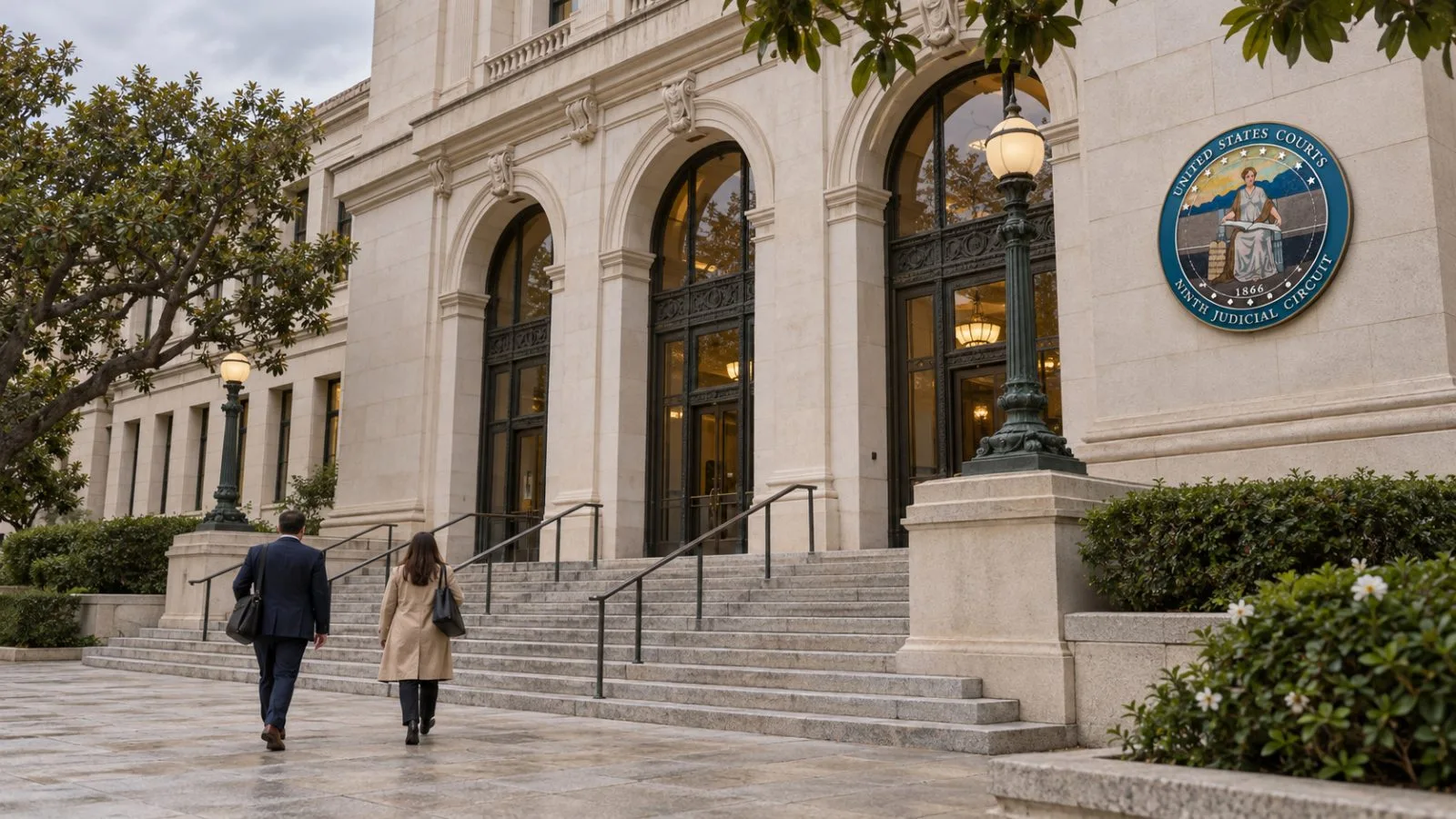
A Ninth Circuit panel on Friday rejected the Justice Department’s emergency bid to separate California mail ballots linked to a federal list, leaving election officials’ current procedures intact as voting proceeds.
The U.S. Department of Justice (DOJ) asked the court to require California and Los Angeles County to set aside ballots associated with more than 20,000 people the department described as likely noncitizens, then verify their citizenship before counting them. Federal law bars noncitizens from voting in federal elections, but the majority said the statute does not specify how states must handle citizenship challenges. The ruling does not determine how many listed people submitted ballots or establish that anyone on the list is a noncitizen.
The majority also found the government had not adequately demonstrated the list’s accuracy. It left intact U.S. District Judge David O. Carter’s assessment that the government had not explained how often the list misidentified people or compared it with a dependable reference. The panel cited the risk of requiring new procedures while ballots were being processed. Carter found Los Angeles County could not implement the changes consistently by Election Day and that they could jeopardize California’s Dec. 11 certification deadline. His order said the county had mailed about 5.9 million vote-by-mail ballots and processed more than 331,000 by Oct. 13.
The court invoked the Purcell principle, which cautions against changing election rules close to Election Day. The DOJ argued that counting ballots from ineligible voters could dilute eligible voters’ votes; the court also weighed the risk that eligible ballots could be wrongly withheld and vote counting disrupted.
Judge Patrick J. Bumatay dissented, saying the ruling “undermines the federal government’s interest in promoting election integrity.” He cited a federal recheck that he said found none of the sampled voters were born in the United States, while a Los Angeles County sample indicated nearly 40% were. The majority described the evidence as conflicting.
The appeals ruling follows Carter’s Oct. 28 rejection of the initial request, covered in EconoTimes’ earlier report. Carter appointed technical special master Daniel B. Garrie and set a district court hearing for Nov. 13 at 10 a.m. PST (18:00 UTC) on motions to dismiss and the DOJ’s request for a preliminary injunction. Parties must submit witness lists addressing the federal list’s reliability and methodology by Nov. 6.