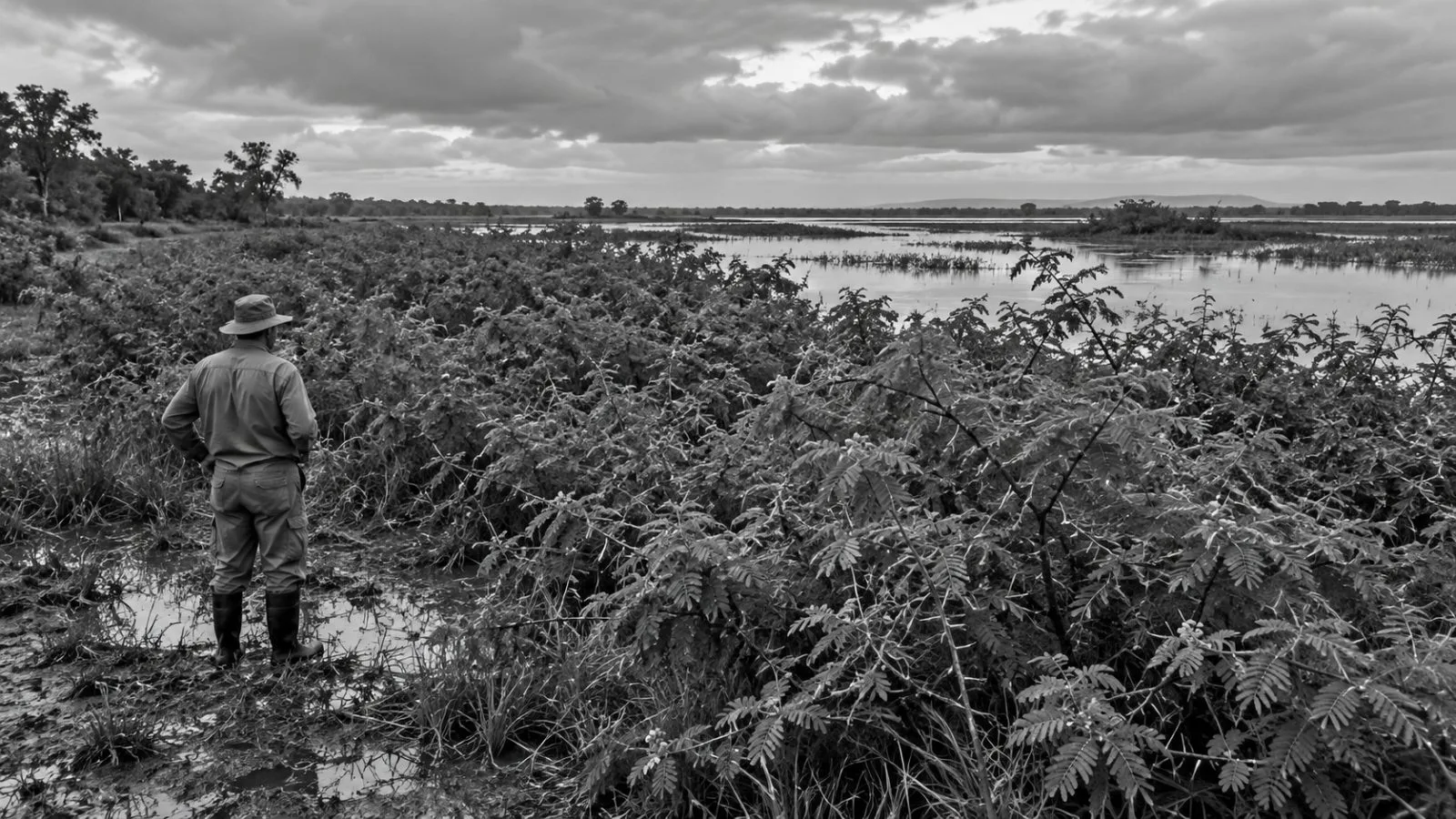
Invasive mimosa (Mimosa pigra) affects up to 140,000 hectares in Australia's Northern Territory, the government estimates, where land managers face control duties as up to 4.6 million hectares nationwide remain at risk.
The national estimate measures land vulnerable to infestation, rather than the area already affected. The territory says mimosa has spread through 15 catchments and reached three islands. It estimates the affected area represents about 10% of its wetlands.
Dense thickets can displace grassland, reduce the land available for floodplain grazing and make livestock mustering harder, according to the territory. The plant can also limit Indigenous people's ability to harvest bush food.
A single plant can produce 200,000 seeds annually. Some remain dormant in sandy soil for up to 20 years. Water can disperse them, and they can also travel on vehicles, machinery, animals and people.
Mimosa was brought to the George Brown Darwin Botanic Gardens in the late 1800s as an ornamental plant because its leaves fold when touched. By the mid-1960s, it had reached the Adelaide River catchment.
The shrub has been recorded beyond the Northern Territory. The territory's public page lists sites near Proserpine, Queensland, and Kununurra, Western Australia. A Queensland Herbarium specimen collected at Lake Samsonvale on Dec. 12, 2025, records another Queensland site. ABC News reported on Feb. 11, 2026, that surveillance there had identified thousands of plants and seedlings.
A 2015 study of giant mimosa clearing found that clearing it took 11 days per hectare.
In the Northern Territory, the 2023–2033 weed plan requires landowners and occupiers to eradicate mimosa in Class A areas and curb its growth and spread in Class B areas. The management guide advises yearly checks and further treatment where plants reappear.