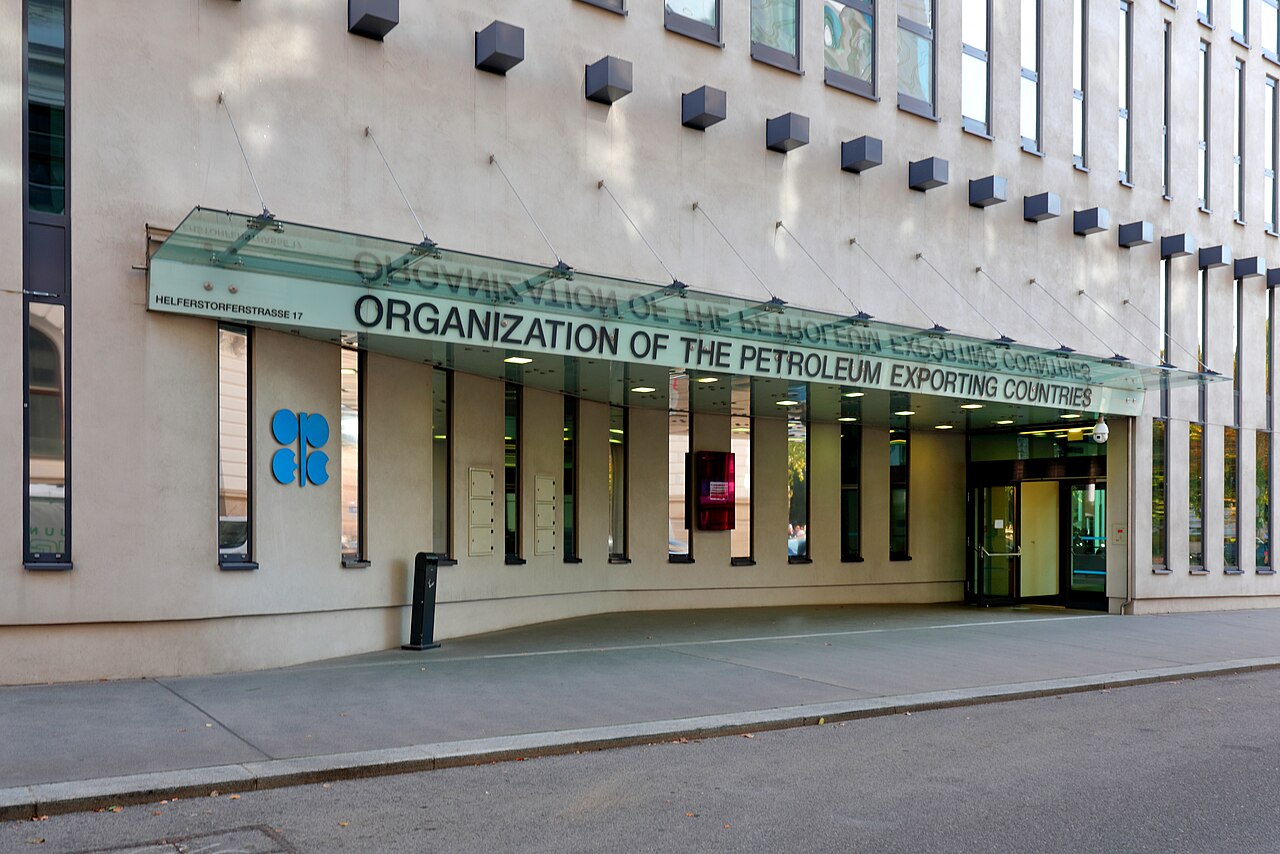
OPEC+ has agreed to maintain its existing oil production targets for November, keeping supply policy unchanged as Middle East disruptions continue to limit actual output from several major producers.
Seven core OPEC+ members — Saudi Arabia, Russia, Iraq, Kuwait, Algeria, Kazakhstan and Oman — confirmed the decision during a brief online meeting on Sunday. The move was widely expected, with significant changes to production policy considered unlikely before 2027.
Gulf producers remain well below their assigned quotas as the U.S.-Israeli war with Iran continues to disrupt regional oil exports. Shipments have fluctuated between 60% and 80% of normal levels in recent months, leaving the global crude market tight despite signs of improving flows through the Strait of Hormuz.
UBS analyst Giovanni Staunovo said keeping production ceilings unchanged matched market expectations, but noted that actual OPEC+ output remains significantly below quota because of continuing disruptions.
Oil prices fell on Friday after European leaders agreed to U.S. President Donald Trump’s request to release diesel reserves. However, Brent crude remains above $100 per barrel, compared with roughly $73 before the Iran war began in late February.
OPEC+ has increased production targets during much of 2026 after years of supply cuts, but many of those planned increases have not translated into additional barrels because of the conflict. The seven core producers pumped about 25 million barrels per day in August, up 630,000 bpd from July but still approximately 5 million bpd below February’s prewar level, according to OPEC data.
The conflict has also delayed an OPEC+ production capacity review that will play a key role in determining members’ 2027 quotas. Uncertainty surrounding future output potential has complicated that assessment.
OPEC+ still has roughly 2 million bpd of production cuts covering most members. The seven producers are scheduled to meet again on November 1.
Separately, the Joint Ministerial Monitoring Committee met Sunday to assess oil market conditions. The committee monitors compliance and market developments but does not directly set OPEC+ production policy.