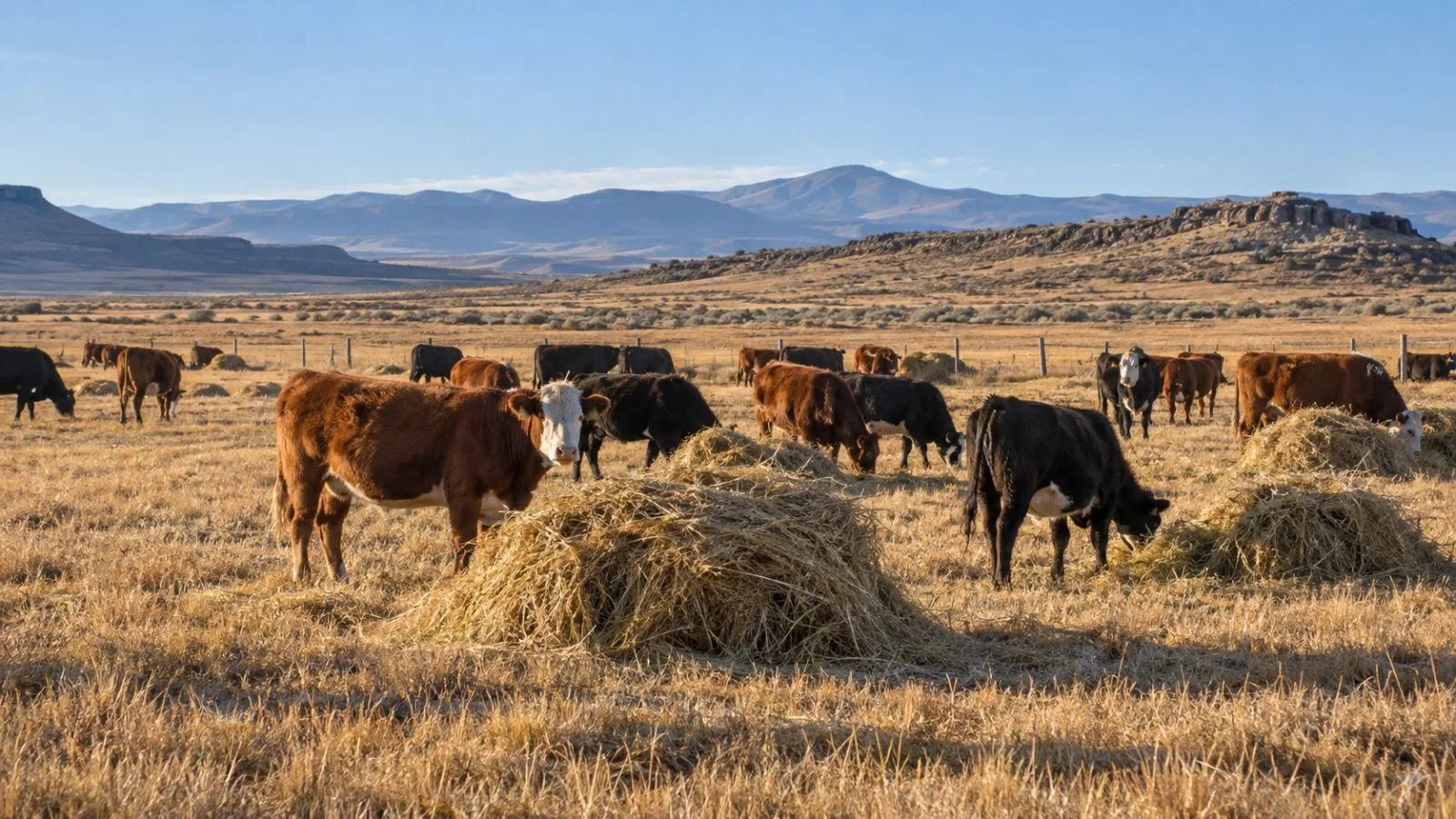
NPR reported that drought-shortened hay and wildfire damage to mountain pasture left Harney County rancher Katie Baltzor considering next year's feed costs after she returned cattle about seven weeks early.
Baltzor brought the cattle home in the third week of July, rather than the second week of September, after fires burned grazing land she normally uses, NPR reported. Drought had also limited her hay crop: She told NPR some fields got too little water to cut, while others produced only a short crop.
Baltzor said filling a tractor with diesel cost about $300. “Fuel costs, parts costs, everything has gone up,” she told NPR. She and her husband used rakebunching, which gathers pasture hay into piles in the field, to reduce tractor passes. Baltzor said the method could leave them with less hay stored for later.
If precipitation and irrigation water remain inadequate, Baltzor said she may need to buy hay next year. NPR reported that she also said calf prices had risen but not enough to keep pace with inflation. Ranchers who keep a heifer to replace an older cow wait about two years for it to produce a calf, she told the outlet.
The U.S. Energy Information Administration (EIA) reported a West Coast retail diesel average of $7.394 per gallon for the week ending Oct. 19, down from $7.456 for the week ending Sept. 21. Those figures cover the region, not Oregon alone.
Oregon Gov. Tina Kotek declared a drought emergency in Harney and four other counties in June. The governor’s office said 82% of Harney County was in moderate to severe drought as of May 19, including 6% in severe drought. The Oregon Water Resources Department cites historically low snowpack, one of the warmest winters in state history and precipitation deficits over several years as factors behind the 2026 drought.
The department compared conditions with 2015, when 25 of Oregon’s 36 counties received state emergency drought declarations. Harney County’s declaration is set to run through Dec. 31. The International Energy Agency said in its October Oil Market Report that record diesel prices were raising goods costs and affecting real incomes, economic activity and inflation. The EIA’s next weekly fuel-price release is scheduled for Oct. 27.