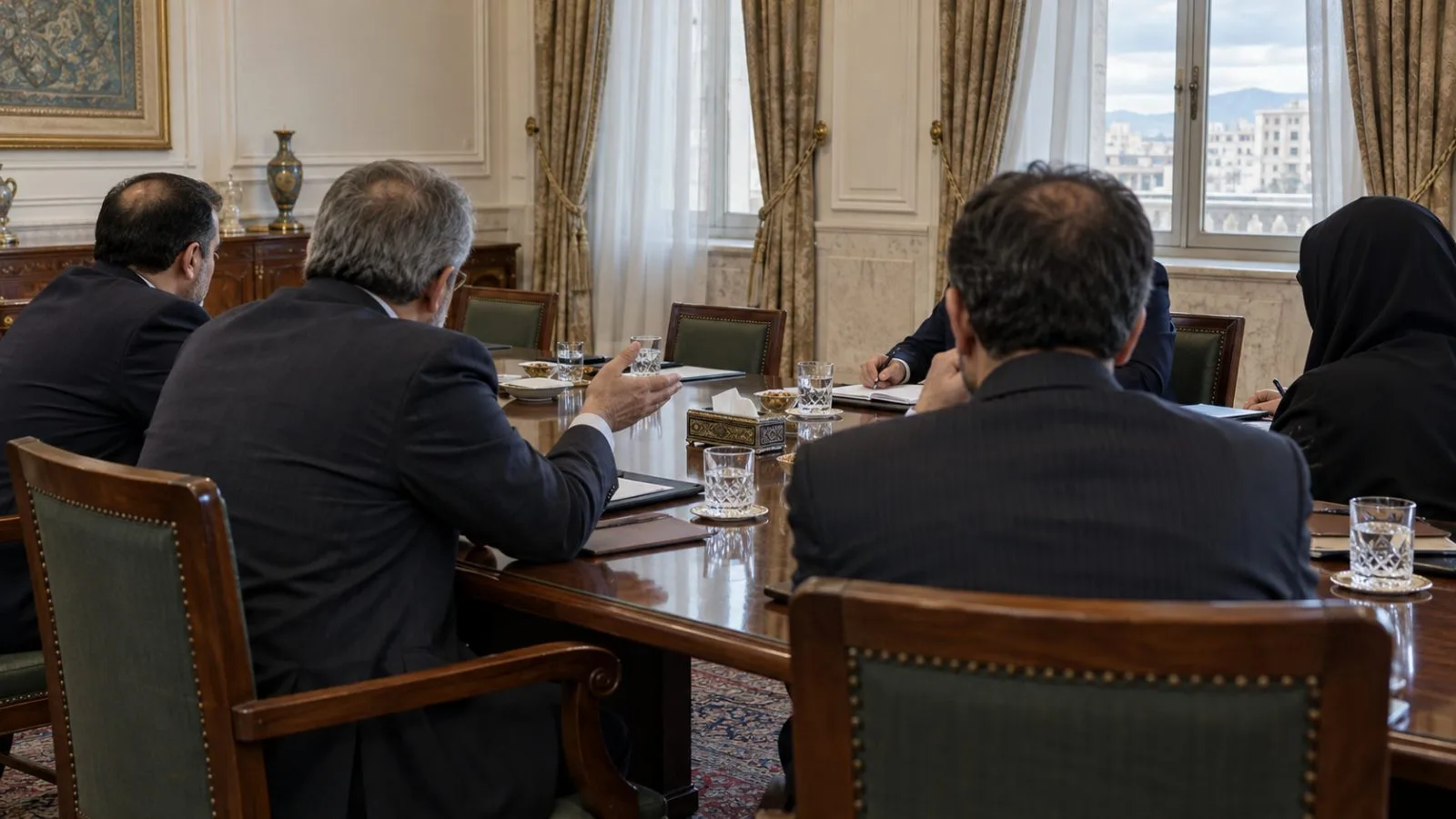
Pakistan Army Chief Field Marshal Syed Asim Munir met four senior Iranian officials in Tehran on Oct. 20, as Islamabad sought to keep mediation open and Tehran restated terms for talks with Washington.
Parliament Speaker Mohammad Bagher Ghalibaf said the United States must meet seven conditions Iran presented in New York to rebuild Tehran’s trust. The meeting account did not list the conditions. Mohsen Rezaei, secretary of Iran’s Supreme National Security Council (SNSC), said Iran would keep its enriched nuclear material in the country and that Washington needed to take steps to rebuild trust before talks.
Munir also met President Masoud Pezeshkian and Foreign Minister Abbas Araghchi. Pakistan’s Deputy Prime Minister and Foreign Minister Muhammad Ishaq Dar said Islamabad would continue its mediation effort. EconoTimes previously reported on Munir’s arrival and meetings with Iranian leaders.
The New Arab reported on Oct. 20, citing unnamed sources, that Pakistan and Qatar had proposed a plan involving an unannounced International Atomic Energy Agency visit and Iran receiving interest earned on $6 billion in Iranian funds held in Qatar. The outlet also reported positive responses from both capitals. The official meeting accounts did not announce those terms or a new agreement.
Qatar said its mediation channel remained active. Ibrahim bin Sultan Al Hashmi, director of the Media and Communication Department at Qatar’s Ministry of Foreign Affairs, warned that further escalation could harm the region, the global economy and energy supplies. He said people in the region, including Iranians, would suffer most if a mine exploded in the Strait of Hormuz, a vessel spilled oil or internet cables were severed.
In a Sept. 25 CBS interview, Pezeshkian said Iran and the United States signed an Islamabad memorandum in mid-June. He said implementation of a seven-day proposal would start after Washington accepted it; the interview described reopening the Strait of Hormuz after seven days if Iran’s conditions were met. The official accounts of Munir’s meetings announced no agreement.