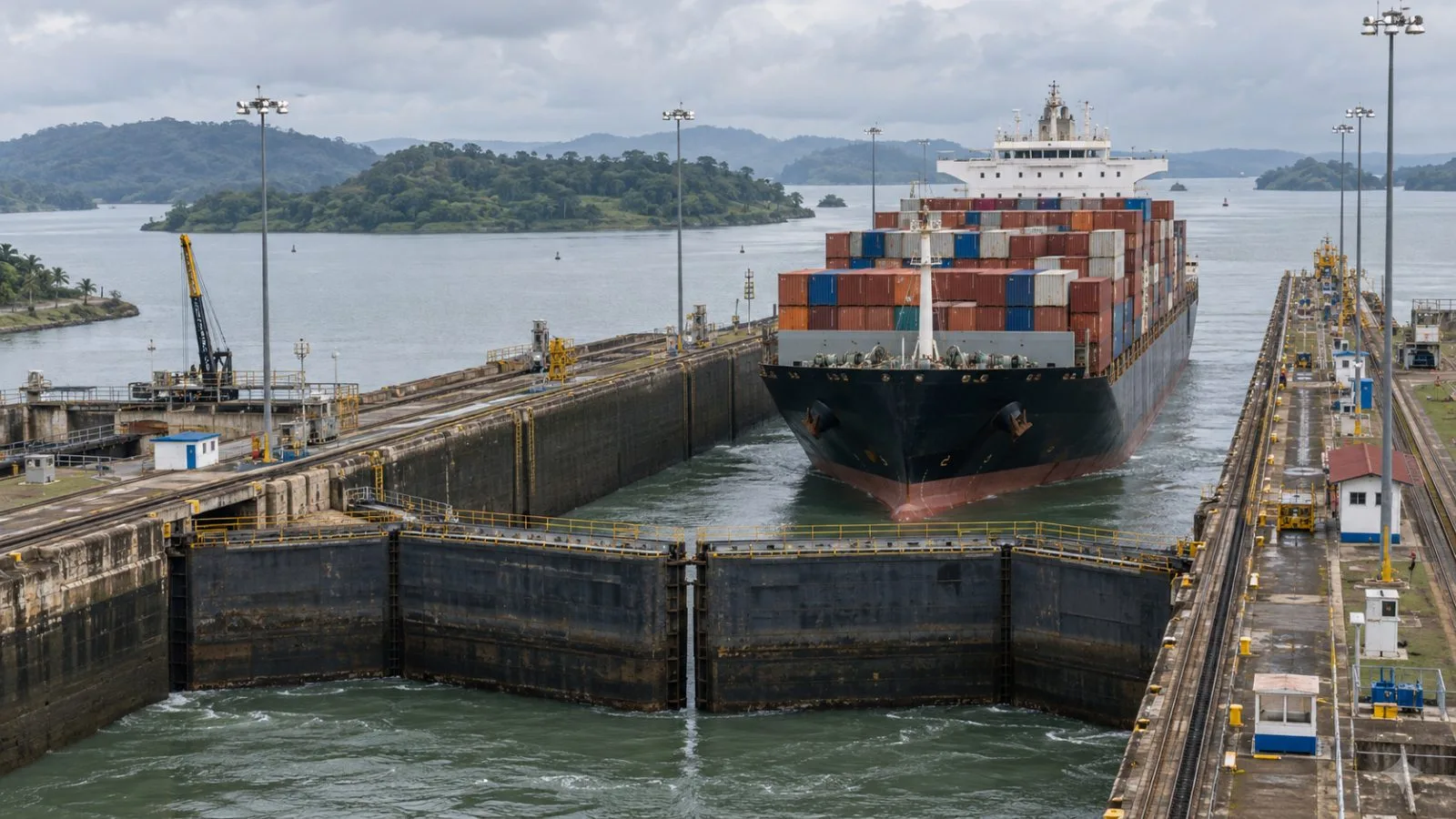
The Panama Canal Authority restored one daily booking slot after rainfall improved, but persistent watershed shortages continue to constrain a waterway that serves shipping and Panama’s public water supply.
The authority raised the maximum permitted draft for Neopanamax vessels to 14.94 meters (49 feet) on Sept. 28, then increased available daily transit slots from 32 to 33 starting Oct. 15. It said the watershed still had a water deficit. The slot count reflects available bookings, not completed crossings; vessels without reservations have no guaranteed transit date and could wait indefinitely.
The shortage reaches beyond shipping. Water stored in Gatún and Alajuela lakes serves canal operations and more than half of Panama’s population, the authority says. The canal contributed 2.965 billion balboas directly to the national Treasury in fiscal 2025, linking water availability to public finances as well as trade.
The strain is visible in at least one farming account. The Guardian reported that Azuero dairy farmer Robert Delgado’s milk production had fallen by half and that he was selling cattle as water and grazing diminished. Panama’s Ministry of Agricultural Development announced an $8.2 million support plan on Sept. 28, including $2.4 million in planned feed purchases intended to help 3,106 livestock producers.
Panama’s proposed Río Indio reservoir is a longer-term response to water needs. The canal authority estimates a cost of 1.5 billion balboas and says about 2,500 people in 550 families across 38 communities would need to relocate. Its proposed fiscal 2027 budget includes 82 million balboas in project spending and expects initial compensation and resettlement work, along with a design-and-construction tender, during that fiscal year. The authority estimates construction would take about six years.
The canal authority says rainfall in its watershed was nearly 30% below normal in 2023, its third-driest year. A World Weather Attribution analysis of that drought identified El Niño and rising water demand as pressures, with population growth and leaking infrastructure also contributing. The study did not establish human-caused climate change as the source of an observed regional drying pattern; it examined 2023, not the current shortfall.
The Instituto de Meteorología e Hidrología de Panamá (IMHPA) forecast rainfall deficits of up to 55% nationally from July through December. In an Oct. 8 outlook, the U.S. Climate Prediction Center (CPC) put the chance of a historically strong El Niño during October through December at 83% and cautioned that local impacts were uncertain. The CPC’s next outlook is scheduled for Nov. 12.