


 How to support someone who is grieving: five research-backed strategies
  Office design isn’t keeping up with post-COVID work styles - here’s what workers really want
  Disaster or digital spectacle? The dangers of using floods to create social media content
  Why financial hardship is more likely if you’re disabled or sick
  AI is driving down the price of knowledge – universities have to rethink what they offer
  Debate over H-1B visas shines spotlight on US tech worker shortages
  The ghost of Robodebt – Federal Court rules billions of dollars in welfare debts must be recalculated
  The Beauty Beneath the Expressway: A Journey from Self to Service
  Locked up then locked out: how NZ’s bank rules make life for ex-prisoners even harder
  Time to buy local: war fuel price shocks reveal the folly of a long food supply chain
  Heritage, desire and diplomacy: why China still values scotch whisky
  Want to cut your energy bills? Here’s how five experts are doing it
  Glastonbury is as popular than ever, but complaints about the lineup reveal its generational challenge
  Britain has almost 1 million young people not in work or education – here’s what evidence shows can change that


 Add as a preferred source on Google



Welcome aboard the roller coaster of parenthood, where emotions run wild, tantrums reign supreme and love flows deep.
As children reach toddlerhood and beyond, parents adapt to manage their child’s big emotions and meltdowns. Parenting terminology has adapted too, with more parents describing their child as “dysregulated”.
But what does this actually mean?
More than an emotion
Emotional dysregulation refers to challenges a child faces in recognising and expressing emotions, and managing emotional reactions in social settings.
This may involve either suppressing emotions or displaying exaggerated and intense emotional responses that get in the way of the child doing what they want or need to do.
“Dysregulation” is more than just feeling an emotion. An emotion is a signal, or cue, that can give us important insights to ourselves and our preferences, desires and goals.
An emotionally dysregulated brain is overwhelmed and overloaded (often, with distressing emotions like frustration, disappointment and fear) and is ready to fight, flight or freeze.
Developing emotional regulation
Emotion regulation is a skill that develops across childhood and is influenced by factors such as the child’s temperament and the emotional environment in which they are raised.
In the stage of emotional development where emotion regulation is a primary goal (around 3–5 years old), children begin exploring their surroundings and asserting their desires more actively.

A child’s temperament and upbringing affect how they regulate emotions. bluedog studio/Shutterstock
It’s typical for them to experience emotional dysregulation when their initiatives are thwarted or criticised, leading to occasional tantrums or outbursts.
A typically developing child will see these types of outbursts reduce as their cognitive abilities become more sophisticated, usually around the age they start school.
Express, don’t suppress
Expressing emotions in childhood is crucial for social and emotional development. It involves the ability to convey feelings verbally and through facial expressions and body language.
When children struggle with emotional expression, it can manifest in various ways, such as difficulty in being understood, flat facial expressions even in emotionally charged situations, challenges in forming close relationships, and indecisiveness.
Several factors, including anxiety, attention-deficit hyperactivity disorder (ADHD), autism, giftedness, rigidity and both mild and significant trauma experiences, can contribute to these issues.
As modern parents, we’re told we need to teach our kids about their feelings to build their resilience – even if we didn't grow up doing it ourselves.
— The Conversation - Australia + New Zealand (@ConversationEDU) February 15, 2023
So how do we do it?@LizWestrupp (@Deakin) + Christiane Kehoe (@Unimelb) explain there are 4 key ways:https://t.co/1BdDPQ7NFH
Common mistakes parents can make is dismissing emotions, or distracting children away from how they feel.
These strategies don’t work and increase feelings of overwhelm. In the long term, they fail to equip children with the skills to identify, express and communicate their emotions, making them vulnerable to future emotional difficulties.
We need to help children move compassionately towards their difficulties, rather than away from them. Parents need to do this for themselves too.
Caregiving and skill modelling
Parents are responsible for creating an emotional climate that facilitates the development of emotion regulation skills.
Parents’ own modelling of emotion regulation when they feel distressed. The way they respond to the expression of emotions in their children, contributes to how children understand and regulate their own emotions.
Children are hardwired to be attuned to their caregivers’ emotions, moods, and coping as this is integral to their survival. In fact, their biggest threat to a child is their caregiver not being OK.
Unsafe, unpredictable, or chaotic home environments rarely give children exposure to healthy emotion expression and regulation. Children who go through maltreatment have a harder time controlling their emotions, needing more brainpower for tasks that involve managing feelings. This struggle could lead to more problems with emotions later on, like feeling anxious and hypervigilant to potential threats.
Recognising and addressing these challenges early on is essential for supporting children’s emotional wellbeing and development.
A dysregulated brain and body
When kids enter “fight or flight” mode, they often struggle to cope or listen to reason. When children experience acute stress, they may respond instinctively without pausing to consider strategies or logic.
If your child is in fight mode, you might observe behaviours such as crying , clenching fists or jaw, kicking, punching, biting, swearing, spitting or screaming.
In flight mode, they may appear restless, have darting eyes, exhibit excessive fidgeting, breathe rapidly, or try to run away.
A shut-down response may look like fainting or a panic attack.
When a child feels threatened, their brain’s frontal lobe, responsible for rational thinking and problem-solving, essentially goes offline.
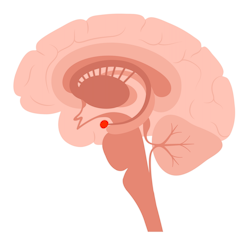
The amygdala, shown here in red, triggers survival mode. pikovit/Shutterstock
This happens when the amygdala, the brain’s alarm system, sends out a false alarm, triggering the survival instinct.
In this state, a child may not be able to access higher functions like reasoning or decision-making.
While our instinct might be to immediately fix the problem, staying present with our child during these moments is more effective. It’s about providing support and understanding until they feel safe enough to engage their higher brain functions again.
Reframe your thinking so you see your child as having a problem – not being the problem.
Tips for parents
Take turns discussing the highs and lows of the day at meal times. This is a chance for you to be curious, acknowledge and label feelings, and model that you, too, experience a range of emotions that require you to put into practice skills to cope and has shown evidence in numerous physical, social-emotional, academic and behavioural benefits.

Talk about your day over dinner. Monkey Business Images/Shutterstock
Spending even small amounts (five minutes a day!) of quality one-on-one time with your child is an investment in your child’s emotional wellbeing. Let them pick the activity, do your best to follow their lead, and try to notice and comment on the things they do well, like creative ideas, persevering when things are difficult, and being gentle or kind.
Take a tip from parents of children with neurodiversity: learn about your unique child. Approaching your child’s emotions, temperament, and behaviours with curiosity can help you to help them develop emotion regulation skills.
When to get help
If emotion dysregulation is a persistent issue that is getting in the way of your child feeling happy, calm, or confident – or interfering with learning or important relationships with family members or peers – talk to their GP about engaging with a mental health professional.
Many families have found parenting programs helpful in creating a climate where emotions can be safely expressed and shared.
Remember, you can’t pour from an empty cup. Parenting requires you to be your best self and tend to your needs first to see your child flourish.







