


 Technicals Over Tightening: Ethereum Rebounds from $2,356 Low After Fed Shock
  FxWirePro- Major Crypto levels and bias summary
  Goldman Sachs Forecasts Fed Rate Hike as Inflation Risks Rise
  Unsustainable – or manageable? We don’t yet know how data centres will impact Australia’s environment
  FxWirePro- Major Crypto levels and bias summary


 Add as a preferred source on Google

When the son-in-law proposed grafting blockchain onto a centuries-old tea tradition, the tradition pushed back.
"Blockchain itself is great technology — nobody can hack it — but scam coins were pouring out exactly when we were considering this," Ahn said. "I worried we'd be misunderstood. So we never mentioned coins. We only talked about NFTs — like the authenticity stamp on a whiskey bottle. That's where the family compromise started."
Son's own rule was the same: the token certifies; it does not replace the object. "The NFT only authenticates. We're not selling the NFT itself — a physical sale has to accompany it." After the inventory audit, his first step was tax and legal review — how tea is taxed when bought and sold, whether the structure was clean — before building ASSETTEA, what the company calls Korea's first pu'er auction and certification platform. He won the family over one member at a time, starting with his mother-in-law.
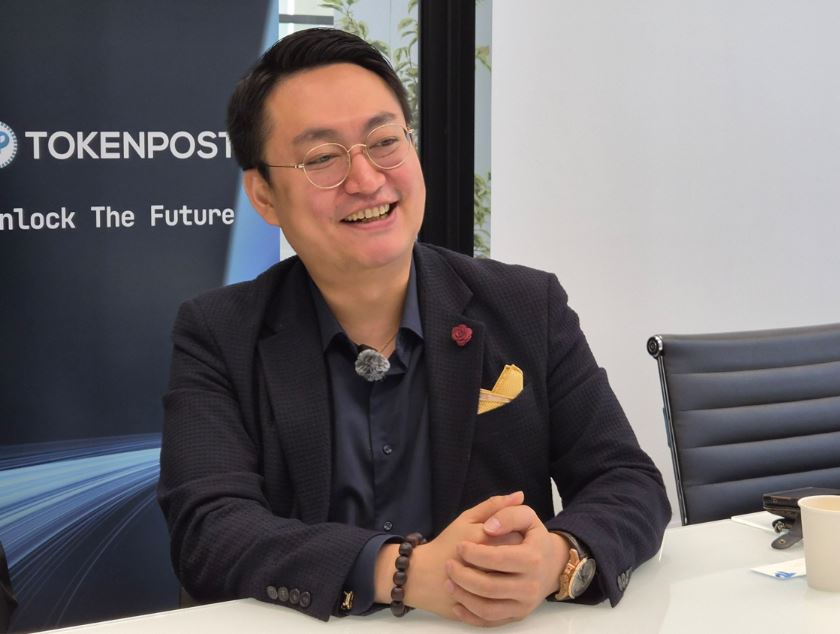
When the auctions drew coverage in Chinese outlets including the People's Daily, the phones lit up with strangers asking to have their family pu'er appraised. Most of what came in was recent ripe tea or raw tea only 10–20 years old. The teas Kkikdageo accepted were ones it could vouch for — tea it had originally sold, or clearly old genuine tea with solid receipts. Provenance, again, is everything. "Even the Hong Kong auctions take what we bring with a light check and put it straight to sale. When someone else brings it, they scrutinize every detail."
The original ambition — fractional investment — was blocked by law. "We wanted to do an STO, but there was no legislation. So we waited." When the relevant rules were tidied up early this year, the six-year-old puzzle finally fit together.
The structure
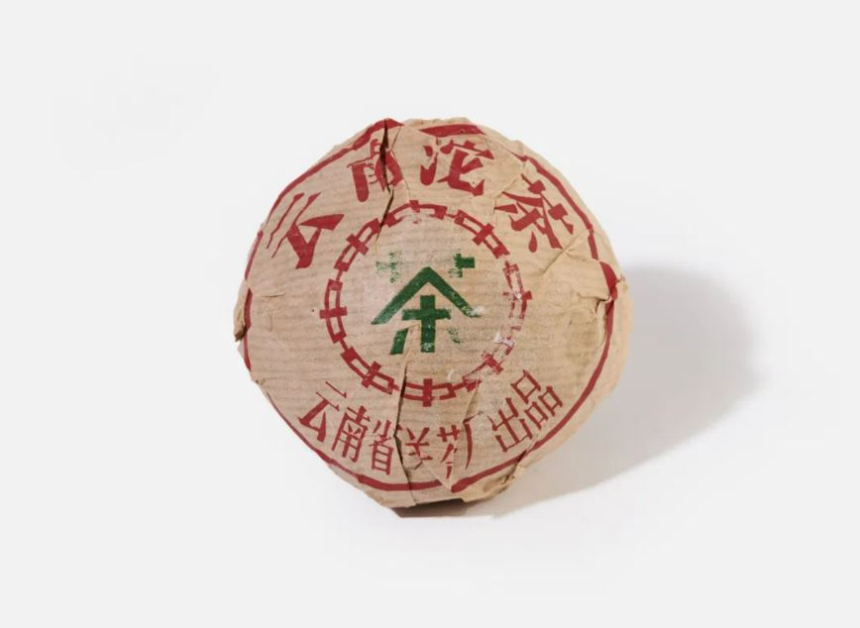
The tea going live is the 1989 Xiaguan Xiaotuo, made at the Xiaguan tea factory in Yunnan — a 37-year-old raw tea, and the first non-metal real-world asset to list on SwitchWon, which until now had dealt in foreign exchange and metals like gold, silver and copper.
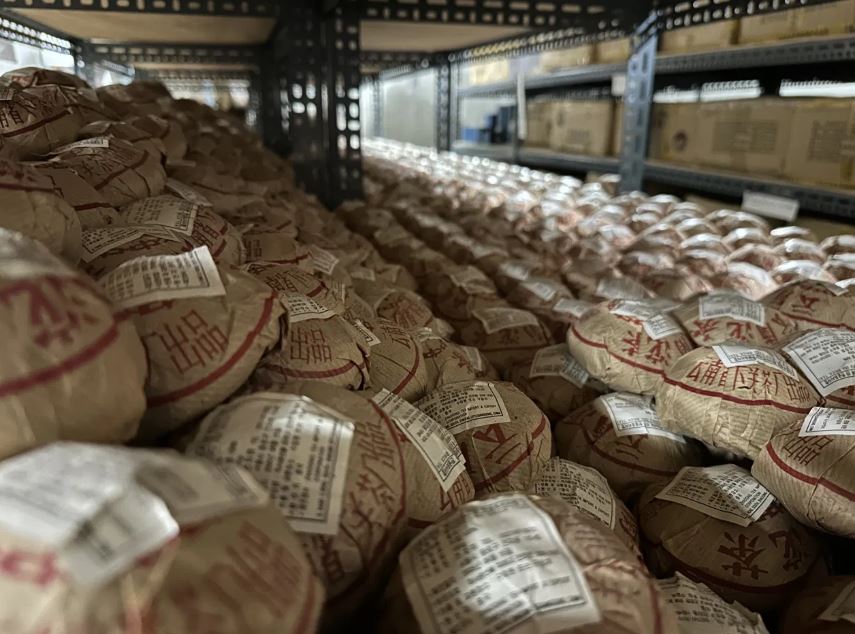
The mechanics are deliberately literal. Kkikdageo issues a "digital redemption product" — effectively a physical claim ticket. One ticket equals one physical unit, priced at 2.5 million won, about $1,800. Holders can trade the ticket for capital gains or redeem it one-for-one for the actual tea and drink it. The listed stock sits in a storage facility built for it.
"This isn't issuing something like a coin," Son said. "Hong Kong recognizes pu'er as an asset — the way an Italian bank lends against wheels of cheese."
Why this tea
The pick was calculated. Tea leaves are graded 1 to 10 by size; the smallest, tenderest grade-1 and grade-2 leaves go into tuocha, the bird's-nest-shaped pressing. It's only about 10–15% of total output, and enthusiasts buy it first, so little reaches the open market. Meanwhile the higher-volume disc-shaped bingcha led the auctions and rose first — leaving tuocha comparatively underpriced.
Son's comparison: an "8892," made in 1988 to recreate the 1950s Red Mark, runs about 40 million won for a 400-gram cake — 10 million won per 100 grams. The 1989 Xiaguan Xiaotuo: 2.5 million won per 100 grams. "It's actually the rarer tea, valued at a quarter of the price. If it gets re-rated, that's how much room it has to run." When he first encountered it nine years ago it cost 400,000–500,000 won. It's up fivefold since — and he still calls it underpriced.
Pu'er prices move in steps: when the leading digit of the tea's age rolls over, when an auction prints a record, or around Lunar New Year, gaining 10–20% a year. "Since this is the first listing, the people who buy in absolutely have to come out ahead. So I chose the lot with the most upside." This first batch of 10,000 cakes is less than a tenth of the 120,000 in the vault. Talks with other RWA venues for follow-on listings are already underway.
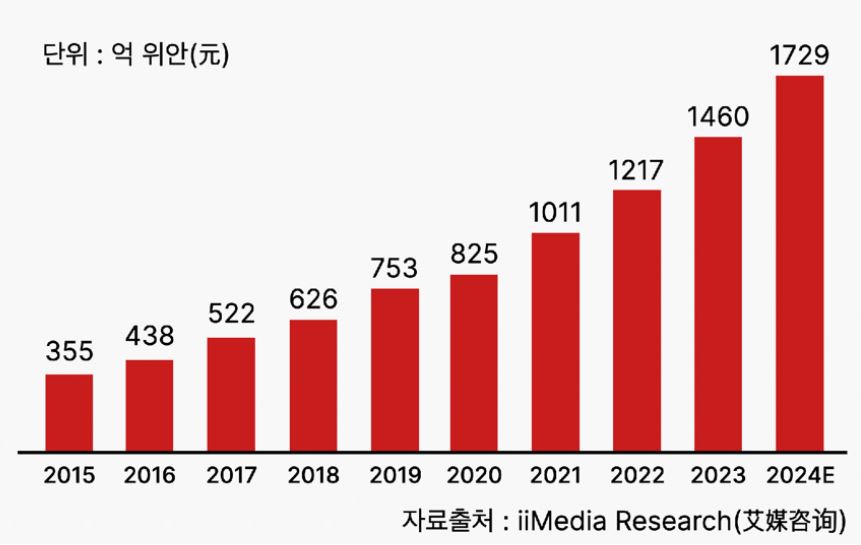
The macro backdrop helps: China's premium tea market grew from 35.5 billion yuan in 2015 to an estimated 172.9 billion yuan in 2024 — roughly $24 billion — nearly fivefold in a decade, per iiMedia Research.
Sotheby's-adjacent demand, and a department-store concierge
The international pull has already started. Hong Kong auction houses keep asking Kkikdageo for consignment lots; talks advanced before the pandemic and regional politics pushed timing out. The couple is unbothered. "It's too cheap right now, so we're not giving it up. After the listing, when we can get a better price, we'll release it." They want to own the price discovery.
In Japan, Daimaru — the Osaka department store — moved: a premier concierge team that serves clients spending more than 500 million won a year booked a buying meeting and a site visit the moment "aged pu'er" came up. An operation that handles Yayoi Kusama limited editions put aged tea on the same shelf. "Of course, if the price doesn't work, we don't sell," Son added.
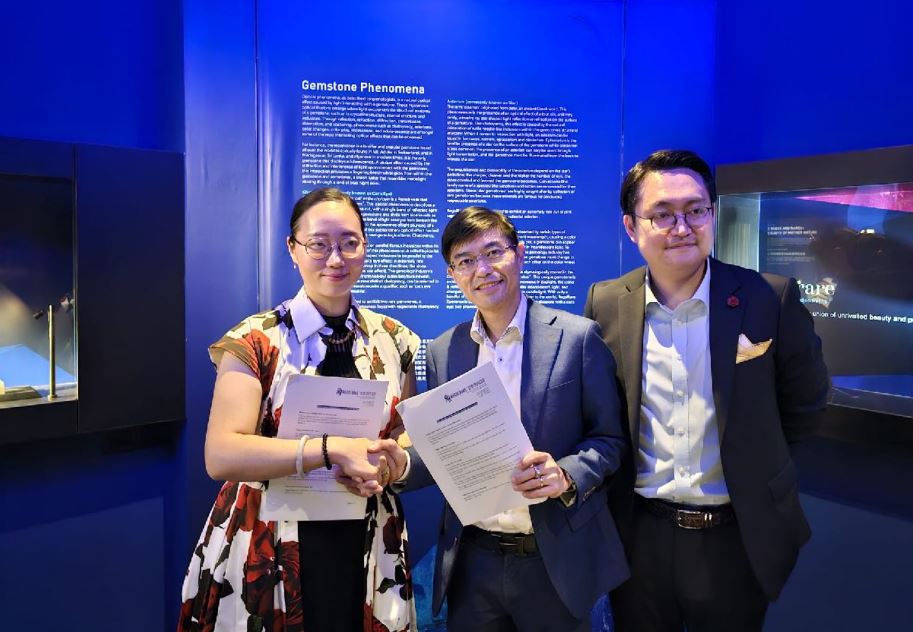
Institutional interest is more direct. Son has lately shuttled between Kuala Lumpur, Hong Kong and Abu Dhabi. "Institutions have wanted to get into RWAs but lacked the right item. Chinese-diaspora family offices in particular are very interested — they already understand pu'er. And an RWA has a floor, because the physical asset backs it. Some say they'll raise a fund and buy once the RWA exists." In Abu Dhabi, where an RWA framework took effect this year, a sovereign-wealth side hunting for listable RWA items was introduced to Kkikdageo through a Malaysian counterpart, and a meeting led to stated buying intent — helped, he notes, by a regional culture that drinks tea instead of alcohol.
There's a wine angle too. "The flavor and aroma of an old-vintage wine is there in aged pu'er. When wine lovers get older and can't drink wine anymore, they come over to pu'er," Ahn said — positioning lao cha as the next luxury alternative asset after wine.
The real prize: becoming the authenticator
The couple's endpoint isn't a listing. It's the thing that doesn't exist anywhere — a pu'er authentication authority. Working with food-engineering researchers at a Korean university, Kkikdageo is extracting age-graded compositional metadata from the crumbs of its 119 varietals. Half a gram of crumb is enough to analyze, and the compositional graph shifts distinctly by era; ripe and raw separate cleanly in the data.
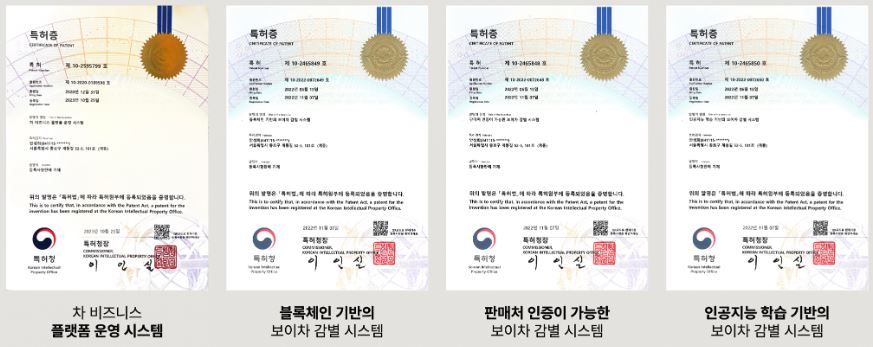
"I asked the professor why nobody had done this. The answer was simple: it's expensive. To build data on a 120-year-old tea, you need a tea worth at least several hundred million to a few billion won. You can't do that on a research budget. We physically hold tea from the early 1900s through the 2000s, so we can build the database. Data doesn't lie." Four related patents are already registered under Ahn's name. Register the compositional data as NFTs, and any incoming tea can be checked against it — a standard a Korean company would fill in a domain the Chinese mainland itself finds hard.
They've already moved policy. After Kkikdageo argued it was irrational to slap a uniform shelf life on fermented tea that improves with age, the rule changed: since 2016, fermented tea in Korea need only carry a production date, not an expiry — one of the legal footings that lets pu'er become an RWA at all.
A 20-year clock, across three generations
Kkikdageo runs on a long clock. The parents' generation used proceeds from haoji and yinji sales to import then-decade-old 1980s tea in the early 2000s (the import certificates are all kept), and aged it 20 years into today's flagship stock. "With the proceeds from this sale, we'll buy the tea our kids — the third generation — will sell. It's a 20-year cycle. We have the know-how to tell which tea will appreciate."
The roles are set: Son drives the RWA expansion; Ahn develops the next generation of tea and the culture and education around it. "Taking over what my parents built over 34 years and earning the public credibility the world recognizes — that's what matters most to me," she said. "On top of that, I want to build a culture where people can drink tea more easily."
Asked for a closing word to the blockchain community, Son framed it as a national opportunity. "Pu'er didn't originate in Korea, but Korea holds the world's largest volume, so we can absolutely lead this market. It's an asset whose value rises with time. I think we can leave a mark on the Web3 and blockchain era."
In China the tea was consumed; in Korea it went unsold and stayed in the warehouse. Inventory that piled up precisely because nobody wanted it has crossed half a century to become treasure — and now, on a blockchain, an asset anyone can buy and sell. Kkikdageo — "have a cup of tea and go," a thousand-year-old koan — is finding a new answer in 2026, on a Korean trading platform.
Figures converted from Korean won and Chinese yuan at rates current to the original June 2026 reporting; treat USD equivalents as approximate. This article is based on interviews and market data and is not investment advice.







