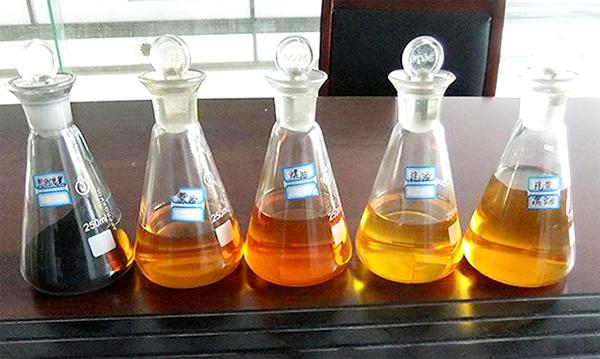
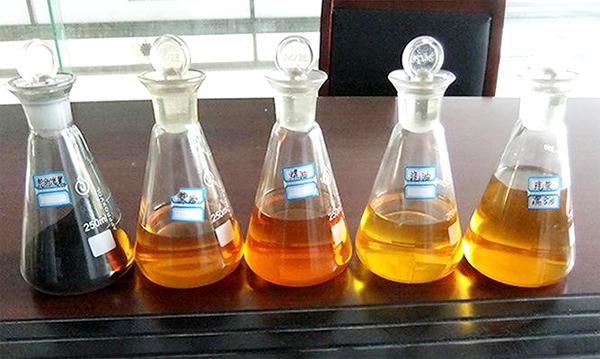
The Ministry of Environment announced that a revision of the enforcement ordinances and regulations of the Waste Management Act came into effect on Tuesday allowing plastic waste pyrolysis oil to be recycled as a raw material in petrochemical products such as naphtha and diesel.
Previously, pyrolysis oil could only be recycled fuel, mainly used in boilers.
The revision also categorized plastic waste pyrolysis oil manufacturing facilities as recycling facilities and no longer as incineration facilities, easing installation and inspection standards.
Upon taking effect, the amendments will allow coffee residue and spent mushroom substrate to be used for producing oil and fat products or as thermal power plant fuel.
Spent mushroom substrate refers to the mixture of mushroom residual substrate and mycelium.


China Opens Door to Stronger U.S. Trade Ties Amid Rising Tensions
What’s so special about Ukraine’s minerals? A geologist explains
Federal Reserve Crisis: DOJ Standoff Threatens Powell's Succession and Rate Stability
WTO Reform Talks Begin in Cameroon Amid Global Trade Tensions
UBS Seeks Legal Protection Over Credit Suisse's Nazi-Era Banking Activities
How to create a thriving forest, not box-checking ‘tree cover’
xAI Faces Lawsuit Over Grok AI-Generated Sexual Content Involving Minors
SK Hynix Eyes Up to $14 Billion U.S. IPO to Fund AI Chip Expansion
Brown-Forman and Pernod Ricard in Merger Talks to Create World's Largest Spirits Giant
Bolsonaro Hospitalized in ICU with Bronchopneumonia Amid Calls for House Arrest
Bank of Japan Faces Rate Uncertainty Amid Middle East Oil Shock
Novartis to Acquire Biotech Firm Excellergy in $2 Billion Deal
Valero Port Arthur Refinery Explosion Prompts $1M Lawsuit Over Worker Safety Negligence
Fungi are among the planet’s most important organisms — yet they continue to be overlooked in conservation strategies
Nomura Upgrades PDD Holdings to Buy, Calls Stock Too Cheap to Ignore
Rise of the Zombie Bugs takes readers on a jaw-dropping tour of the parasite world
How the war in Iran is already affecting UK farmers and food production