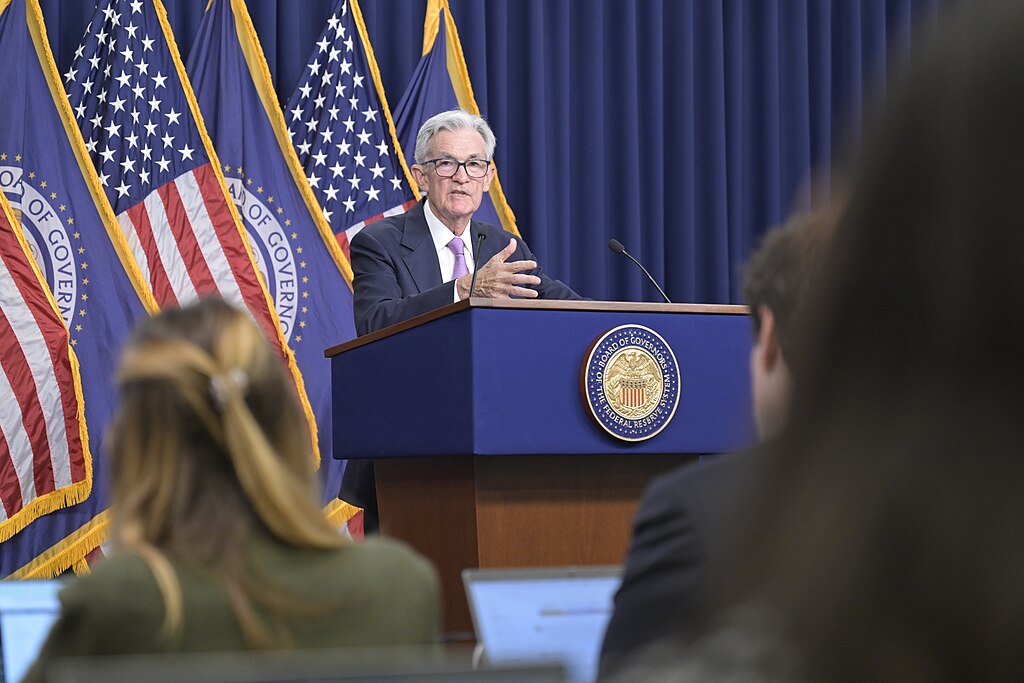
U.S. Federal Reserve Chair Jerome Powell signaled a cautious stance on interest rate policy, stating that the Fed would await more economic data before making any adjustments. Speaking at the Economic Club of Chicago, Powell warned that President Donald Trump’s tariff policies could push inflation higher while slowing growth and weakening the labor market—potentially moving the economy further from the Fed’s dual mandate of stable inflation and maximum employment.
Although recent market volatility has increased, Powell said markets remain orderly and are reflecting the uncertainty surrounding trade policy, not signs of dysfunction. He emphasized there is no "Fed put," dismissing expectations that the central bank would intervene simply to stabilize falling asset prices.
Powell acknowledged the U.S. economy began the year strong, but trade tensions have created headwinds. Consumer spending is modest, import surges tied to tariff avoidance are distorting GDP data, and business sentiment is declining. Despite these pressures, Powell believes the economy remains in a "solid position" for now.
He expressed concern that tariffs are likely to drive up inflation, possibly in a sustained way, complicating the Fed’s ability to hit its 2% inflation target. While short-term inflation expectations have risen, long-term expectations remain anchored. The Fed’s current benchmark rate is 4.25%-4.50%, unchanged since December, but markets are increasingly pricing in multiple rate cuts by the end of the year.
Powell reaffirmed the Fed’s independence, stressing that monetary policy decisions will not be influenced by politics. Still, with both inflation and employment potentially drifting from target levels, the Fed may face a difficult balancing act in the months ahead as it weighs whether to lower rates or hold steady amid ongoing trade policy uncertainty.