


 Gold Prices Fall as Fed Signals Another Rate Hike
  Gold Prices Rise as Hormuz Tensions Fuel Inflation Risks
  BofA Raises Coinbase Stock Target to $203 on Stablecoin Growth
  RBI Rate Hike Bets Surge as Inflation Rises
  Cardano Price Eyes $0.30 as ADA Whale Activity Surges
  RBI Uses $10 Billion Currency Swaps to Drain Excess Rupee Liquidity
  Bangladesh GDP Growth Accelerates to 4.6% on Industrial Rebound
  Robinhood Buys $25 Million in Bitcoin for Corporate Treasury
  Japan Real Wages Rise 1.5%, Supporting BOJ Rate Hikes
  Gold Prices Rise as Dollar Weakens, Treasury Yields Ease
  Fairshake Backs 32 Pro-Crypto House Candidates
  Zcash Privacy Demand Rises as AI Exposes Bitcoin Transactions
  Iran Tanker Attacks Surge as Hormuz Oil Flows Near Prewar Levels


 Add as a preferred source on Google
At the board meeting held on February 7, the Reserve Bank of Australia (RBA) policymakers voted to leave the cash rate unchanged at 1.50 percent as they judged that it would be consistent with sustainable growth in the economy and achieving the inflation target over time. Minutes of the February RBA board meeting were released on Tuesday. The RBA continued with its broadly upbeat commentary in the minutes.
The RBA downplayed the contraction in GDP in the September quarter and said that Australia’s economic slowdown in Q3 2016 was likely temporary. The RBA noted that the nation’s third quarter contraction reflected some temporary factors, including disruptions to coal supply and bad weather. Australia subsequently recorded a large trade surplus, aided by resource exports in the following three months.
"Australia's low-cost producers of iron ore were expected to increase output further and the ramp-up in liquefied natural gas production was expected to make a significant contribution to output growth," the central bank said.
The bank forecast growth to pick up to around 3 percent in the year-ended terms later in 2017, and to remain above estimates of potential growth over the rest of the forecast period. Policymakers expect the underlying inflation to pick up gradually, largely reflecting the rising unit labor costs and the diminishing spare capacity. Further, the central bank predicts that rising resource exports in a more positive global environment will spur growth in Australia as the drag from falling mining investment wanes.
However, cautious comments prevailed on the labor market. The RBA warned subdued growth in household income was likely to constrain consumption growth. The central bank said spare capacity in the labour market will likely persist and consumption growth could be limited by subdued income levels. December quarter wages figures are due on Wednesday, which economists expect will continue to show annual growth sub-two percent and the lowest in at least two decades.
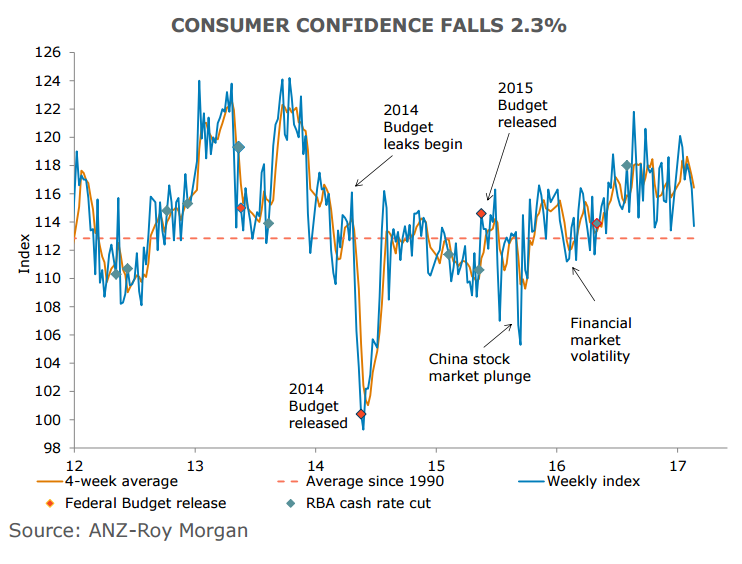
Earlier today the ANZ-Roy Morgan confidence index dropped by a further 2.3 percent to its lowest level since December. Sharp decline was seen in views toward current finances and also views on economic conditions over the next five years. Aussie left unimpressed after RBA minutes. AUD/USD down 0.33 percent on the day, trading at 0.7661 at around 1140 GMT. We see a potential 'Bullish Gartley' pattern on hourly charts raising scope for near-term downside. Completion of the 'Bullish Gartley' could open possibilities for long.







