


 US-Led Coalition Targets Global Factory Overcapacity
  RBA Hikes Interest Rate to 4.60% as Inflation Risks Rise
  US Stock Futures Flat as Fed Minutes, Earnings Loom
  Oil Prices Rise as Hormuz Risks Offset IEA Stock Release
  Asian Currencies Mixed as Yen Weakens, Dollar Holds Firm
  JPMorgan CEO Jamie Dimon Warns Mythos AI Raises Cyber Risk Tenfold
  China Shuts 670 Banks as Bitcoin Eyes Financial Risks
  BOJ Signals Faster Rate Hikes as Inflation Risks Grow
  RBI Raises Repo Rate to 5.50% in Hawkish Shift on Inflation Risks
  Fed Unveils Stablecoin Rules Under GENIUS Act
  Kalshi Withdraws PEPE Perpetual Futures Filing
  Cardano Price Surges 10% as ADA Targets $0.30
  UK House Prices Flat in September as Mortgage Rates Weigh


 Add as a preferred source on Google
The Reserve Bank of New Zealand (RBNZ) holds its next monetary policy meeting on Wednesday, 9th November and markets have fully priced in a 25 basis point cut to a fresh record-low of 1.75 percent. Focus shall remain on the statement for guidance and the NZ dollar may face a whipsaw-like reaction should Governor Graeme Wheeler highlight a material shift in the monetary policy outlook.
The central bank at its previous meeting left its policy rate on hold at 2.00 percent, maintaining its easing bias. It warned that the ‘current projections and assumptions indicate that further policy easing will be required to ensure that future inflation settles near the middle of the target range,'. The statement clearly showed the RBNZ's concern regarding weakness in inflation the strong desire to meet its inflation target of 2 percent.
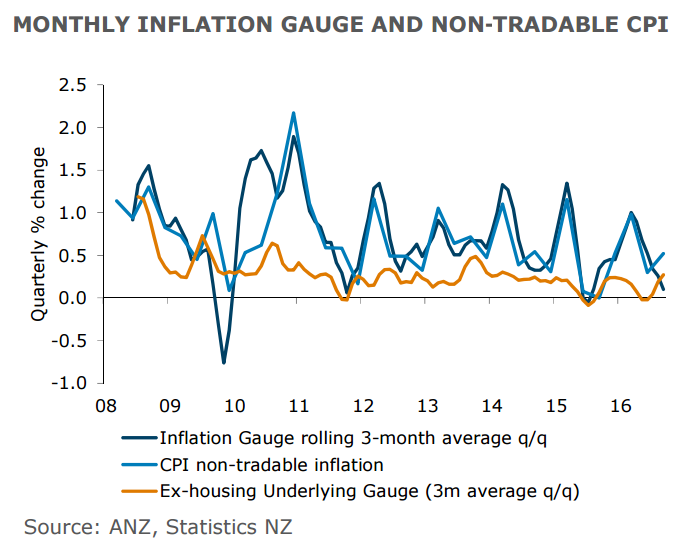
Earlier today, Statistics NZ revised up the Q3 CPI result from 0.2 percent to 0.3 percent, which lifted annual CPI inflation from 0.2 percent to 0.4 percent, and non-tradables inflation from 2.1 percent to 2.4 percent. Given the RBNZ was forecasting 0.2 percent annual CPI and 2.2 percent annual non-tradable inflation in Q3, this +0.2 percent surprise adds to the argument that the RBNZ is unlikely to cut the OCR further after this week in the absence of an adverse global event.
The 1.4 percent rise in Q3 employment may not be enough to keep the RBNZ on the sidelines as household earnings remain subdued, but the central bank may largely promote a wait-and-see approach for 2017 as it expects ‘domestic growth to remain supported by strong net immigration, construction activity, tourism, and accommodative monetary policy.’
"Despite the strong economy, the RBNZ will follow through on its well-flagged cut and take the cash rate to 1.75%. Given ongoing concerns about the NZD and inflation expectations, an easing bias will be maintained," said ANZ in a report to clients.
NZD/USD was down 0.13 percent down on the day, trading at 0.7314 at around 11:15 GMT. Should the central bank statement highlight a potential shift in the monetary policy path, NZD/USD could see a knee-jerk reaction.







