
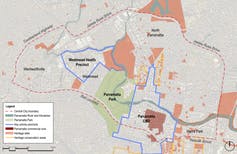
In my article yesterday showing how far Greater Parramatta is from hosting one of three metropolitan CBDs proposed by the Greater Sydney Commission, the verdict was clear:
The Sydney metropolis has a very long and bumpy way to go before we can re-imagine it with more than one CBD. Visionary and bold decision-making, supported by significant investment, is required for the Central City to transition to a metropolitan centre.
Today, I introduce a bold proposal to build a Central CBD for metropolitan Sydney, as a real complement to the City of Sydney CBD to the east.
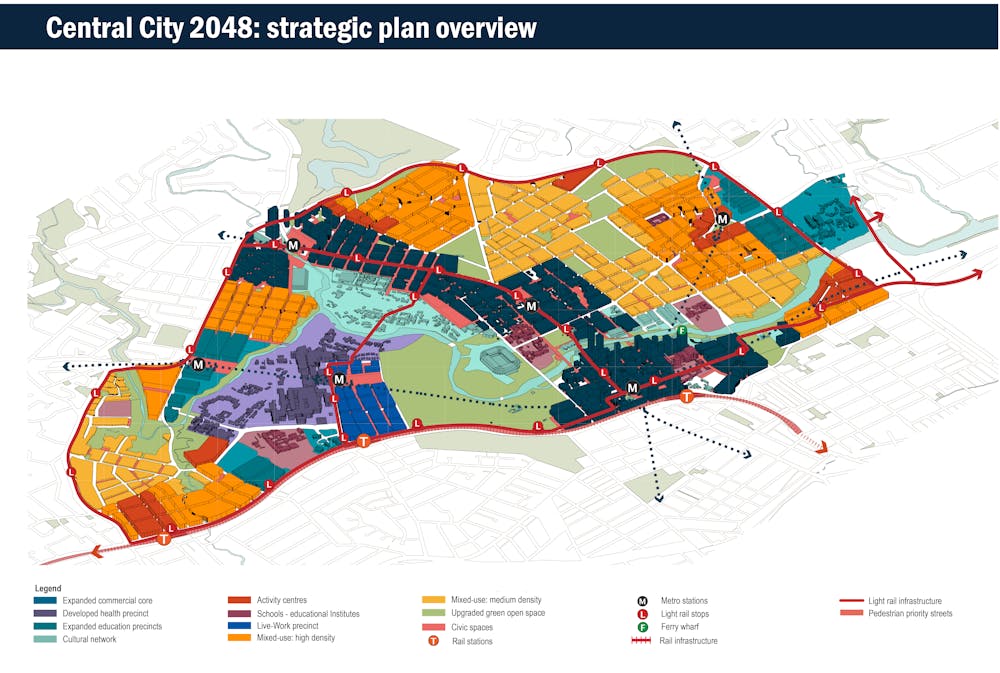
Figure 2: An overview of Central City 2048. Image: Jamie van Geldermalsen, Mile Ilija Barbaric, Rao Umair Afzaal, Kun Fan, Author provided
Central City 2048 is a 30-year strategic plan, which builds on the Greater Sydney Commission’s Greater Sydney Region Plan. Central City 2048 presents a vision for a dynamic, connected and sustainable CBD at the heart of the Greater Sydney metropolitan region.
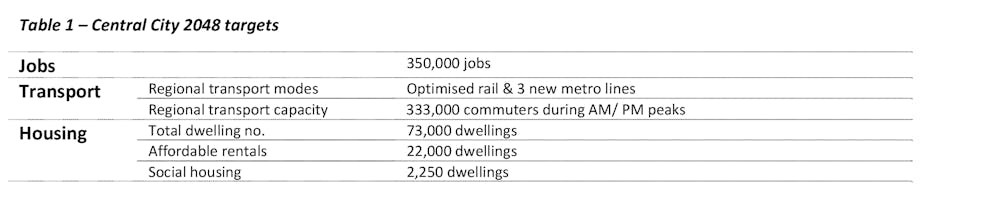
Employment, transport and housing targets to be achieved by Central City 2048 are listed in Table 1.
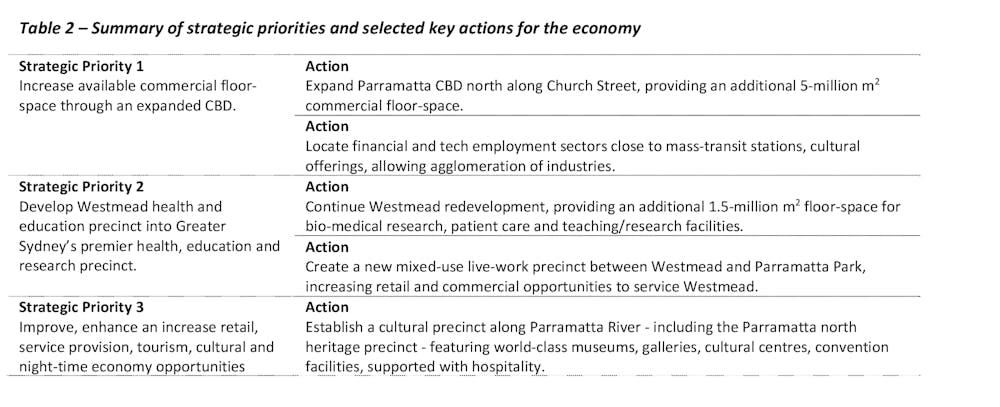
Economy
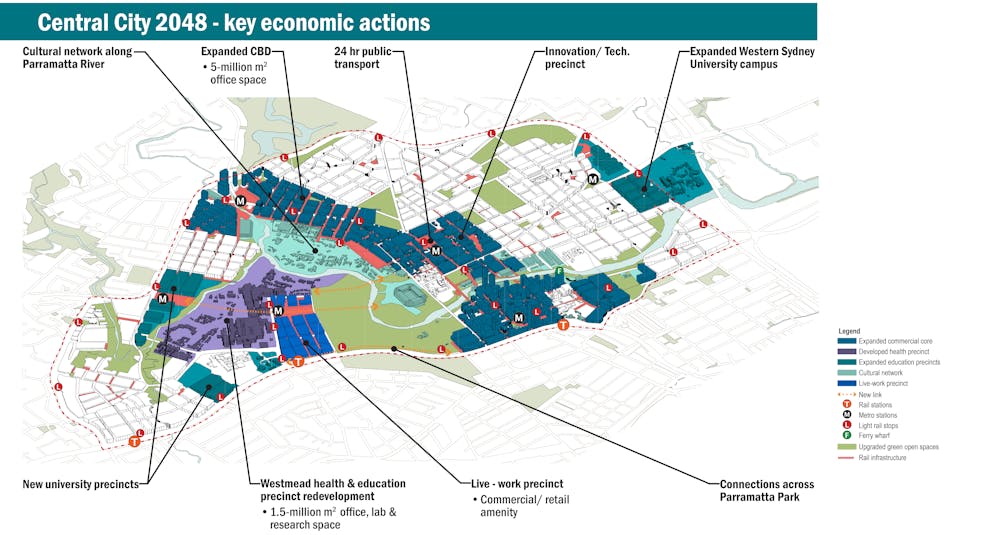
Figure 3. Key economic actions – Central City 2048. Image: Jamie van Geldermalsen, Mile Ilija Barbaric, Rao Umair Afzaal, Kun Fan, Author provided
Central City’s economy is supported by two pillars: Parramatta CBD and the Westmead health and education precinct. There is a key strategic challenge to attract finance, tech, education and creative industries, while supporting existing health and government sectors. Essential to economic growth is the provision of dedicated commercial and retail floor space, and regional access to it.
Connectivity
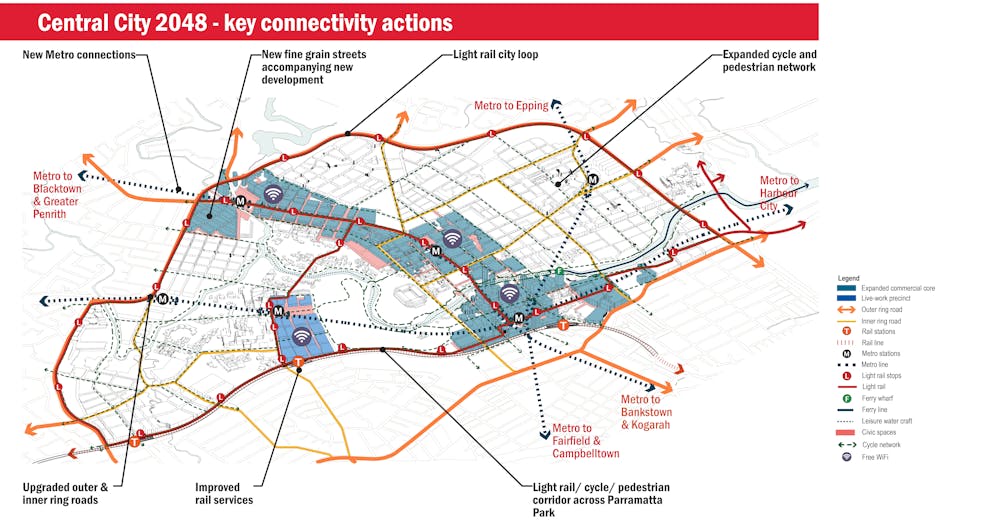
Figure 4. Key connectivity actions – Central City 2048. Image: Jamie van Geldermalsen, Mile Ilija Barbaric, Rao Umair Afzaal, Kun Fan, Author provided
Currently, commuter travel time to Central City from most strategic centres exceeds 30 minutes during morning and afternoon peak periods. By 2056, the number of trips to Central City is predicted to triple during these periods.
Without more investment in public transport, forecasts suggest the travel-to-work mode split will remain the same, increasing Central City’s congestion problems. Regional mass-transit connections and reliable local transport options are a priority for Central City’s future.
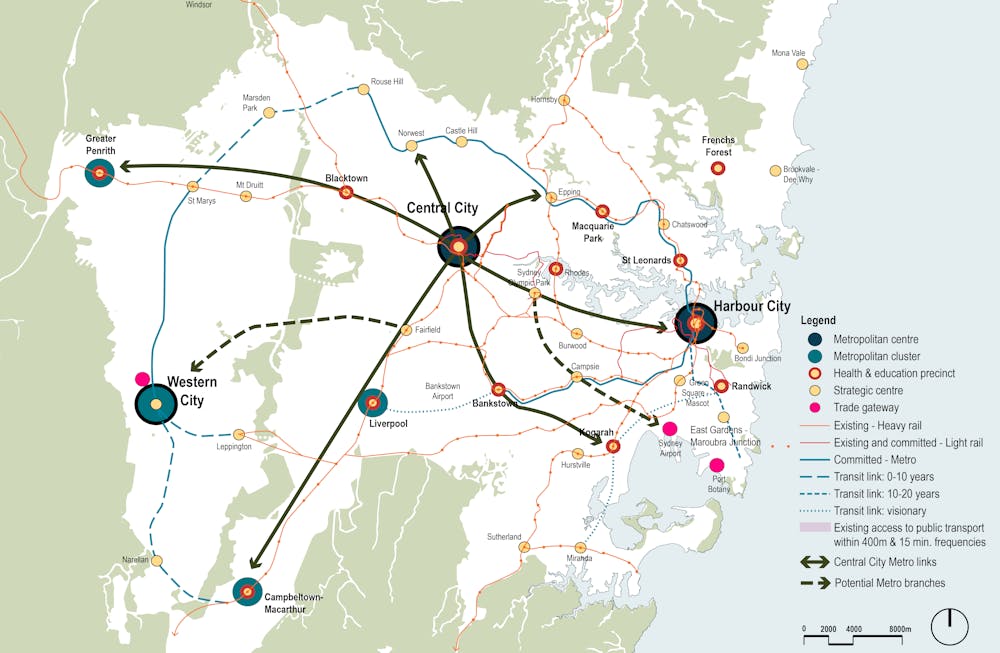
Figure 5. Central City 2048 regional connectivity map. Image: Jamie van Geldermalsen, Mile Ilija Barbaric, Rao Umair Afzaal, Kun Fan, Author provided
In terms of digital connectivity, existing infrastructure is limited to copper wire infrastructure. Only small pockets are connected to the National Broadband Network. A more reliable network with increased capacity is essential for Sydney’s next metropolitan centre.
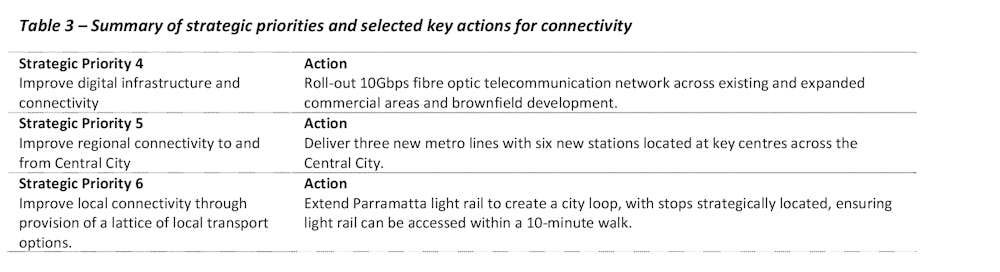
Liveability
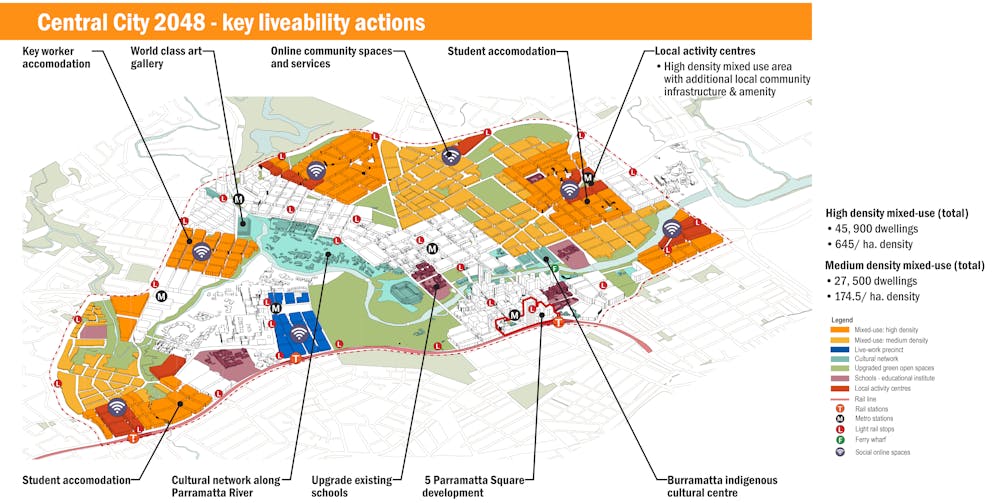
Figure 6. Key liveability actions – Central City 2048. Image: Jamie van Geldermalsen, Mile Ilija Barbaric, Rao Umair Afzaal, Kun Fan, Author provided
At 41.5 people per hectare, Central City’s residential density is much lower than the Harbour City’s 64.8 people/hectare. Highly liveable cities such as Vancouver and Copenhagen, with residential densities of 167.64 persons/hectare and 61.8 persons/hectare respectively, suggest high-density cities can be liveable too.
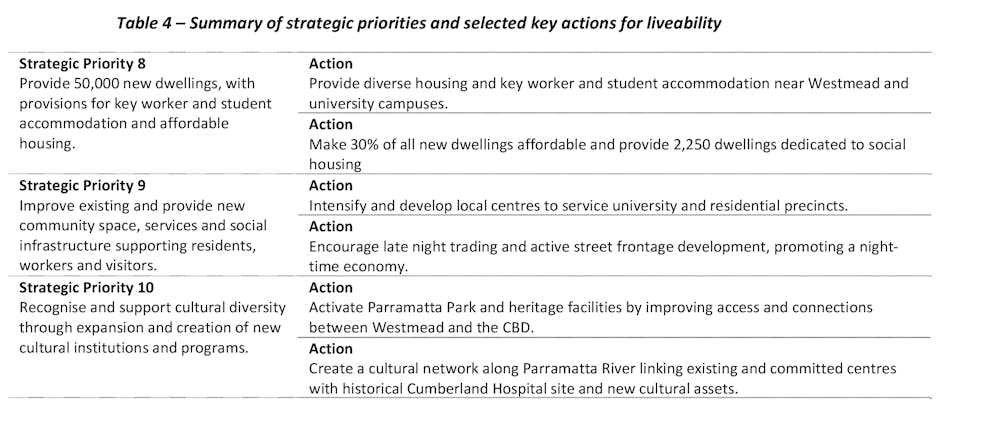
To support increased densities, Central City 2048 proposes increased employment opportunities and investment in transport, social and cultural infrastructure. It capitalises on Central City’s cultural diversity, heritage and landscape to create a vibrant and liveable city. Affordable housing targets of 30% are proposed to ensure Central City is an equitable city.
Invest in city shaping
Central City 2048 proposes one new rail line, three metro lines, just under 300,000 additional jobs, and a 30% affordable housing target for all new dwellings. This looks ambitious, if not shocking, to many. But it portrays a compelling image of what it takes to build a metropolitan CBD at the geographical heart of the Greater Sydney Region. This is what city-shaping, and indeed nation-building, looks like.
The decision is now ours: are we willing to invest what it takes to make it happen?


