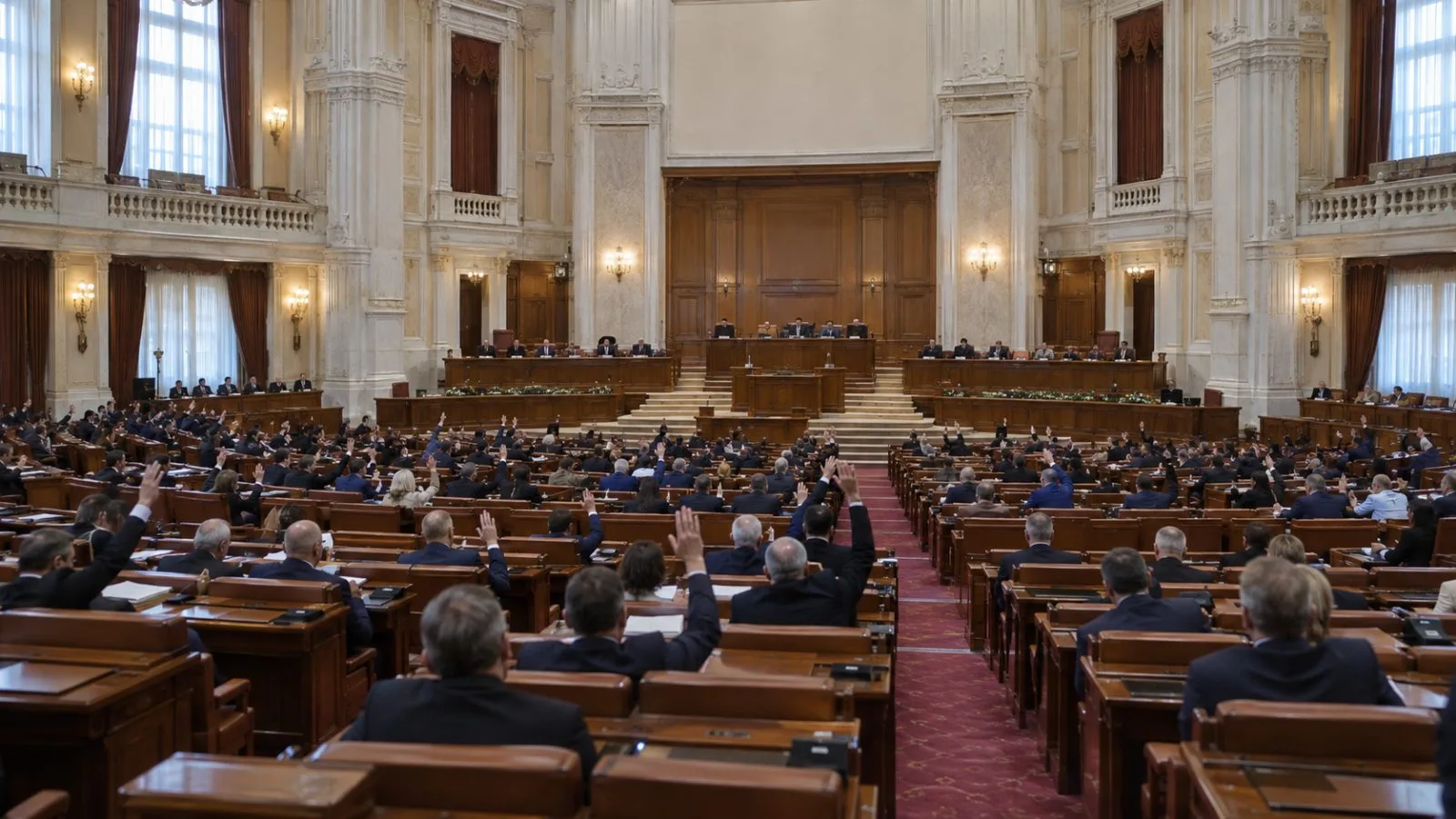
Romania’s Parliament approved Prime Minister Luca Niculescu’s minority cabinet on Oct. 20, as its government program set a year-end budget deadline and a longer-term goal of reducing the deficit. The Associated Press reported a 280-58 vote after months of political deadlock.
The program calls for Parliament to adopt the 2027 budget by Dec. 31, 2026. It aims to bring the deficit below 3% of gross domestic product by 2030, in line with Romania’s European Union excessive-deficit timetable. Using the European System of Accounts measure, it estimates a deficit of about 6.0% of GDP for 2026.
The existing fiscal strategy puts the 2027 deficit target at 5.2% of GDP. The government says the autumn forecast will determine the final target, making that forecast the next measure of how much adjustment the budget must deliver.
The program also reports a cash deficit equal to 2.89% of GDP for January through August 2026, down from 4.51% in the same period a year earlier. Those cash figures use a different accounting measure from the annual deficit estimates. Interest spending rose 26.7% to 42.1 billion lei, while personnel spending fell 3.8% to 109 billion lei. Value-added tax receipts increased 25.2%; the program does not say how the changes affected different groups.
The Finance Ministry said in a statement that Moody’s viewed the new cabinet as improving the prospects for adopting the budget by year-end. In the ministry’s account, Moody’s projected deficits of 5.8% of GDP in 2026 and 5.5% in 2027. Before the parliamentary vote, Acting Finance Minister Alexandru Nazare said the budget would test the government’s credibility.
FXStreet reported that a Societe Generale assessment linked confidence in the Romanian leu to the budget’s credibility and described the political situation as fragile. On Oct. 21, the European Central Bank set its daily euro reference rate at 5.3365 lei. The rates are benchmarks, not intraday trading prices. ING has said a weaker leu would make imports more expensive in local-currency terms, as earlier EconoTimes coverage of the leu and import costs reported.
The autumn forecast will set the final 2027 deficit target. Under the government program, Parliament must pass the budget by Dec. 31, 2026.