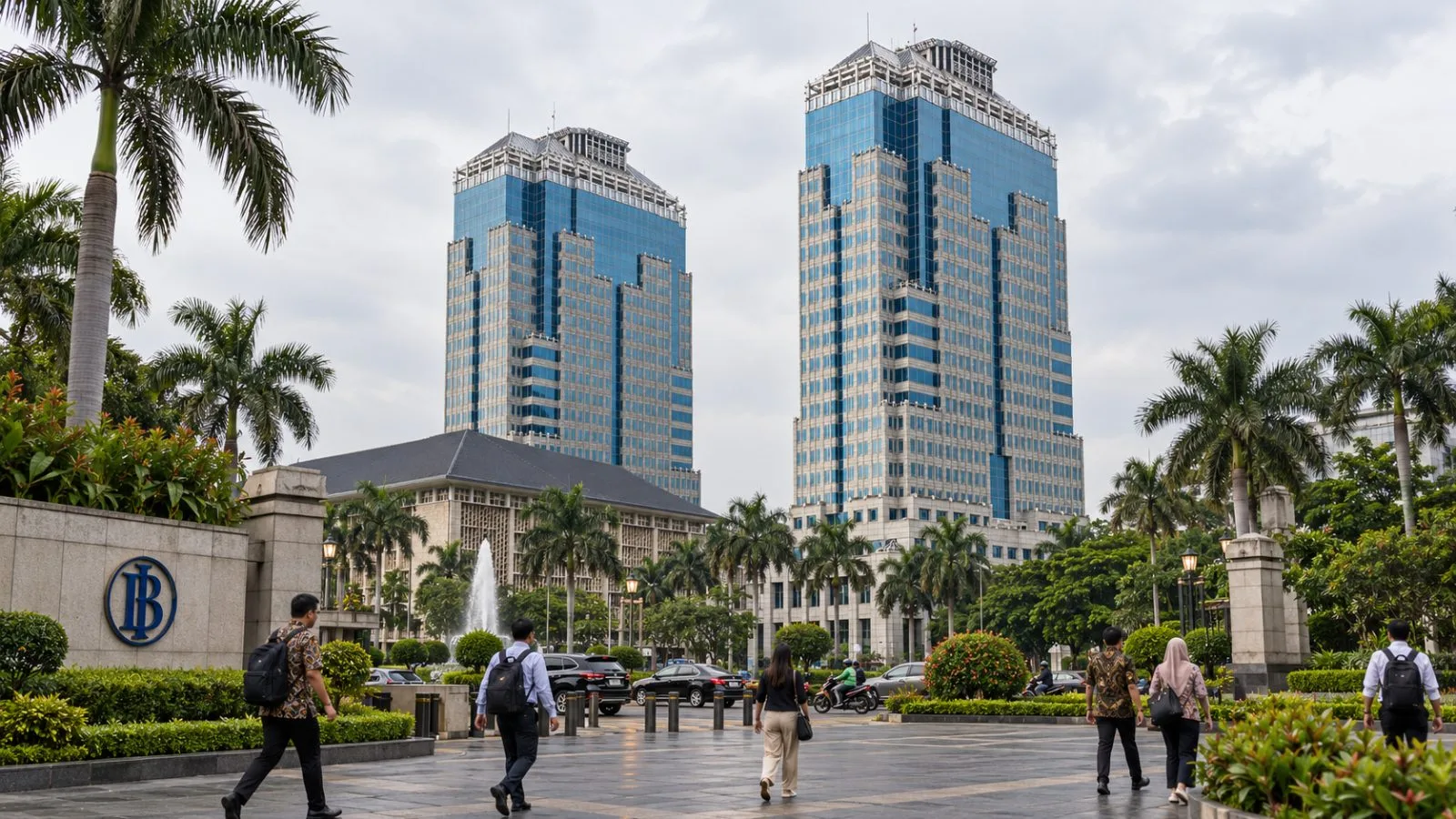
The rupiah weakened against the U.S. dollar on Monday as Bank Indonesia prepared liquidity measures and the government planned to hold subsidized fuel prices steady to protect household purchasing power.
Market reports showed different rates at different points in the day. Bloomberg data cited by Investor.id showed the rupiah at IDR 18,085 per dollar at 10:05 p.m. ET Sunday (02:05 UTC Monday), five rupiah weaker than the reported Friday close of IDR 18,080. CryptoWave later reported about IDR 18,120 per dollar at 1:13 a.m. ET Monday (05:13 UTC), while FXStreet reported USD/IDR near IDR 18,150 during Asian trading.
At its Oct. 20-21 meeting, Bank Indonesia (BI) held its BI-Rate at 5.75%, left the Lending Facility at 6.5% and raised the Deposit Facility to 5%. The central bank linked its policy mix to attracting foreign capital and keeping the rupiah steady, while also supporting economic growth. Under its rupiah support measures, conventional commercial banks’ reserve requirement will fall from 9% to 8% Sunday, Nov. 1, then to 7% Dec. 1. For sharia commercial banks and business units, the schedule is 7.5% to 6.5% Sunday, Nov. 1, then 5.5% on Dec. 1.
Indonesia’s energy minister said the Indonesian Crude Price stood at $105 to $106 per barrel on Oct. 19; its average from January through October 2026 was about $91 to $92 per barrel. The Cabinet Secretariat said officials are developing budget steps to hold subsidized fuel prices steady through December while protecting the government’s fiscal position. It cited household purchasing power as a reason for the policy.
The U.S. Energy Information Administration (EIA) says Indonesian demand for petroleum and other liquids had outpaced domestic production by 2004, when the country became a net importer. Separately, MSCI Inc. opened an Oct. 15 consultation on moving its Indonesian indexes from emerging-market to standalone-market status, citing concerns about opaque shareholding structures and suspected coordinated trading. MSCI set April 30, 2027, as the feedback deadline and said it would announce a decision by June 30, 2027.
BI’s initial reserve cuts take effect Sunday, Nov. 1.