


 Trezor Cuts Reseller Network After Ledger Security Breach
  Cardano Price Drops 15% as Whales Sell 110 Million ADA
  Fed's Hammack Urges Faster Rate Hikes to Fight Inflation
  Citi Upgrades Galaxy Digital Stock, Raises Price Target to $28
  Crypto Derivatives Dashboard: Bulls Retain Control Amid $488M Liquidation Flush
  Dogecoin Price Rebounds as DOGE Defends $0.08 Support
  Zcash Price Drops 30% as ZEC Tests Critical $1,120 Support
  RBA Hikes Interest Rate to 4.60% as Inflation Risks Rise
  Morgan Stanley Predicts $10 Trillion RWA Market by 2030
  RBI Uses $10 Billion Currency Swaps to Drain Excess Rupee Liquidity
  Philippines Current Account Deficit Seen at $19.1 Billion in 2026


 Add as a preferred source on Google
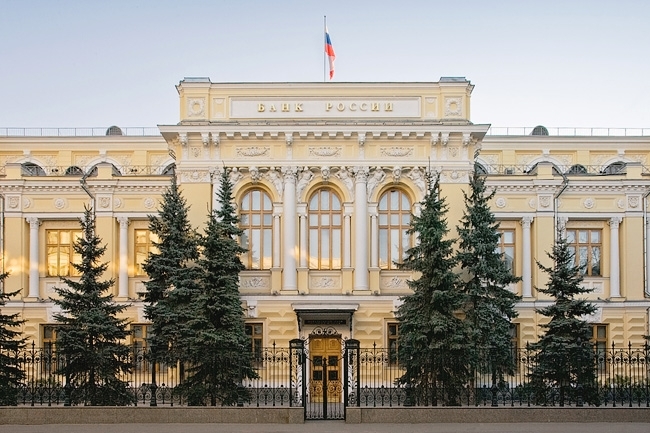
Russia’s interest in blockchain technology seems to be growing. The Central Bank of Russia announced in February that it has established a Working Group on the analysis of advanced technologies and innovations in the financial market, with focus on the study of distributed technologies such as blockchain, and other payment technologies.
A source close to the central bank told Izvestia that the main issue being addressed by the working group members is blockchain implementation (exactly how to apply the blockchain technology), adding that if the issue is not solved this year, banks might lose interest in the technology, making it inappropriate for further study.
The source explained that blockchain is a distributed database and there is no single place where all the data would be stored. In addition, it is impossible to remove data from it, which makes the system as transparent as possible.
“Therefore, the Central Bank is considering to give banks the right to use blockchain technology to store information about all of their transactions, concludes the source”, Izvestia reported (Google translated).
According to Riafan, the central bank plans to present the results of research of the working group to study blockchain technology in June 2016.
Several officials of the central bank as well as the government have voiced their optimism on blockchain technology in the past couple of months. Olga Skorobogatova, the deputy chairman of the Central Bank of Russia, said that the blockchain technology will be used in the global financial sector in the next two years. Russian president Vladimir Putin German Klimenko believes the technology to be ‘amazingly interesting’ and expects lots of experiments in this space.
Last year, deputy finance minister Alexey Moiseev told CoinDesk, “"We feel that blockchain technology is very important in the development of various Internet-based services. We appreciate the potential relevance of blockchain technology for the development of e-commerce and therefore we feel that it should be allowed and developed…”
However, Andrey Sharov, Vice President of Sberbank, one of the largest banks in Russia, recently shared somewhat pessimistic views on what the future might hold as a result of blockchain technologies. He predicted that banks would disappear by 2026, adding that he would have no place to work.

- News

- Economy

- Central Banks
- Investing
- Research
- Roundups
- Digital Currency
- Insights
- Technical Analysis
- Technology
- Business
- Law
- Health
- Nature
- Fintech
- Science
- Topic
- Opinions
- ©Econometrics LLC . All Rights Reserved.
Russian Central Bank Considering Blockchain Implementation In Banks
Monday, April 11, 2016 7:05 AM UTC
Editor's Picks



- Market Data
Most Popular




