


 Best Gold Stocks to Buy Now: AABB, GOLD, GDX
  Gold Prices Fall Amid Rate Jitters; Copper Steady as China Stimulus Eyed


 Add as a preferred source on Google
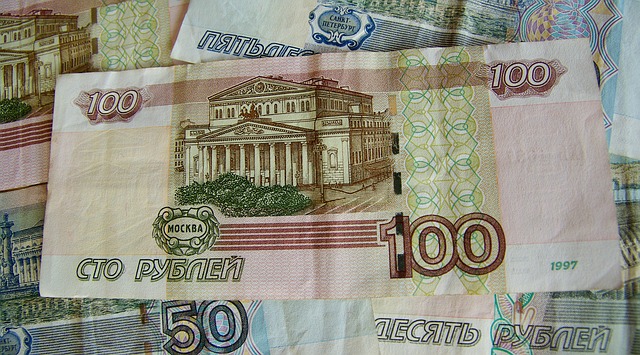
The Russian rouble hit its year high on 24 August, weakening to 70.89 against the USD and to 82.37 against the EUR as the oil price fell to its lowest level of the year on the same day. The sell-off in commodities accelerated on tumbling stock markets in China, which spread further globally, hurting emerging markets and commodity currencies the most.
As the Brent price has lost 18.8% over the past 30 days, the Russian currency has clearly been the worst performer in the emerging market universe, losing 15.2% in spot return against the USD over the period. It has been the fastest deterioration in the rouble since the currency crisis in December 2014 - the one that led to a record FX run and emergency rate hikes. In addition, significant outstanding FX debt repayments at that time created extra pressure on the rouble amid the introduction of financial sector sanctions. A totally new environment for the central bank accelerated the transition to a free floating regime as significant FX intervention was wasting FX reserves.
As Russia was the earliest of a group of commodity-oriented emerging market economies to abandon the peg, the current turmoil has not surprised Russian markets, neither has the spike in the rouble's volatility, which has risen to the level seen in May 2015, although it is still far from the elevated level of January 2015. This time, the central bank of Russia (the CBR) is staying on the sidelines, resisting FX or even verbal intervention in order to avoid the risk of losing credibility. During 2015, the CBR has been consistent in its monetary policy, cutting its key rate by 600bp YTD as consumer price growth slowed and inflation expectations have eased on a stabilised rouble, after peaking at 16.9% y/y in March 2015.
"The renewed fall of the rouble will halt CPI growth deceleration and may push consumer prices further in the short run. Thus, we expect the CBR to halt its rate cuts on 11 September. However, we believe possible price increases will not be as dramatic as in early 2015, when the December 2014 devaluation was transferred into consumer prices. We expect the CPI to post 11% y/y in December 2015 on a high base effect and falling economic activity", says Danske Bank.
Introducing the rouble's free float has mitigated the impact of the oil price shock on the Russian economy much better than in the 2008-09 crisis. The economy contracted 3.4% y/y in H1 15, better than the market expected. However, given the continual fall in the oil price, our models show that the rouble is currently still overvalued, which is weighing on fiscal stability. The oil price has fallen dramatically in rouble terms this year, jeopardising budget execution, as the gap between boosting expenditure and shrinking revenues is widening.
"We remain bearish on the rouble reiterating our current forecasts for the USD/RUB published last week: 70.00 (3M), 72.00 (6M) and 70.00 (12M). We increase our EUR/RUB forecasts from 74.20 to 77.00 (3M), from 77.76 to 79.20 (6M) and from 77.00 to 80.50 (12M)" notes Danske Bank.







