As Hollywood studios reduce risk and streaming platforms focus on profitability, one production company is betting that artificial intelligence can solve a problem at the centre of the entertainment business: the rising cost of making original films.
Acme AI & FX, led by Ryan Kavanaugh, Garrett Grant, Lawrence Grey and Matthew Kavanaugh, has spent nearly two years developing a production model that uses proprietary AI technology and grey-stage performance capture to create photorealistic digital environments around live human performances.
The company says its system can reduce below-the-line production costs and shorten shooting schedules while keeping actors, writers, directors and department heads in place.
That distinction is central to Acme’s market positioning. While much of the entertainment industry remains wary of AI following labour disputes and concerns about job displacement, Acme is pitching itself as a production infrastructure company rather than a replacement for creative labour.
Actors perform on stage. Directors direct the action. Writers and department heads remain part of the process. The company’s technology is used to reduce or eliminate many of the traditional costs associated with location shooting, set construction, travel, permits and logistical delays.
Acme says it can deliver films at roughly 20 percent of traditional below-the-line costs and cut shoot schedules by 60 to 70 percent.
The company’s thesis comes at a difficult moment for the film and television business. Studios have become more dependent on franchise properties and established intellectual property. Streamers have reduced spending growth and become more selective about greenlighting new projects. International buyers have also become more cautious, often favouring proven IP over original films.
The result has been a difficult environment for mid-budget and original projects.
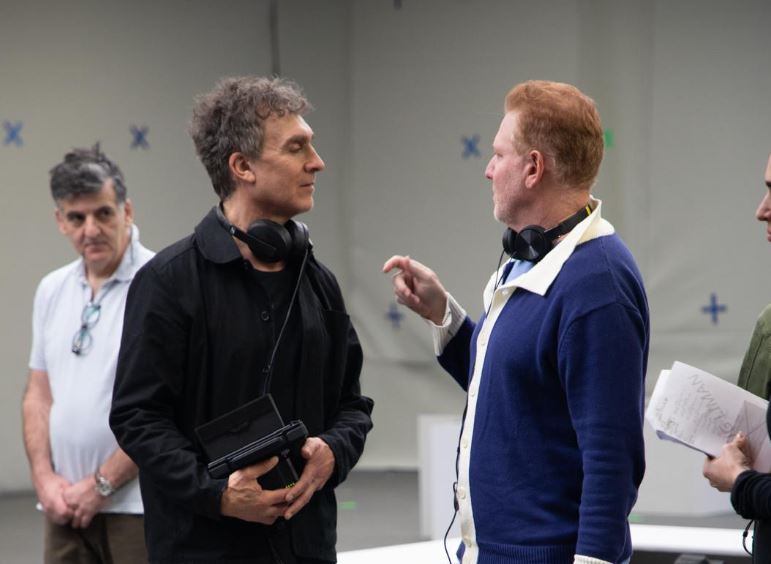
Acme’s flagship production, Killing Satoshi, is nearing completion. Directed by Doug Liman and starring Casey Affleck, Pete Davidson, Gal Gadot and Isla Fisher, the film follows the mystery surrounding Satoshi Nakamoto, the anonymous creator of Bitcoin. The screenplay was written by Nick Schenk.
The film was produced using Acme’s grey-stage model with AI-generated environments. Acme is also serving as VFX and AI partner on Stop That Train, a new film from director Adam Shankman.
The company says it has more than 15 film and television projects in various stages of production and pre-production, in addition to advertising work. It has built facilities in London, broken ground in Spain, operates a smaller studio in Los Angeles and plans to expand to New York.
Kavanaugh’s role gives the company a high-profile and sometimes controversial figurehead. He founded Relativity Media, which became one of Hollywood’s most prominent independent studios before entering bankruptcy protection in 2015. Kavanaugh later bought the company back out of Chapter 11 following a lengthy process.
Earlier in his career, Kavanaugh was associated with financing structures that helped channel institutional capital into Hollywood, including slate financing arrangements with major studios. He was also involved in early film and streaming distribution strategies.
The Acme model follows a similar entrepreneurial pattern: identify a structural inefficiency, build a financial or technological model around it, and use that model to unlock production volume.
The company still has to prove that its system can deliver consistent commercial results. But if it does, Acme could become a case study in how AI is applied to preserve, rather than replace, creative industries.
For Hollywood, the question is no longer whether AI will enter the production process. The question is who controls it, and whether it is used to reduce opportunity or expand it.
Just Luxe
Inside the Quiet AI Studio Reimagining the Future of Cinema
Hollywood has always been built on illusion: backlots dressed as foreign capitals, soundstages transformed into palaces, deserts and distant planets, and actors asked to make the impossible feel intimate. What has changed is the cost of maintaining that illusion.
Today, the economics of cinema are under extraordinary pressure. Original films have become harder to finance. Studios are retreating into the safety of franchises. Streamers, once willing to spend aggressively on prestige and experimentation, are now more cautious. The result is a luxury problem with real cultural consequences: the films audiences remember most are often the ones the industry now finds hardest to make.
Acme AI & FX believes it has found a way forward.
The company, led by Ryan Kavanaugh, Garrett Grant, Lawrence Grey and Matthew Kavanaugh, has been quietly developing an AI-powered production model designed to preserve the artistry of filmmaking while removing much of its logistical excess.
At the centre of the model is Acme’s proprietary grey stage. Actors perform there. Directors guide them. Writers and department heads remain essential. Around that human centre, Acme uses proprietary AI technology to generate photorealistic environments: interiors, landscapes, cityscapes and worlds that previously required expensive travel, location scouts, physical sets and large-scale logistical planning.
The result is not a synthetic replacement for cinema, but a new kind of cinematic atelier. Human performance remains the luxury object. The technology simply expands the canvas.
That proposition arrives at a delicate moment. For years, AI has been treated in Hollywood as a threat, a force that might flatten craft and replace talent. Acme is making the opposite argument: that technology can protect creative work by making more of it possible.
Its flagship production, Killing Satoshi, is an ambitious test of that thesis. Directed by Doug Liman and starring Casey Affleck, Pete Davidson, Gal Gadot and Isla Fisher, the film explores the mystery of Bitcoin creator Satoshi Nakamoto. Written by Nick Schenk, it is a high-concept original thriller of the sort Hollywood has become increasingly reluctant to finance.
Acme produced the film on its grey stage with AI-generated environments, creating the scale of a major studio production without the traditional physical sprawl.
The company is also involved in Stop That Train, the new Adam Shankman film, and says more than 15 film and television projects are already in development or production.
The business case is as striking as the creative one. Acme says it can cut shoot schedules by 60 to 70 percent and reduce below-the-line costs to a fraction of traditional production levels. In a market where original films are often rejected because their budgets no longer justify the risk, those savings could be transformational.
Ryan Kavanaugh’s presence adds another layer to the story. His career has included major successes, bold financing innovations and public controversy. With Relativity Media, he helped popularise slate financing and became one of Hollywood’s most visible independent studio figures before the company’s bankruptcy and restructuring made him a target of industry criticism.
Now, Acme offers him and his partners a new chapter: not merely another studio, but a production system built for a changed era.
Luxury cinema has always depended on craft, scale and imagination. Acme’s wager is that artificial intelligence, used carefully, can preserve all three.
If it succeeds, the future of film may not look less human. It may look more possible.
LA Weekly
The AI Studio Betting It Can Bring Original Movies Back to Hollywood
Los Angeles knows the sound of a stalled industry.
It is in the quieter stages, the thinner production calendars, the crews waiting for the next call and the writers with strong scripts that no one wants to finance. Hollywood is still making movies, but it is making fewer risky ones. The business has narrowed. Sequels, franchises, remakes and familiar IP dominate the conversation.
Original films, especially mid-budget ones, are fighting for oxygen.
Acme AI & FX thinks it can change that.
The company has been building quietly, without the usual Hollywood noise. No splashy launch. No constant press cycle. Just facilities, technology and productions. Its pitch is blunt: AI can reduce the cost of filmmaking without replacing the people who make films worth watching.
That last part matters in this town.
Acme’s model uses a proprietary grey stage where actors perform and directors direct in a controlled environment. The AI does not replace performance. It generates the world around it. Streets, interiors, landscapes, cities and large-scale environments are built digitally with photorealistic precision.
The savings come from what the company removes: location moves, travel, weather delays, physical builds, permitting headaches and the sprawling logistics that drive budgets higher before a scene is even finished.
Acme says it can cut shoot schedules by 60 to 70 percent and produce at roughly 20 percent of traditional below-the-line costs. In a city where production flight and falling shoot days have become major concerns, that claim is not just technical. It is economic.
The company’s highest-profile project is Killing Satoshi, directed by Doug Liman and starring Casey Affleck, Pete Davidson, Gal Gadot and Isla Fisher. The film, written by Nick Schenk, explores the mystery of Bitcoin creator Satoshi Nakamoto.
It is not a superhero sequel. It is not a reboot. It is an original thriller with a major director and recognisable cast. In other words, it is exactly the kind of movie Hollywood says it wants but often struggles to make.
Acme is also the VFX and AI partner on Adam Shankman’s Stop That Train and says it has more than 15 projects moving through production and pre-production.
The leadership team includes Ryan Kavanaugh, Garrett Grant, Lawrence Grey and Matthew Kavanaugh. Kavanaugh’s name carries baggage in Hollywood, as well as a record of major industry bets. He founded Relativity Media, helped popularise slate financing and was involved in early structures that reshaped film finance and streaming distribution. Relativity’s bankruptcy made him a target. Acme now puts him back in familiar territory: trying to solve a broken part of the entertainment business.
The difference is that this time the problem is not access to capital. It is the cost of production itself.
Hollywood has spent years arguing about whether AI will destroy jobs. Acme is trying to prove the opposite. If the technology can make projects cheaper, more projects may get greenlit. More projects mean more writers, actors, directors and crews working.
That is the promise. The proof will be in the films.
But for a city that has watched too many productions leave, shrink or die in development, Acme’s model offers something rare: a version of AI that might actually keep Hollywood working.
Bangkok Post
New AI Studio Seeks to Reshape Global Film Production
The global film industry is undergoing a period of significant structural change. Studios are relying more heavily on established franchises, streaming platforms are reducing their appetite for risk, and original mid-budget films are becoming harder to finance.
Against that backdrop, Acme AI & FX is emerging as a new entrant in film production technology, with a model that seeks to reduce production costs while preserving the role of actors, directors, writers and creative crews.
The company, led by Ryan Kavanaugh, Garrett Grant, Lawrence Grey and Matthew Kavanaugh, has developed a production system based on proprietary artificial intelligence and grey-stage performance capture. Actors perform on stage, while Acme’s technology generates photorealistic digital environments around them.
The model is designed to reduce dependence on physical locations, set construction, international travel, permits and the logistical costs traditionally associated with feature film production.
Acme says the system can cut shoot schedules by 60 to 70 percent and substantially reduce below-the-line costs. If successful, the model could have implications not only for Hollywood, but also for international film production centres competing for investment and content creation.
The company’s first major test is Killing Satoshi, a conspiracy thriller directed by Doug Liman and starring Casey Affleck, Pete Davidson, Gal Gadot and Isla Fisher. The film focuses on Satoshi Nakamoto, the anonymous creator of Bitcoin, whose identity remains one of the most famous mysteries in technology and finance.
The project was produced using Acme’s AI-generated environments. It is also notable because it is an original, non-franchise film, the type of project that has become more difficult to finance in the current market.
Acme is also working as VFX and AI partner on Stop That Train, directed by Adam Shankman, and says it has more than 15 film and television projects in various stages of development and production.
The company has built facilities in London, is expanding in Spain, has a smaller studio presence in Los Angeles and plans to open in New York. Such a model could eventually allow productions to reduce their reliance on specific physical locations while maintaining cinematic scale.
For international markets, that development is significant. Film and television production has become increasingly global, with countries competing through tax incentives, infrastructure, skilled crews and post-production capabilities. AI-driven production could alter that competition by reducing the importance of some traditional cost factors while increasing the value of technology-enabled studio infrastructure.
The leadership team’s Hollywood background also draws attention. Ryan Kavanaugh previously founded Relativity Media and became known for financing structures that helped bring institutional capital into film production. His career has also included controversy, particularly around Relativity’s bankruptcy and restructuring.
With Acme, the central claim is that artificial intelligence does not need to replace creative labour. Instead, the company argues, it can reduce the cost base that has made many original productions commercially difficult.
That distinction will be important as governments, studios and labour groups consider how AI should be used in the creative industries.
The entertainment business is unlikely to return to its previous model. The question is what replaces it. Acme is betting that the answer lies in combining human performance with AI-enabled production infrastructure.
If the model proves durable, it could mark a new phase in global filmmaking.
Daily Front Row
Hollywood’s New Power Set Is Betting on AI, But Not the Way You Think
There is a new production player quietly moving through Hollywood, and its pitch is surprisingly human.
Acme AI & FX, led by Ryan Kavanaugh, Garrett Grant, Lawrence Grey and Matthew Kavanaugh, is not selling the bleak version of artificial intelligence that many creatives fear. It is not promising actorless movies, automated scripts or digital stars replacing real ones.
Instead, Acme is positioning itself as the AI studio that keeps talent at the centre and uses technology to make everything around that talent faster, smarter and less expensive.
That could matter more than ever.
Hollywood is in a strange mood. Everyone wants originality, but few want to pay for the risk. Studios are leaning into familiar franchises. Streamers are cutting back. Buyers want proven IP. The mid-budget original film, once the lifeblood of the industry, has become one of the hardest things to get made.
Acme’s answer is a proprietary grey-stage model where actors perform, directors direct and creative teams remain intact. AI generates the environments around them: city streets, interiors, landscapes, exteriors and cinematic worlds that would once have required locations, sets, travel and major logistical buildouts.
The company says the model can cut shoot schedules by 60 to 70 percent and bring below-the-line costs down dramatically.
For producers, that means the math changes. For actors and directors, it could mean more original projects get a chance. For audiences, it could mean a break from endless recycled IP.
The proof point is Killing Satoshi, Acme’s flagship production. Directed by Doug Liman and starring Casey Affleck, Pete Davidson, Gal Gadot and Isla Fisher, the film explores the mystery of Bitcoin creator Satoshi Nakamoto. Written by Nick Schenk, it has the feel of an old-school Hollywood thriller with a very contemporary subject.
It is also the kind of original star-driven film the traditional system has become reluctant to back.
Acme is also working on Adam Shankman’s Stop That Train as the VFX and AI partner, while more than 15 film and television projects are reportedly in motion behind the scenes.
Kavanaugh’s involvement gives the company a built-in Hollywood storyline. He has been praised as a financial innovator and criticised as a controversial operator. His Relativity Media years made him one of the most visible independent studio figures in town, and the company’s bankruptcy made him a target. But his track record also includes slate financing, early streaming distribution strategy and a long-standing interest in restructuring how entertainment gets made.
Now he and his partners are applying that instincts to AI.
What makes Acme interesting is not simply the technology. It is the positioning. At a time when many in the creative community view AI as a threat, Acme is trying to frame it as a tool for protecting the kind of work Hollywood claims to value.
Less waste. Faster shoots. Lower costs. More room for original ideas.
The fashion world understands reinvention. So does Hollywood. Acme’s bet is that the next era of entertainment will not be defined by choosing between people and technology, but by finding a better way to stage both.
Digital Journal
Acme AI & FX Launches New Production Model Aimed at Reducing Film Costs Without Replacing Creative Talent
Acme AI & FX is positioning itself as a new kind of film production company, using artificial intelligence to reduce production costs while keeping actors, writers, directors and creative crews central to the filmmaking process.
The company, led by Ryan Kavanaugh, Garrett Grant, Lawrence Grey and Matthew Kavanaugh, has spent nearly two years developing a proprietary AI-enabled production system. Its model is designed to address one of the entertainment industry’s most pressing challenges: the rising cost of producing original film and television content.
Hollywood has become increasingly dependent on franchises, sequels and established intellectual property. At the same time, streaming platforms have reduced their willingness to greenlight expensive original projects as they shift from subscriber growth to profitability. International buyers have also become more cautious, often favouring projects with built-in audience awareness.
Acme’s approach focuses on reducing the production costs that make original projects difficult to finance.
The company shoots performances on a proprietary grey stage and uses AI to create photorealistic environments around the actors. This reduces the need for physical sets, location shoots, travel, permits and other logistical expenses.
According to the company, its model can cut shoot schedules by 60 to 70 percent and produce at a fraction of traditional below-the-line costs.
Acme says the technology is not intended to replace performers or production teams. Actors continue to perform, directors direct, writers write and department heads continue to manage their areas of production. The AI is used primarily to generate the visual environments that would otherwise require expensive physical production.
The company’s flagship project is Killing Satoshi, directed by Doug Liman and starring Casey Affleck, Pete Davidson, Gal Gadot and Isla Fisher. The film explores the mystery of Satoshi Nakamoto, the anonymous creator of Bitcoin. The screenplay was written by Nick Schenk.
The film was shot using Acme’s grey-stage process with AI-generated environments. Acme is also serving as the VFX and AI partner on Adam Shankman’s Stop That Train.
The company says it has more than 15 film and television projects in various stages of pre-production and production, as well as advertising work. It has built studio infrastructure in London, has broken ground in Spain, operates a mini studio in Los Angeles and plans to expand into New York.
Ryan Kavanaugh’s involvement is likely to attract industry attention. He previously founded Relativity Media and became known for film financing innovations, including slate financing structures that helped bring institutional capital into studio production. Relativity later underwent bankruptcy and restructuring, making Kavanaugh a controversial figure in Hollywood.
Acme represents a new effort to reshape the economics of production at a time when the industry is under pressure from cost inflation, reduced risk appetite and growing debate over the role of AI in creative work.
The company’s central argument is that artificial intelligence can support rather than replace the creative workforce. If its model proves scalable, Acme could offer studios and producers a new route to making original films financially viable.
In an industry searching for ways to reduce costs without reducing ambition, Acme AI & FX is betting that AI-enabled production infrastructure could become a major part of Hollywood’s next chapter.