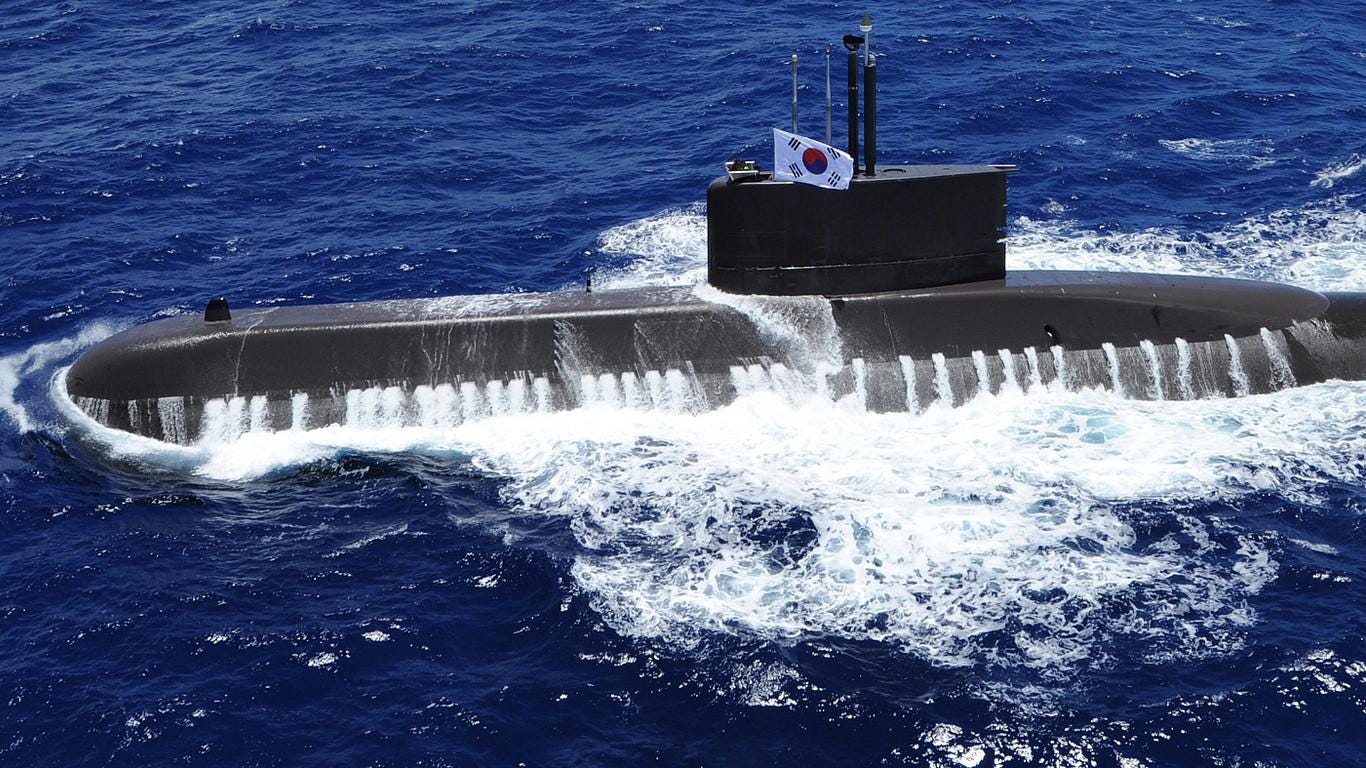
South Korea has developed technology that can greatly extend a sub's range by allowing it to create hydrogen fuel cells on its own, according to a state-run defense research agency.
The Agency for Defense Development (ADD) announced that a new technology developed can generate high-purity hydrogen directly in submarines. High-purity hydrogen may be utilized as a fuel in submarine fuel cells.
Submarines also have problems charging their fuel cells since they are inefficient at storing energy and take a long time to charge. Furthermore, hydrogen may only be charged through different stations.
However, the newly-developed technology lets submarines produce high purity hydrogen autonomously through a fuel reforming method that utilizes methanol as a fuel.
Fuel reforming is a method of converting a chemical structure from the fuel's component and extracting the desired substance during the process.
The ADD stressed that the new technology does not require a separate hydrogen charging station and can reduce charging time, allowing for greater submarine range.

WTO Ministerial Collapse Leaves Global Digital Trade Rules in Limbo
SpaceX Pivots Toward Moon City as Musk Reframes Long-Term Space Vision
Japan Business Sentiment Rises as Iran War Fuels Inflation Fears, BOJ Rate Hike Looms
SpaceX’s Starship Completes 11th Test Flight, Paving Way for Moon and Mars Missions
South Korea's $17.3 Billion Emergency Budget Targets Oil Price Surge
Neuren Pharmaceuticals Surges on U.S. Patent Win for Rare Disorder Drug
Neuralink Expands Brain Implant Trials with 12 Global Patients
Oil Prices Hold Near Multi-Year Highs Amid Iran Conflict and Hormuz Supply Fears
NASA Resumes Cygnus XL Cargo Docking with Space Station After Software Fix
Asian Currencies Hold Steady Amid U.S.-Israel-Iran Tensions and BOJ Signals
Lost in space: MethaneSat failed just as NZ was to take over mission control – here’s what we need to know now
FDA Pilot Program Eases Rules for Nicotine Pouch Makers
RBC Capital: European Medtech Firms Show Minimal Middle East and Energy Risk Exposure
Dollar Surges to Nine-Month High as Middle East Tensions Drive Safe-Haven Demand 


