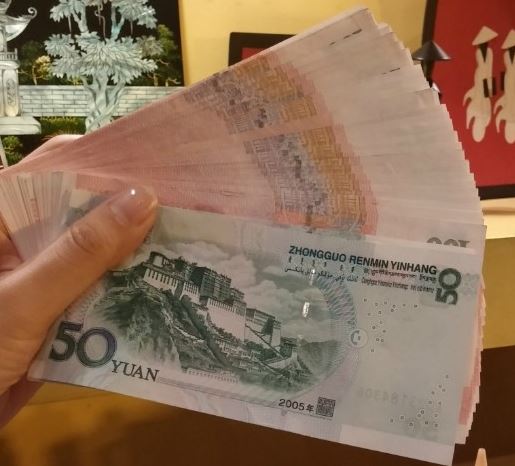
The yuan weakened on Wednesday as escalating U.S.-China trade tensions rattled Chinese markets post-Lunar New Year. The dollar surged over 0.5% against the yuan to 7.2856, despite the People's Bank of China (PBOC) setting a stronger-than-expected midpoint rate. Investors watched the fixing closely for signs of Beijing's stance on currency devaluation in response to U.S. tariffs.
China swiftly retaliated against new U.S. tariffs imposed by President Donald Trump, with Trump stating he has no urgency to engage in talks with Chinese President Xi Jinping. Analysts predict China may allow further yuan depreciation to counteract the economic impact of tariffs, signaling prolonged trade friction.
Meanwhile, the offshore yuan hovered at 7.2892 per dollar after plunging to a record low of 7.3765 earlier in the week. The Australian dollar, often a proxy for the yuan, edged lower to $0.6247, while the New Zealand dollar traded at $0.5653.
The yen was a key mover, rising over 0.5% to 153.47 per dollar, its highest in over a month. Japan’s inflation-adjusted real wages grew 0.6% in December, fueling speculation of further Bank of Japan (BOJ) rate hikes. Traders have priced in over 30 basis points of tightening by year-end.
Elsewhere, the Canadian dollar rebounded from its 22-year low, standing at C$1.4331, while the Mexican peso steadied at 20.4840 per dollar. The euro climbed back above $1.02, last trading at $1.0374, and sterling gained to $1.2484. The dollar index slipped 0.07% to 107.97.
Despite trade war tensions, market sentiment remained resilient, with optimism stemming from delayed U.S. tariffs on some countries following negotiations.