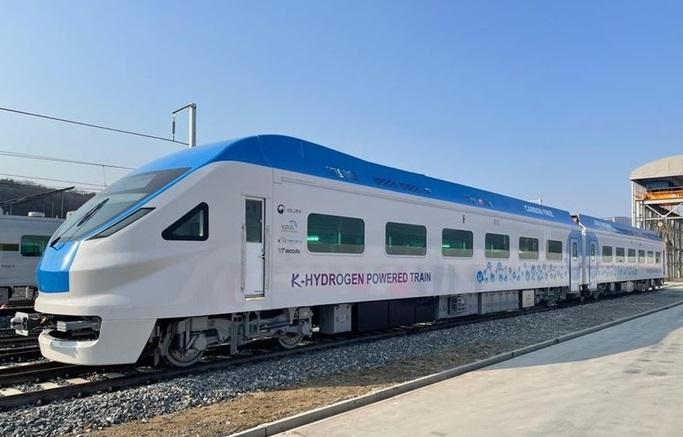
South Korea’s Ministry of Land, Infrastructure, and Transport has developed a test vehicle for a hydrogen-powered train that enables operation without electric facilities.
The project was carried out in collaboration with the state-run Korea Railroad Research Institute.
Woojin Industrial Systems Co. manufactured the test vehicle and the Korea Railroad Corp. developed the operational technology.
The hydrogen-powered electric train is equipped with a 1.2-megawatt hybrid power system based on a hydrogen fuel cell and secondary cell and also features a smart energy management system.
The train has a maximum operational speed of over 110 km per hour and a range of over 600 km on a single charge.



SK Hynix Joins $1 Trillion Club as AI Chip Demand Fuels Stock Surge
Dollar Gains Slightly as U.S.-Iran Tensions Keep Forex Markets on Edge
Fertile land for growing vegetables is at risk — but a scientific discovery could turn the tide
Meta Subscription Push Could Add Billions in Recurring Revenue, Says Rosenblatt
Tokyo Inflation Cools in May, Supporting BOJ’s Cautious Rate Hike Path
Oil Prices Set for Sharp Weekly Losses as U.S.-Iran Ceasefire Hopes Ease Supply Concerns
As the Black Summer megafires neared, people rallied to save wildlife and domestic animals. But it came at a real cost
SQM Q1 Profit More Than Doubles as Lithium Prices Surge
Lake beds are rich environmental records — studying them reveals much about a place’s history
Blue Origin New Glenn Rocket Explodes During Launch Pad Test, Delaying Space Ambitions
Rice feeds billions of people – but its role in fueling climate change is growing
Sable Offshore Wins Key Court Battle Over California Oil Pipeline
SpaceX IPO Could Become Largest in History with $1.8 Trillion Valuation Target
How is Antarctica melting, exactly? Crucial details are beginning to come into focus
UK Grocery Inflation Slows to 3.1% as Supermarket Price Pressures Ease in May 2026
US Dollar Slips as Markets Weigh Potential US-Iran Peace Deal and Oil Price Outlook
Thousands of satellites are due to burn up in the atmosphere every year – damaging the ozone layer and changing the climate 


