


 New York Declares Measles Disaster Emergency as Cases Surge
  Trump Administration to Launch Autism Initiatives Targeting Acetaminophen Use and New Treatment Options
  Parasites are ecological dark matter – and they need protecting
  Blue Origin New Glenn Explosion Could Delay Launch Operations Until 2028
  3 clinical-grade skincare creams you really shouldn’t buy online
  NASA Partners with Katalyst to Save Swift Observatory with Innovative Docking Mission
  Wildfires ignite infection risks, by weakening the body’s immune defences and spreading bugs in smoke
  Swimming in the sweet spot: how marine animals save energy on long journeys
  Rice feeds billions of people – but its role in fueling climate change is growing
  Trump Administration Bars U.S. Travelers From Congo Flights Amid Ebola Outbreak
  US-Backed Pediatric HIV Treatment Drops After Foreign Aid Changes, Study Finds
  Burkina Faso and Mali’s fabulous flora: new plant life record released


 Add as a preferred source on Google
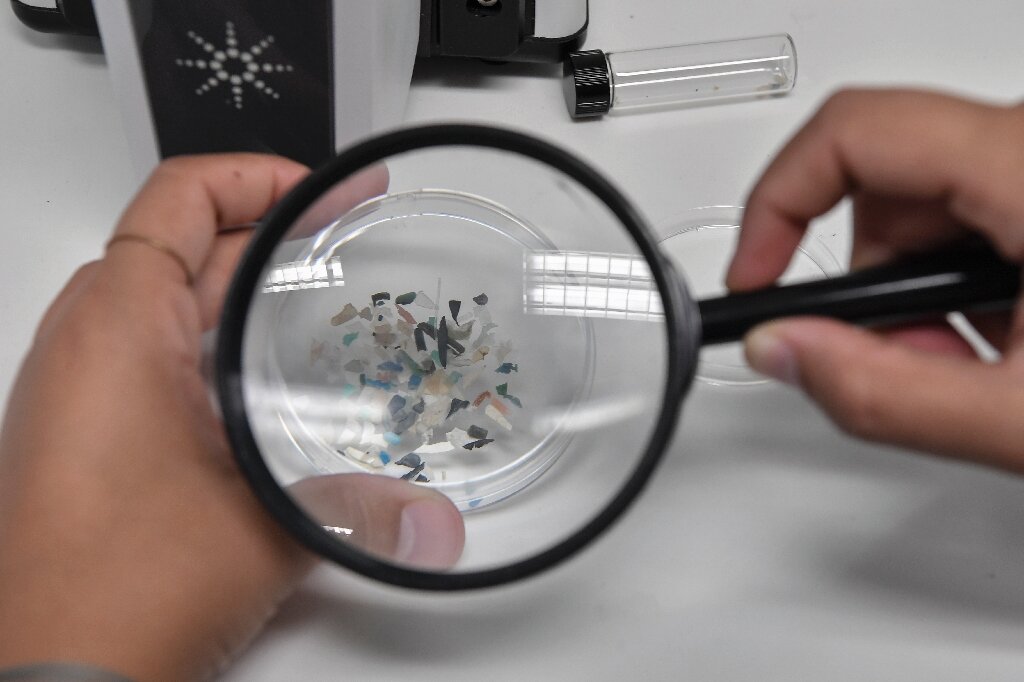
Scientists in the Netherlands have discovered microplastics in human blood for the first time from nearly 80 percent of 22 anonymous, healthy volunteers, warning that the ubiquitous particles could also be making their way into organs.
Half of the blood samples showed traces of PET plastic, widely used to make drink bottles, while more than a third had polystyrene, used for disposable food containers and many other products.
The Dutch study was published in the Environment International journal.
The microplastics, tiny pieces of mostly invisible plastic, have already been found almost everywhere from the deepest oceans to the highest mountains as well as in the air, soil, and food chain.
According to Dick Vethaak, an ecotoxicologist at Vrije Universiteit Amsterdam, it was the first time they detected and quantified such microplastics in human blood, which is proof that we have plastics in our body -- and we shouldn't.
He added that further research is needed to investigate how it could impact health by determining where it is going in the body, if it can be eliminated or excreted, or if it is retained in certain organs, or able to pass the blood-brain barrier.
The study said the microplastics could have entered the body via air, water, or food, and in products such as particular lip glosses, toothpaste, and tattoo ink.
Vethaak added that there could be other kinds of microplastics in the blood that his study did not pick up as it could not detect particles larger than the diameter of the needle used to take the sample.
The study was funded by the Netherlands Organisation for Health Research and Development UK-based Common Seas, which aims to reduce plastic pollution.







