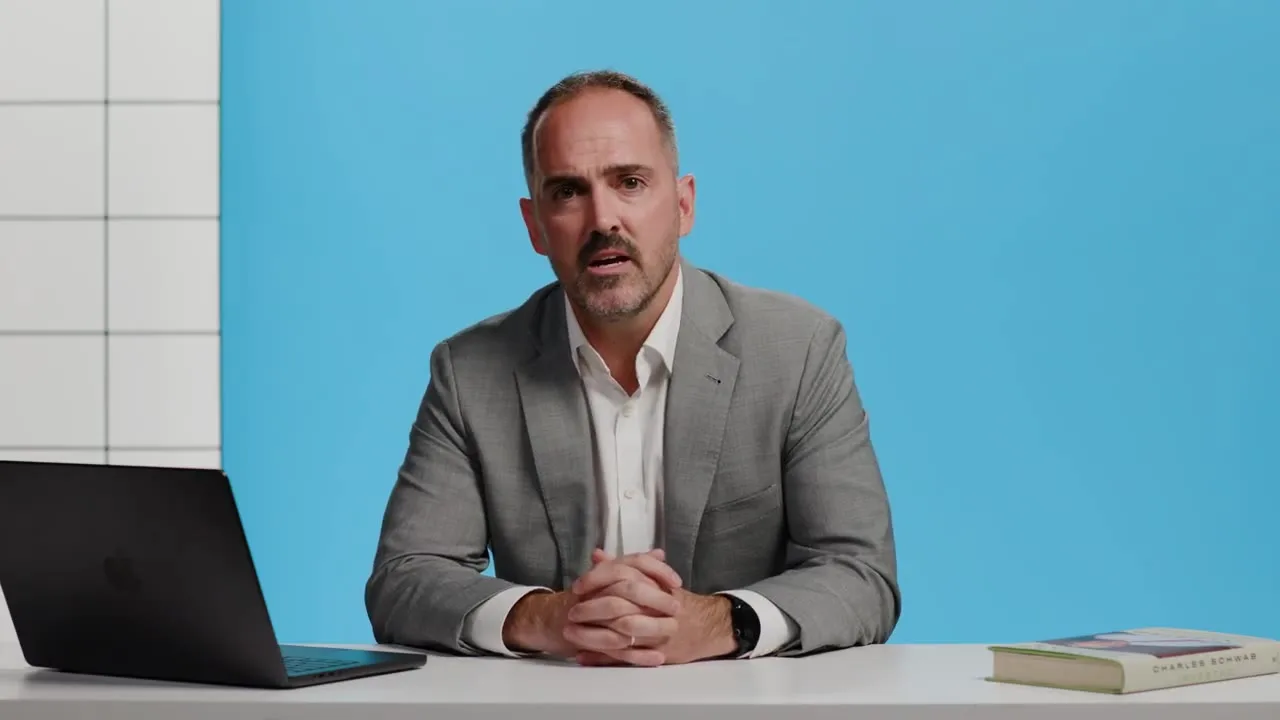
The 10-year Treasury yield rose to 5% on growth and changing rate expectations, Collin Martin, head of fixed income research and strategy at the Schwab Center for Financial Research, said.
Martin attributed the recent increases chiefly to economic strength and expectations of tighter Federal Reserve policy. Concerns about government debt and weaker foreign demand played a smaller role in his assessment.
He spoke on Schwab Network's “What's Going on with the Bond Market? With Collin Martin | Comment Below,” published Oct. 22.
Bond prices fall when yields rise, reducing the value of existing holdings. Martin linked the increases over recent months to a resilient economy and a change in the expected path of interest rates.
He said the Federal Reserve raised rates in mid-September, with one or two further increases expected by year-end or into 2027. Markets expected rates to reach a higher level than they had anticipated earlier this year.
Inflation expectations had contributed little to the rise in yields, in his assessment. He acknowledged concerns about whether buyers could absorb future government borrowing but described those concerns as a smaller influence.
Turning to Treasury buybacks, Martin described an expansion announced by Treasury Secretary Scott Bessent in mid-August. A viewer's question cited purchases of more than $4 billion in longer-term debt, but Martin gave no precise amount.
He explained that buybacks help investors trade older Treasury securities, which can become harder to sell as they move further from their issuance date. Yields initially fell after the announcement but subsequently rose above their earlier levels.
Martin suggested uncertainty about government intervention could lead investors to demand higher yields. He described a possible loss of credibility, while saying he did not think that point had been reached.
He then addressed “bond vigilantes,” investors who sell government debt over concerns about public finances, pushing borrowing costs higher. He put outstanding US debt at $40 trillion and described interest payments as a growing share of annual spending.
Higher interest costs could offset spending cuts elsewhere, he said. He did not identify a yield level that would force Congress to change fiscal policy.
Martin described the economy as able to withstand the rise in yields. Longer-term lending should offer higher yields than short-term lending when economic growth and employment are stable, he said.
Mortgage rates follow longer-term Treasury yields more closely than the Fed's short-term policy rate, he explained. Rising yields had increased mortgage costs, adding to the difficulty of buying homes at already high prices.
On support for Japan's yen, Martin suggested US involvement reflected concern that Japan might sell Treasuries to finance intervention. He put Japan's holdings above $1 trillion and described it as the largest foreign government holder.
He linked further US support to whether the yen resumed falling, without giving a timetable or exchange-rate threshold.
Martin rejected the idea that the Fed had lost control of the bond market. He said inflation had exceeded the central bank's 2% target for five and a half years, while employment remained stable.
The supplied remarks ended before he answered a final question about whether debt and rising yields were bringing the economy close to a breaking point.