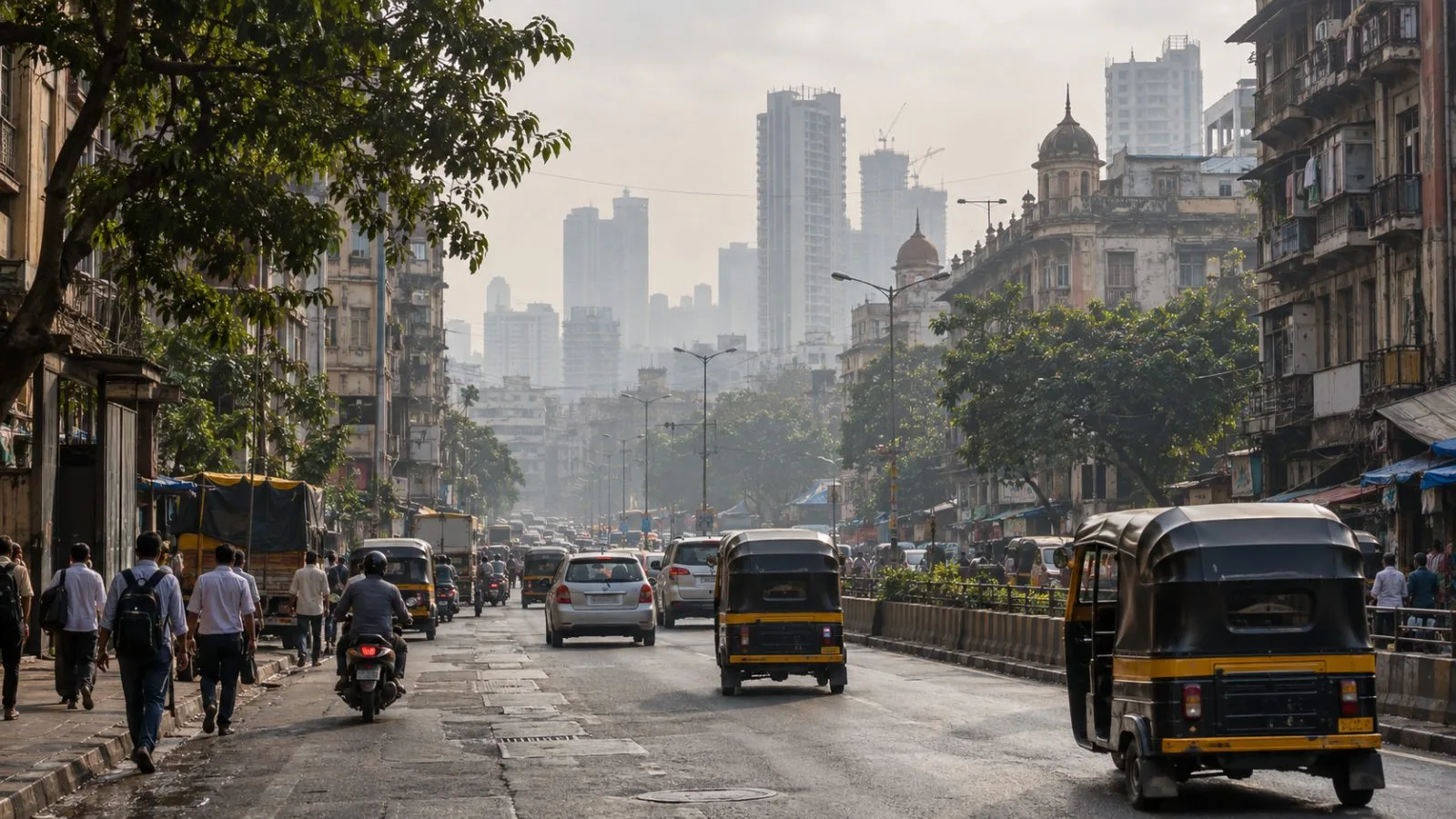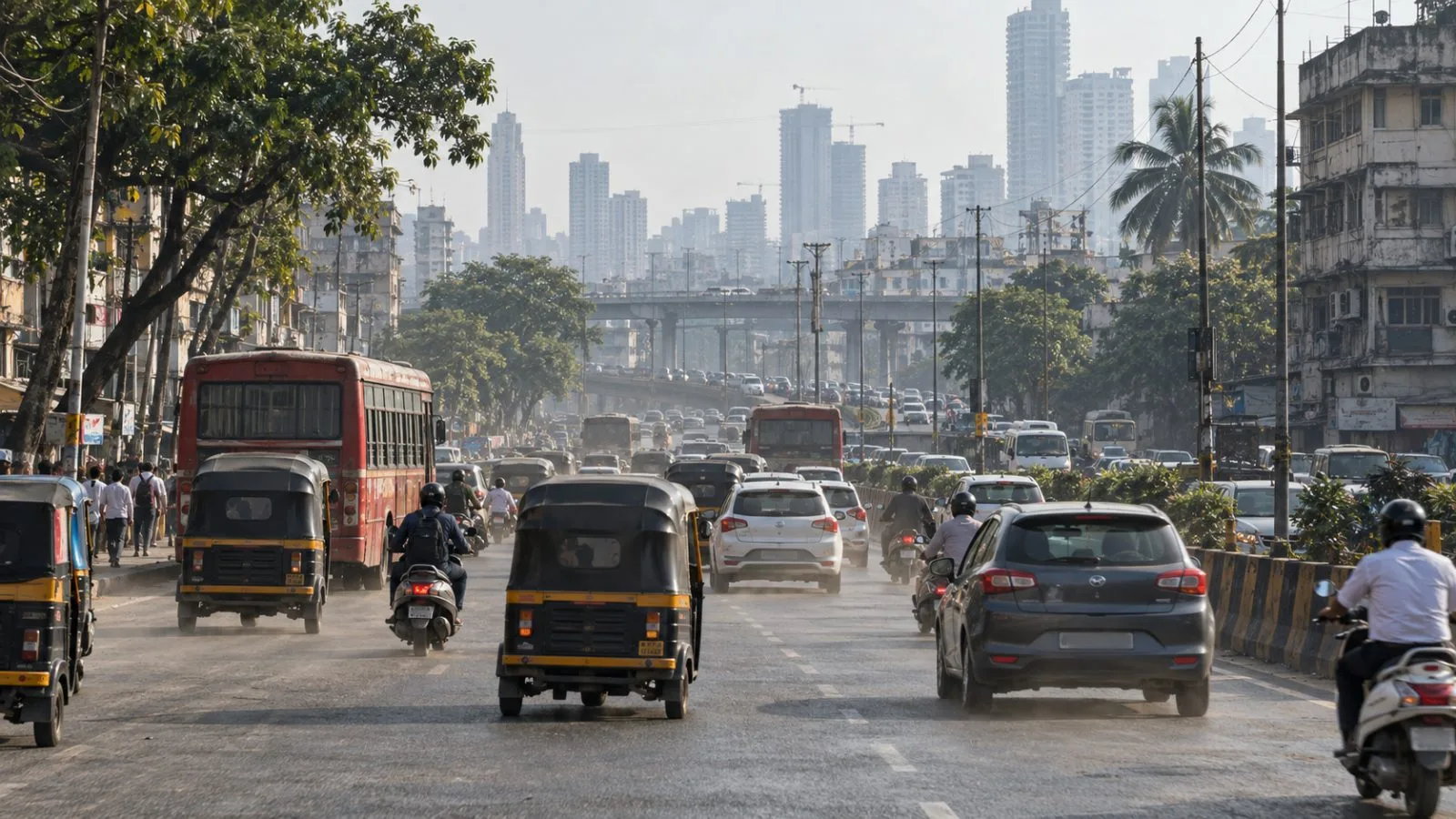
Atmospheric scientist Dr. Gufran Beig warned that El Niño could worsen Mumbai’s winter pollution, a city-level forecast separate from official outlooks on the climate pattern.
Beig, founder-project director of SAFAR and chair professor at NIAS, IISc, told NDTV Profit that changes to coastal winds could slow pollutant dispersion. He also expects a milder winter and less rain, which could mean fewer chances for rainfall to clear pollutants from the air.
In its Oct. 8 discussion, the Climate Prediction Center at the National Oceanic and Atmospheric Administration (NOAA) put the chance of El Niño remaining in the strong-to-very-strong range during January-March 2027 above 83%. NOAA’s outlook addresses the climate pattern, not Mumbai’s air quality.
India’s Ministry of Earth Sciences said in a July 30 parliamentary response that El Niño could reach a very strong category in October-December 2026. The ministry said its intensity and effects on India depend on changing ocean and atmospheric conditions. It also said the World Meteorological Organization (WMO) and India Meteorological Department (IMD) do not formally classify an event as a “super El Niño.”
Reports cited different Mumbai air-quality readings for Oct. 24. NDTV Profit reported an AQI of 322 and described it as very poor. Hindustan Times cited a citywide reading of 120 from the Central Pollution Control Board’s (CPCB) Sameer app, with 17 of 24 active monitoring stations in the moderate range and Malad West highest at 171. CPCB classifies readings of 101-200 as moderate and 301-400 as very poor. The reports do not provide enough detail about the 322 reading to reconcile it with the Sameer reading.
A Centre for Science and Environment (CSE) analysis of CPCB data found Mumbai’s average PM2.5 concentration was 49 micrograms per cubic meter between Oct. 1, 2024, and Jan. 31, 2025. That was the lowest winter average in four years and 24% below the average of the previous three winters. CSE also found winter PM2.5 levels exceeded annual averages at most locations. Separately, it found that days with bad air began accumulating around mid-November and continued into January, alongside cooler weather and slower winds.
CSE identified local emissions and regional conditions as factors in Mumbai’s air quality. NDTV Profit also cited road dust, vehicle emissions, industrial activity and construction as pollution sources. NOAA’s next ENSO Diagnostic Discussion was scheduled for Nov. 12, 2026.