
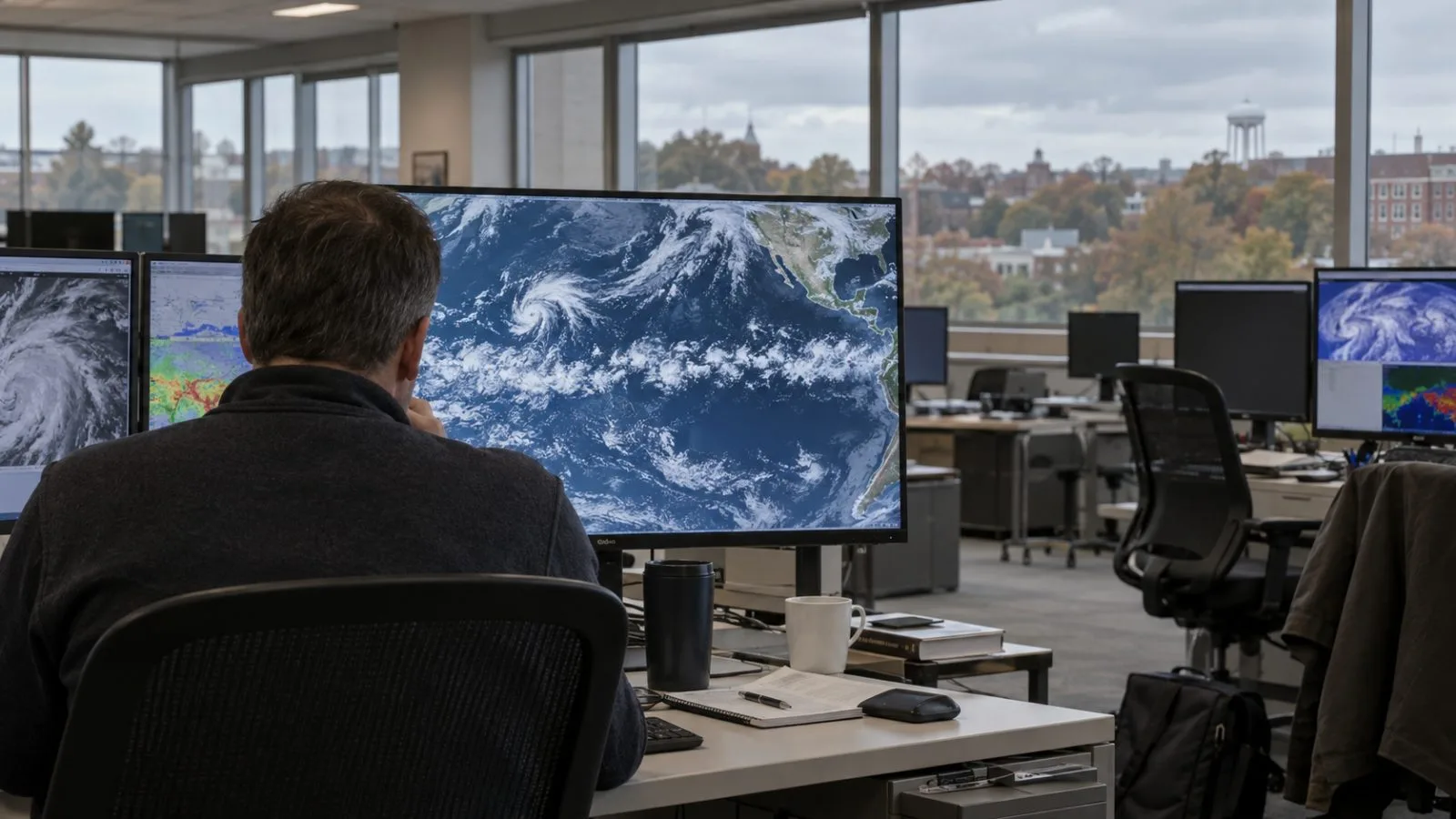
NOAA’s Climate Prediction Center said Nov. 12 that Pacific temperatures had reached the El Niño threshold, as reports described flooding deaths and coastal effects in the United States.
The center’s threshold test requires a three-month average at least 0.5 degrees Celsius (0.9 degrees Fahrenheit) above normal. NOAA said the pattern is likely to remain strong or very strong through January-March 2027.
The label “super El Niño” is not used formally by every agency. India’s Ministry of Earth Sciences said in a July 30 parliamentary response that the World Meteorological Organization and India Meteorological Department do not formally use the term, as EconoTimes has reported on the agencies’ terminology.
Climatologist Daniel Swain put California’s coastal sea-surface temperatures 8 to 10 degrees Fahrenheit above average, The Independent reported. California’s flooding arrived weeks before this month’s king tides, and the outlet attributed the early coastal effects to higher sea levels and wave energy associated with warm water. The Independent also said marine life had been found hundreds of miles from its usual ranges, while thousands of seabirds starved after losing access to food.
The Independent linked El Niño to deadly flooding rains in the southern United States. FOX 10 in Phoenix reported that Williams Singavarapu, 73, was found dead this month after falling into floodwater that entered a drainage tunnel. The Yavapai County Sheriff’s Office said Benny Sutton, Jr., 63, died after floodwater swept away his truck.
Lake Powell, the country’s second-largest reservoir, has gained 20 feet from its record low, The Independent reported. Swain wrote that the reservoir remained 13 feet below its level at the same time last year. Climate scientist and hydrologist Martin Hoerling told The Associated Press the increase was “somewhat of an unexpected boost from Mother Nature.” NOAA’s forecast calls for strong-to-very-strong conditions through January-March 2027.