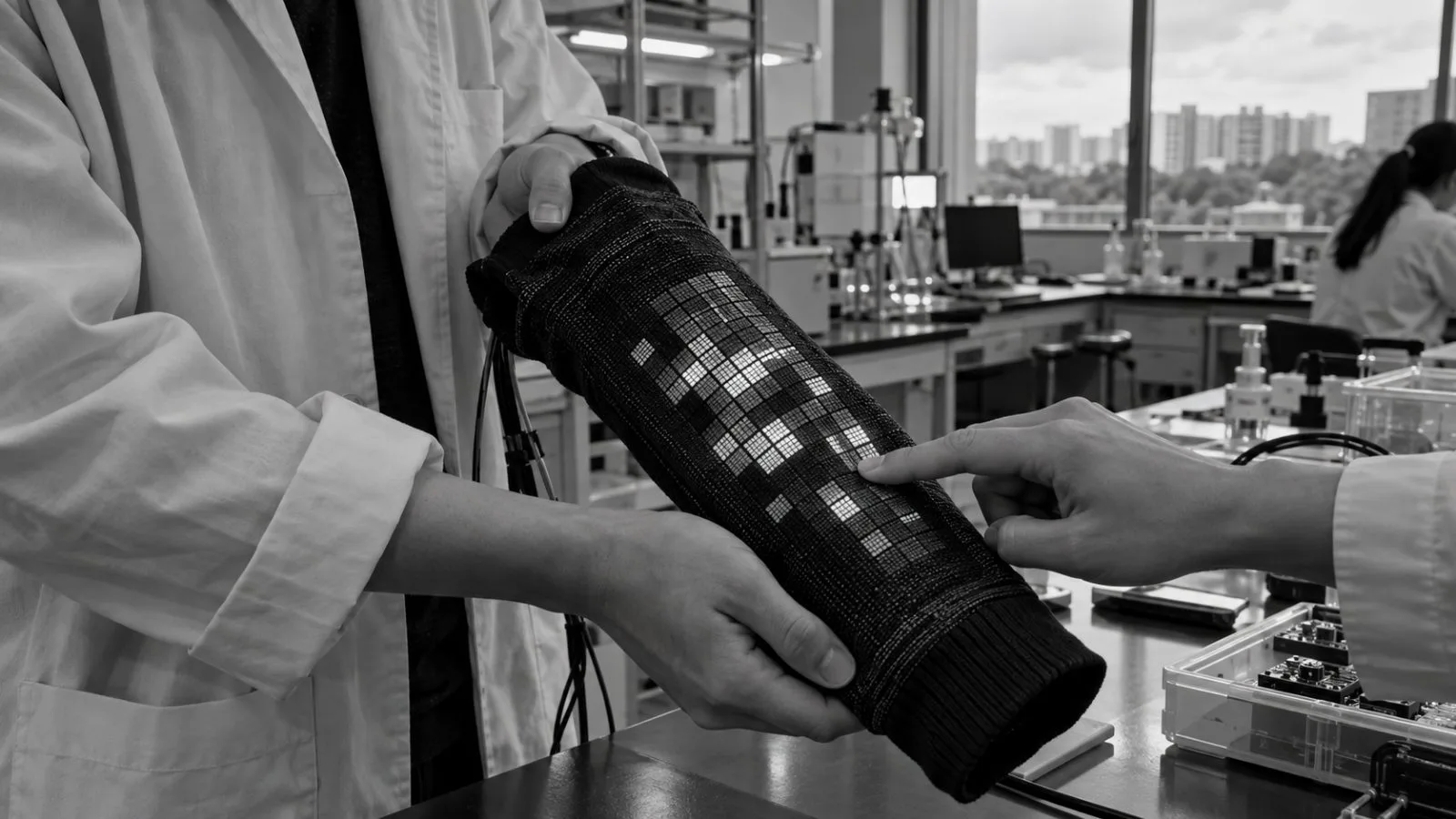
Researchers at the National University of Singapore have integrated a touch-sensitive pixel display into a sleeve, creating a 96-by-54-pixel interface for wearable computing in work published in Nature on Oct. 21.
NUS describes the system as the world’s first touchscreen integrated into a garment. The panel measures 168 by 105 millimeters and forms its image from 54 pixel fibers, each fitted with 96 LEDs. The Nature paper reports a refresh rate of 30 frames per second and eight-bit color, along with interactive computing and wireless data exchange. NUS says the interface displays graphics and video.
According to NUS, the sleeve can run a calculator, show photos and compass readings, respond to voice commands, receive images through Bluetooth, and measure and display body temperature. In tests reported by the university, brightness and touch response changed little after 50 detergent washes and 1,000 bends around a five-millimeter radius. NUS also says the display is as breathable as cotton, polyester and denim and remains within established skin-contact safety limits.
NUS says the researchers linked more than 5,000 microchips through more than 20,000 electrical connections to create a thread about one millimeter thick and 10 meters long. The Nature paper describes the engineering challenge as combining graphical interface functions with textiles built from one-dimensional fibers, while conventional interfaces rely on flat, rigid displays. The team’s design places display pixels, touch sensing and electrical connections within the fiber structure.
NUS said the team’s next research priorities are increasing resolution, adding integrated sensing and running artificial intelligence on the device. The announcement did not give a timetable for that work.