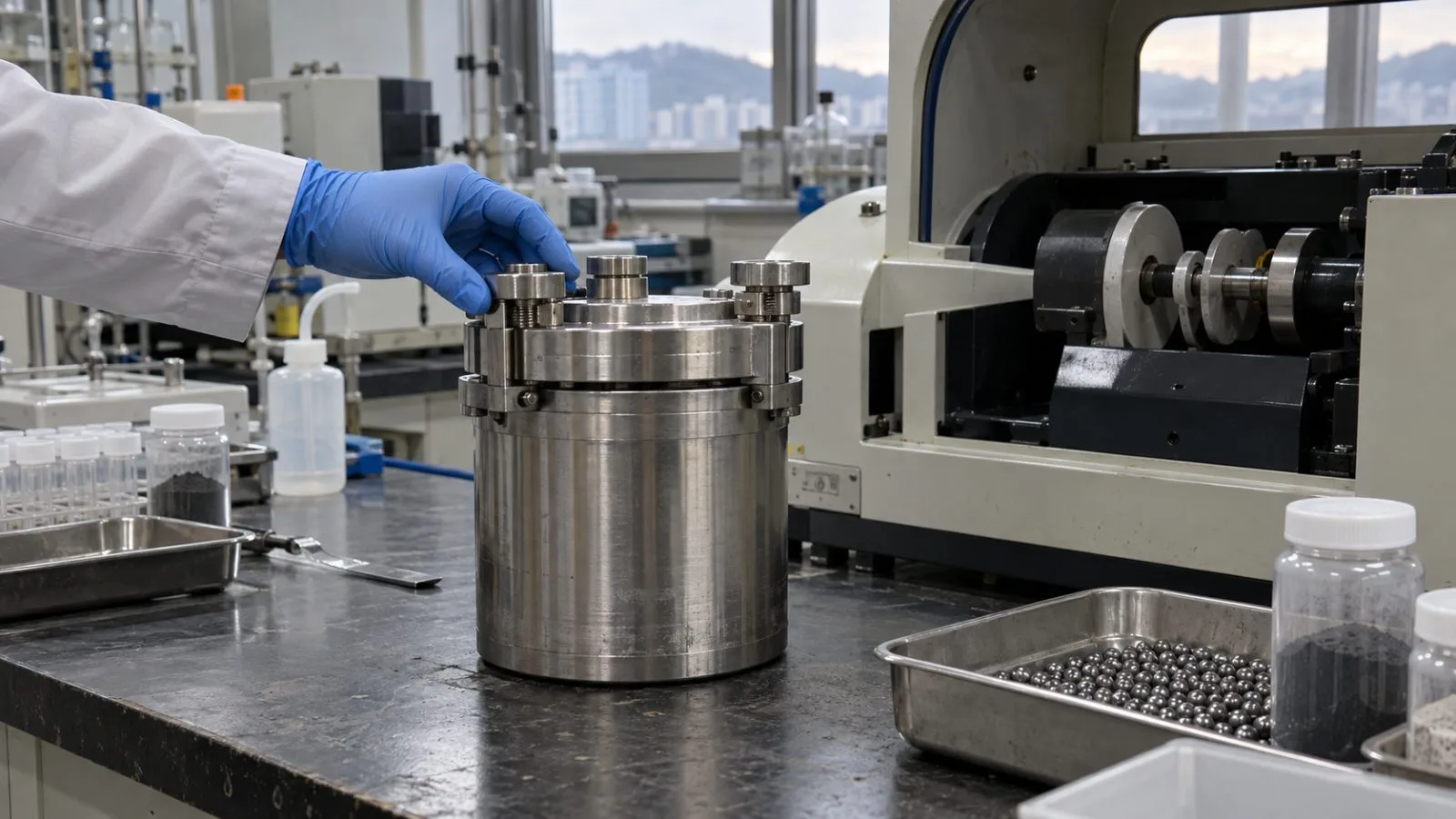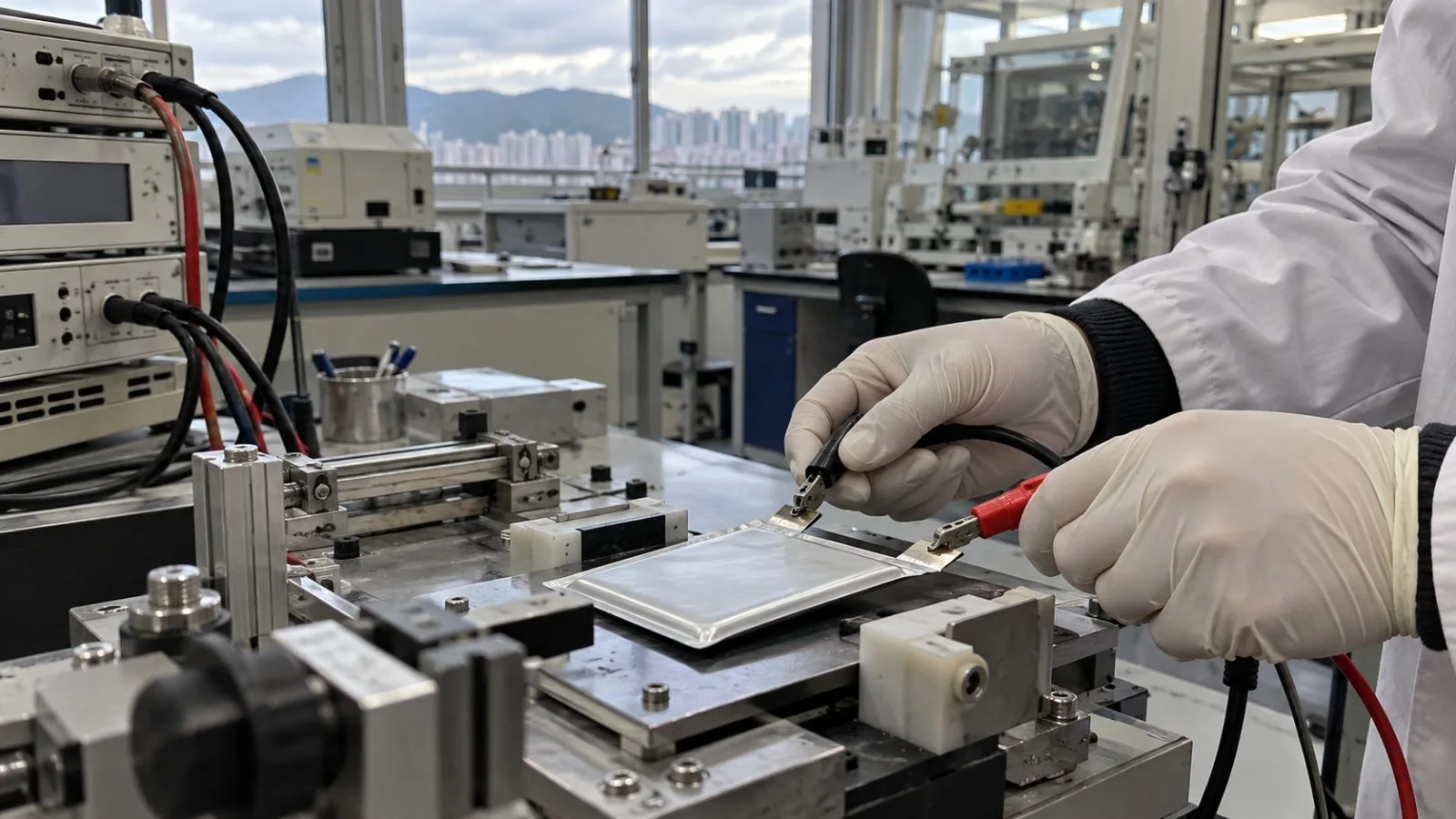
Researchers at Chonnam National University say a sodium-metal full cell using their electrolyte retained 90.4% capacity after 1,000 cycles, adding evidence for sodium batteries as a possible lower-cost alternative to lithium-ion batteries.
The paper, published in Energy Storage Materials, measured 92 mAh/g at the start of the 2C cycling test and 83.2 mAh/g after cycle 1,000. For a full cell paired with a sodium vanadium phosphate cathode, researchers recorded 110.2 mAh/g at 0.1C and nearly 99% coulombic efficiency; at 5C, capacity was 90 mAh/g.
The electrolyte uses sodium perchlorate, N-isopropylacrylamide and succinonitrile. Heat was used to polymerize the mixture in place, producing a polymer matrix. For the optimized formulation, the paper lists ionic conductivity of 1.39 mS/cm at 30°C, a sodium-ion transference number of 0.58 and an electrochemical stability window of 5.0 V versus Na/Na⁺.
The paper frames the design around a limitation of liquid deep eutectic solvents: they can help ions move but may escape from a cell. Polymerizing the mixture is intended to reduce that leakage while keeping ion transport. The paper says similar polymerizable deep eutectic solvent approaches were explored for lithium batteries, while their use in sodium-metal systems remained limited.
In separate symmetric-cell tests, sodium deposition and removal remained stable for more than 1,000 hours, researchers reported. Chonnam National University's announcement said the electrolyte did not ignite during a 10-second flame exposure. It also described a pouch cell that powered an LED after it was folded and cut.
The study presents sodium-metal batteries as a possible lower-cost alternative to lithium-ion batteries, citing sodium's abundance and low cost. The university identified large-scale energy storage as a possible application. The paper also points to challenges including reactive sodium, dendrite growth, unstable electrode interfaces and side reactions, and describes conventional organic liquid electrolytes as volatile and flammable. The reported work covers laboratory cell tests; it does not establish manufacturing-scale production, pricing or commercial deployment.