Some younger U.S. buyers are opting for older cars to avoid new-car financing costs, The Guardian reported, as the average new-vehicle price tops $50,000 nationwide.
Experian’s second-quarter 2026 data put the average monthly bill at $765 for new-car borrowers and $542 for used-car borrowers. Loan durations were close to 70 months in both groups. The supply of cheaper used vehicles has also tightened: Cox Automotive said cars priced under $15,000 represented 15.1% of used inventory in August, compared with 20.6% a year earlier.
The Guardian profiled Jack Price, a 30-year-old former Marine who bought a 2010 Volkswagen Jetta for $6,000 after joining the Marines in 2021. The car had 60,000 miles when he bought it and has since passed 150,000; he said repairs cost about $3,000 this year. Price said buying a home in his 20s was easier because the Jetta did not add a monthly loan obligation. “I get so much crap from people, but not people my age,” he said.
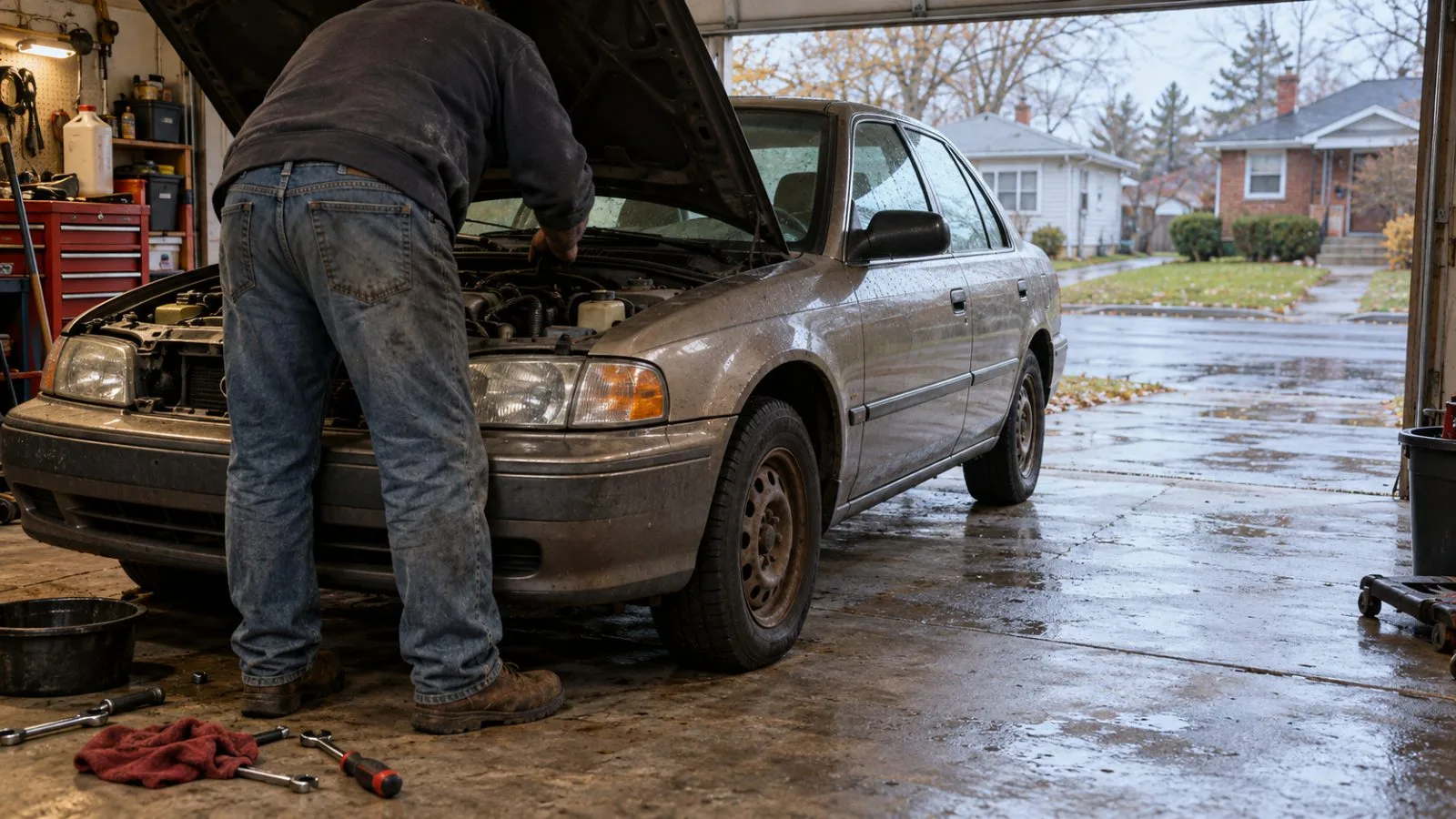
Che Bidal, 19, bought a damaged 2004 Mazda6 for $900, then spent $1,500 on parts. He consulted AI chatbots and YouTube material during the repair work. “Car companies are banks now,” he told The Guardian.
The feature links high new-car prices to demand for larger SUVs and pickups. It also says digital systems and limited repair access can make do-it-yourself maintenance harder, while automakers can benefit when owners rely on dealership service or pay for features inside their cars.
Older vehicles can bring repair and safety concerns. Consumer Reports auto expert Keith Barry told The Guardian that newer safety systems can help protect occupants in crashes. The feature lists blind-spot monitoring, driver-attention monitoring and electronic stability control as examples of equipment that may be absent from older cars. Barry also cautioned that the older vehicles still in service may not reflect the reliability of all cars built in that period.
The Guardian reported that Slate hopes to begin fulfilling orders by the end of 2026.