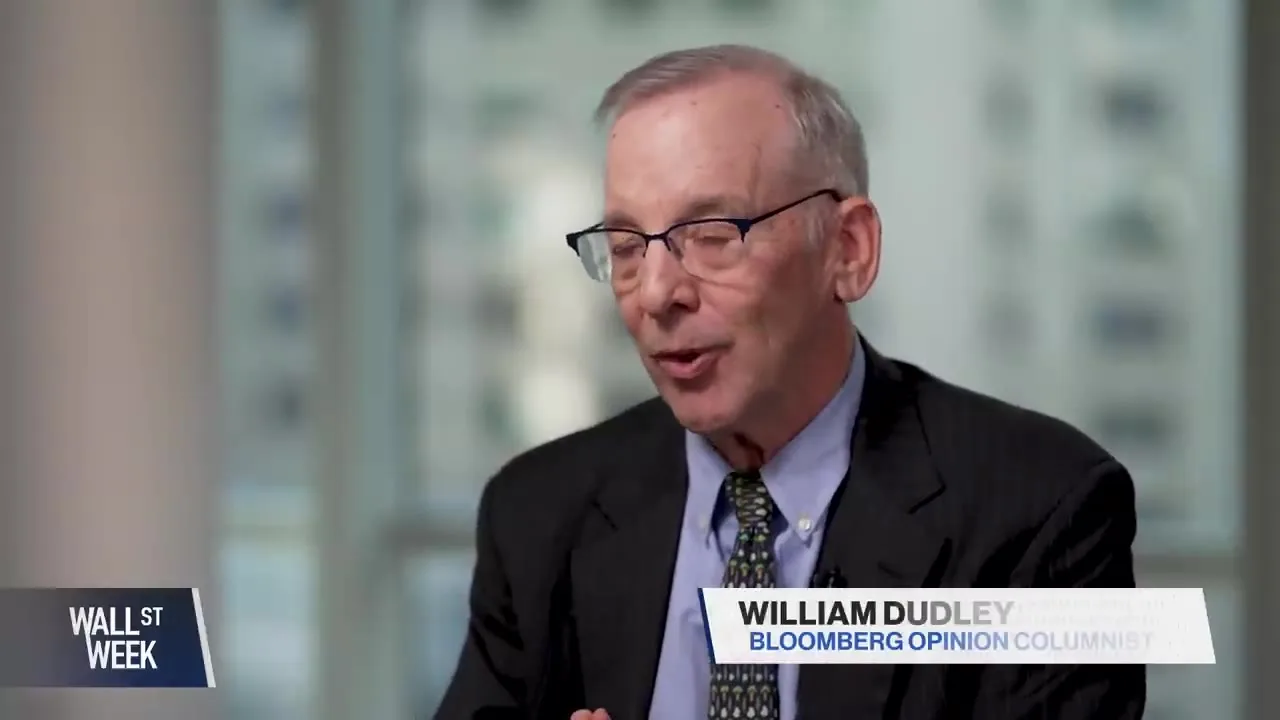
The United States should raise taxes or cut spending to address rising debt service costs, former Federal Reserve Bank of New York President Bill Dudley said in a Bloomberg Television interview published Nov. 21.
Shortening the maturity of government debt would do little to change the course of those costs and could expose the federal budget to greater swings in interest rates, Dudley said.
Debt service costs are rising because interest rates are higher and the government is adding debt, he said on “Will Bessent's Bond Gambit Pay Off?” The government must also refinance borrowing issued at low rates between 2008 and 2022, he said.
Dudley gave a hypothetical example in which the Treasury Department could issue short-term bills at 4% instead of 10-year notes at 5%, saving 100 basis points, or one percentage point. He said that would not substantially alter the debt service problem.
The more debt the government holds and the more it relies on short-term borrowing, the more changes in Federal Reserve policy affect its finances, he said.
Dudley said changes to Treasury borrowing patterns could also add a risk premium, the extra return investors demand for uncertainty. The department has long sought to make its issuance regular and predictable.
He said Treasury Secretary Scott Bessent had discussed helping Japan avoid selling Treasury securities and replacing securities bought back by the department with shorter-term debt. Dudley said such steps were small relative to the fiscal problem.
The United States raises less tax revenue as a share of its economy than some other developed countries, leaving room to raise more, he said. The question was how much to raise and from whom.
Dudley said the Fed should continue to set interest rates to pursue full employment and 2% inflation, even if higher rates worsen the government's finances. Responsibility for the fiscal problem rests with Congress, he said.
Columbia Law School professor Kathryn Judge said shorter-term borrowing could reduce financing costs in the near term while exposing the country to interest rate risk. She said reducing the debt itself was the way to bring interest costs under control.
Judge said revised Treasury language gave the department more flexibility to change auction sizes and rely more on short-term financing. She said there had been no immediate change in auction sizes and the department was still committed to keeping them steady for at least the next couple of quarters.
Judge said it was hard to determine whether the federal deficit or borrowing linked to artificial intelligence was the larger factor behind higher long-term yields. She also said she did not know whether Democratic control of Congress would change the size of the budget, though she expected more scrutiny of how funds are spent.