South Korean and U.S. officials have reaffirmed that agreed conditions for wartime command transfer remain unchanged after Gen. Xavier Brunson’s remarks raised questions about how the process is being assessed.
Brunson, who commands the United Nations Command (UNC) and Combined Forces Command and leads U.S. Forces Korea, spoke Oct. 14 at the Gold Institute for International Strategy’s Second Annual Indo-Pacific Summit in Washington. Yonhap reported that Brunson referred to “new standards” as conditions and plans evolved, citing North Korean missile launches as evidence of changed conditions. The remarks did not establish that the allies had formally changed the transfer requirements.
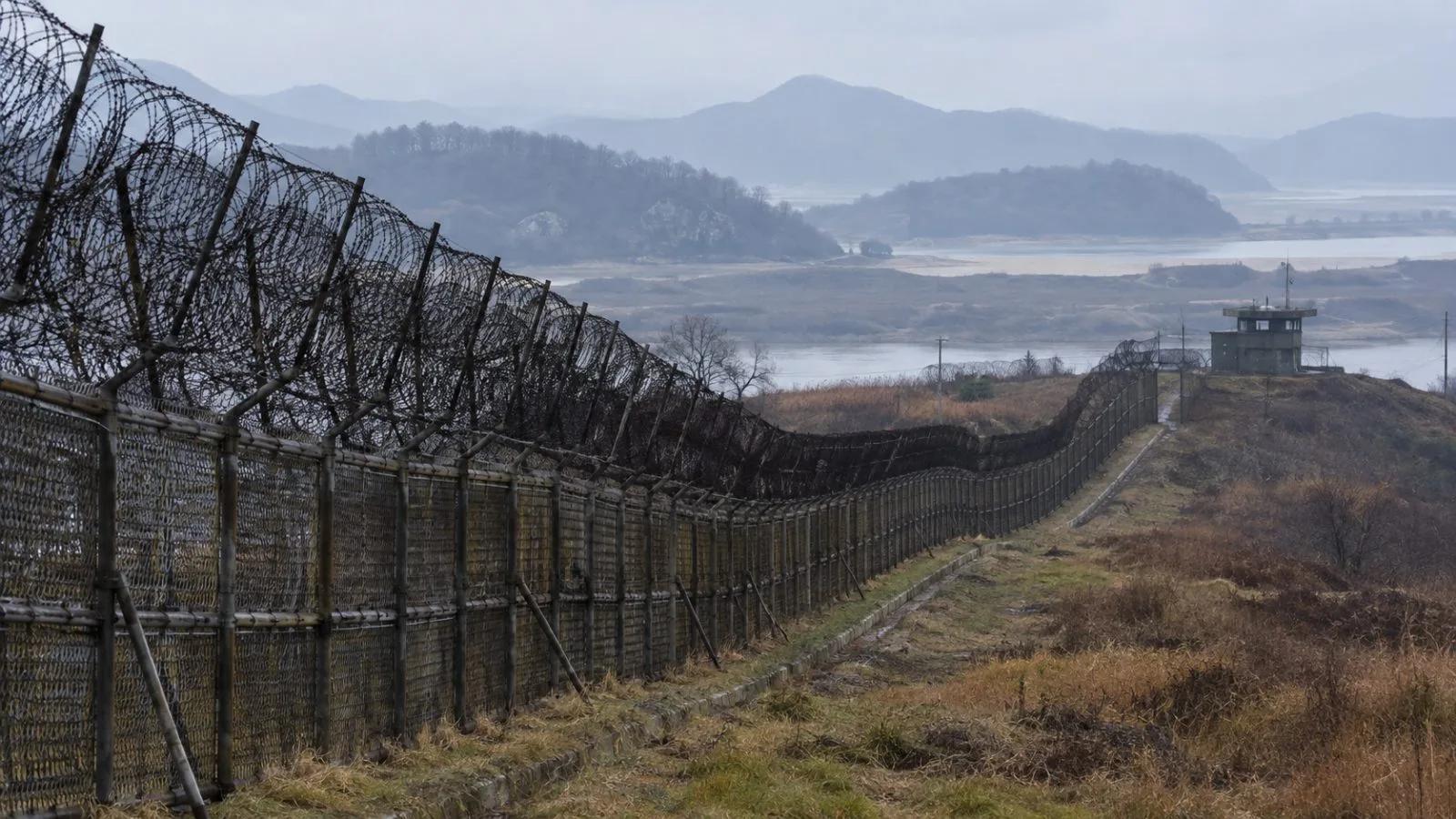
The Hankyoreh reported that Brunson also described South Korea’s starting point as the Demilitarized Zone’s southern fence from the UNC’s perspective. South Korean Defense Minister Kang Shin-chul said the transfer requirements had not changed, though assessments of whether they had been met could differ. Kang also said Seoul had conveyed its concerns to Washington, Yonhap reported. Army Chief of Staff Gen. Kim Kyu-ha told SBS, “I cannot agree,” in response to the DMZ remarks.
The Korea Times reported that the UNC later said Brunson was referring to its military and administrative duties under the armistice, and that his remarks did not call South Korean sovereignty into question. Article 3 of South Korea’s Constitution defines the country’s territory as the Korean Peninsula and adjacent islands. The 1953 Korean Armistice Agreement establishes the DMZ by requiring forces to withdraw 2 kilometers from the Military Demarcation Line on each side.
South Korea regained peacetime operational control (OPCON) on Dec. 1, 1994. The allies agreed on principles for wartime transfer in 2006 and, in 2014, made the transition dependent on mutually agreed conditions rather than a fixed date. Defense Ministry material records a plan signed in 2015 and revised in 2018; after transfer, the Combined Forces Command would remain under a South Korean four-star general or admiral.
In a report published Oct. 21, Yonhap quoted a senior U.S. official who spoke the previous day and said the fundamental requirements were unchanged as the threat environment evolved. Yonhap also quoted an unnamed Pentagon official describing the transfer as requiring agreement between the allies and fulfillment of conditions.
In a Korea Herald commentary, columnist Wang Son-taek linked the dispute to historical memory and public disappointment, arguing that it could affect trust in the alliance.