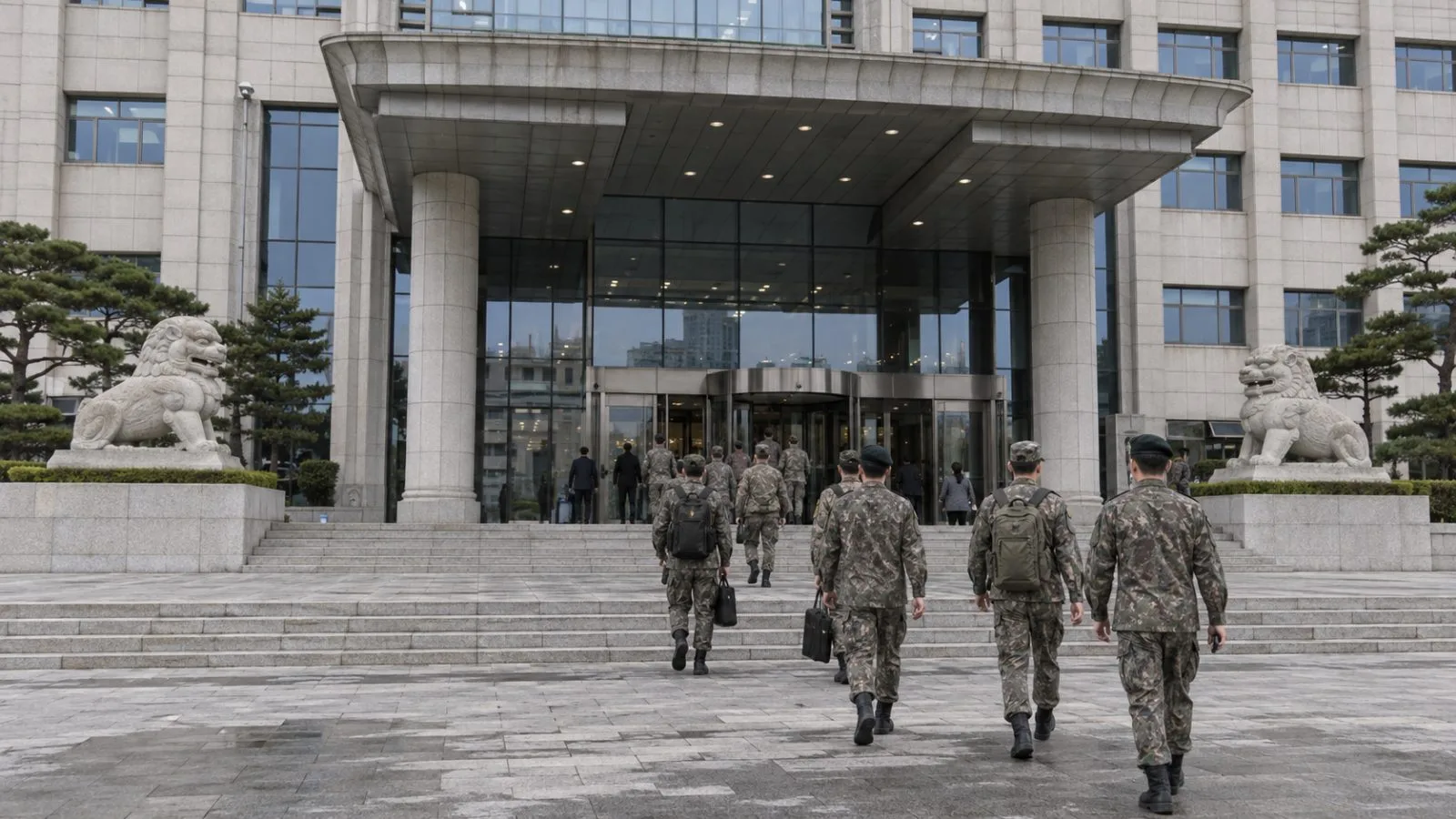
U.S. officials told Yonhap News Agency that the fundamental requirements for transferring wartime command to South Korea have not changed, as the allies debate how to assess readiness for the handover.
An unnamed senior official said Oct. 20 that the requirements remained in place even as security threats evolved. A Pentagon official separately said the transfer would depend on conditions agreed by both countries and that Washington would not prejudge the outcome.
The statements followed remarks by U.S. Forces Korea Commander Gen. Xavier Brunson at an Oct. 14 forum in Washington. Brunson described changed conditions and what he called a changed plan as grounds for “new standards” in assessing the transfer, Yonhap reported.
South Korea’s Ministry of National Defense (MND) said the handover should take place once the allies meet their agreed conditions. Ministry spokesperson Chung Bin-na said, in what she identified as a personal view, that repeatedly shifting the requirements would prevent a transfer. The ministry said the allies would work to resolve differences over conditions and assessment criteria ahead of their annual Security Consultative Meeting.
The countries agreed in 2014 to base the transfer of wartime operational control (OPCON) on conditions instead of a fixed date. Their 2015 plan assesses South Korea’s capacity to lead combined defense, the alliance’s ability to respond to North Korean nuclear and missile threats, and whether the security environment supports a stable handover.
South Korea controls its forces in peacetime, while the commander of the ROK-U.S. Combined Forces Command holds operational control of combined forces during war. Under principles agreed in 2018, that command would remain after the transfer, with a South Korean general or admiral as commander and a U.S. general or admiral as deputy.
Brunson’s comments also prompted a separate dispute over the Demilitarized Zone (DMZ). He said South Korea began at the zone’s southern fence from the perspective of the United Nations Command (UNC), KBS reported. The UNC said he was describing its responsibilities under the 1953 armistice, rather than addressing South Korean sovereignty. South Korea’s Constitution defines its territory as the Korean Peninsula and adjacent islands.
President Lee Jae Myung has pressed for an early handover of wartime command. Yonhap reported that his administration wants the transfer before his term ends in 2030. The bilateral plan sets no transfer year; as of Oct. 14, the allies had not finalized a date for the Security Consultative Meeting, KBS reported.